
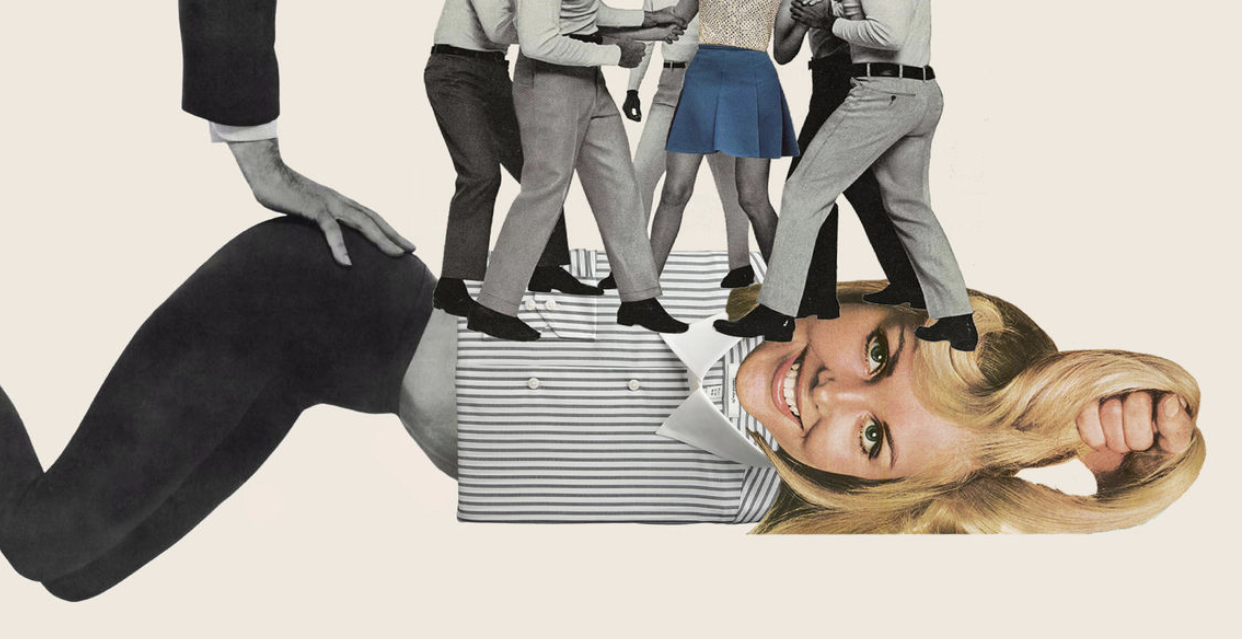
Image via EVN Report
***
“Not all men are evil” is the argument made by the privileged white man who believes his bystanding nature and shallow understanding of ethics and morals are enough to set him apart from the pack. He tries not to show it, but it’s apparent that the power bestowed upon him by the very nature of the patriarchy is entrenched in his values — in the way he sees the world and goes about his life. He’s an advocate for his own in public, hides his true values in private, and looks to his community of brethren. He is both complicit and ineffectually settled into his complacency.
It is understood that the ways of men can be traced back to the consequences of their childhood. That is one explanation for the ill-fitting behavior that is so unsurprising once seen. Cycles of toxic masculinity make way for years’ worth of violence, whether emotional, physical, or psychological, against women. The cycles start in youth, continue into adulthood, and persist throughout old age. It is a tale as old as time, and that is the crux of the issue.
Despite the universality of these situations, there are a variety of factors at play in the conduct of harm that is imposed upon others. The root of the trauma differs, yet the results and impacts on society remain the same. Race and class are the primary divisors influencing the ways that the trauma gets named, excused, or punished.
A boy is born with no knowledge of the world. He is taught how to be through lived experiences and the words of the men that surround him as he is reared. This boy learns that pain is a threat, crying is a weakness, and hypermasculinity is equivalent to power. There is no room to struggle, and because of that, there was never any chance to heal. From what? They do not know yet. And that is where the problem lies.
America has established itself as a country that prioritizes the patriarchy whilst remaining hierarchical in the ways that said patriarchy operates. The White man remains at the top. The issue they face is power. Given so much of it for centuries on end, and excused by the strains of morality — there is still no way to regulate such power.
The men of the minority populations, namely Black and Latino, were stripped of the power that is bestowed upon that of the White man. In actuality, within the confines of America, they never truly held power. Even so, the effects of this societal relationship have infiltrated their familial relationships and friendships. Here is where the cycle of toxic masculinity perpetuates. It’s impactful and harmful in ways that transcend generations.
Power is established through the family dynamic. It is where children learn the concept of hegemonic masculinity, allowing the fear of weakness to overtake the possibility of their empathy. Being taught to live this way has only instilled in children from the start that there is no need for accountability, no need for sympathy. Accordingly, the path is paved for more errors, leading to destruction and distress.
The need for validation lies within themselves as well as in the structures of society. It is a multifaceted fight, where there are no true winners. What is supposed to happen when no one is ever satisfied? The tension then spills over to those who are being surrounded by it. Whether women or children, we are facing the effects of the inadequacies presented by the toxic norms.
***
This article was edited by Whitney Woodrow and Mia Kirch.
 Cooper Toland
 Lara Ejzak
 Jonathan Kho