
Photo via Energy Connects
***
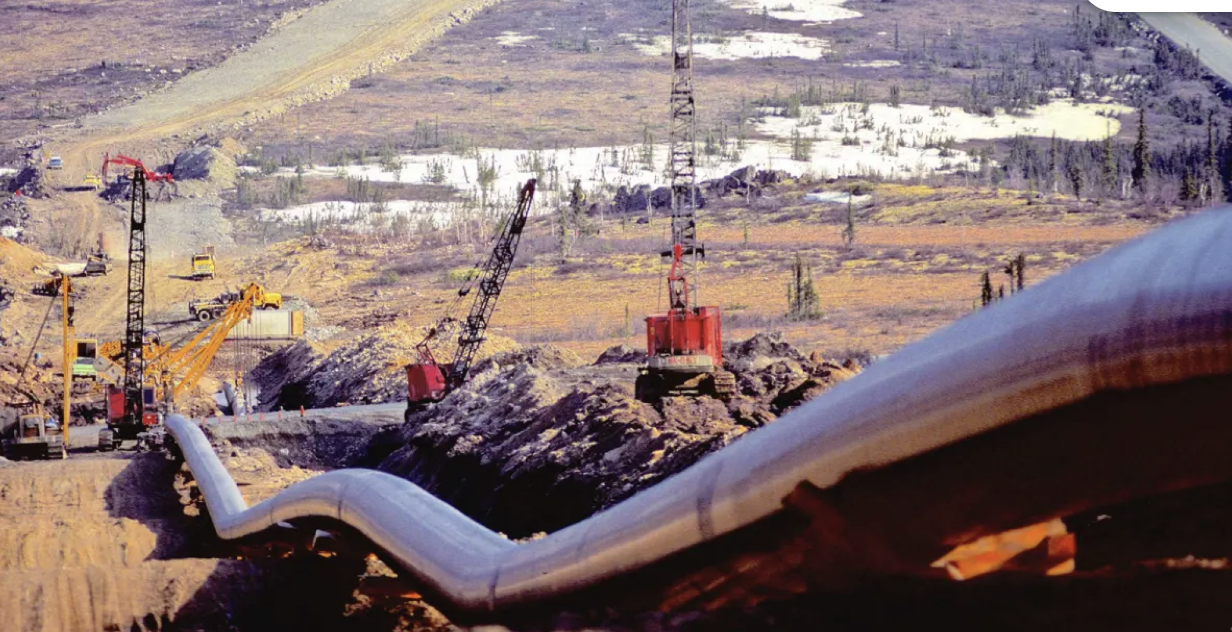
On October 13, President Donald Trump claimed at a rally in Alaska that Taiwan has committed to purchasing 30% of the gas coming off the proposed Alaska liquefied natural gas project. The Alaska Liquefied Natural Gas (LNG) project is a pipeline that would provide clean-burning natural gas to fuel local markets, mining, and industrial needs. It would run from the North Slope natural gas through the resource-rich center of Alaska. According to CNBC, Taiwan’s state-owned energy company CPC Corp reportedly reached an agreement with Alaska Gasline Development Corp to purchase LNG and invest in the pipeline project. This year, Taiwan has participated in a similar decision. Politico reported that Taiwan’s Ministry of Economic Affairs confirmed that it committed to purchasing 6 million tons of Alaska LNG annually after extraction and that it would put $4.4 billion toward project development.
This is a significant purchase for Taiwan, as they are the home to critical semiconductor production requiring an energy demand climb due to AI-related growth. This year, their energy requirements exceed those of Japan and Korea for this reason.
However, despite this demand, excessive production of these semiconductor chips will leave a mark on our overall environmental health. In order to keep bot servers cool, data centers require an immense amount of energy and water, driving higher emissions and e-waste. More sustainable action is necessary to counter such activity; however, given the general demand for AI use in the workforce, it is evident that this development will only exacerbate environmental degradation.
Donald Trump claims other large countries are also in demand of Alaska’s liquefied natural gas, specifically South Korea. He claims South Korea had committed $54 billion to the pipeline project, as part of a broader investment deal Seoul made with the U.S. last year to lower U.S. tariffs. However, South Korea contested Trump’s claim. According to Politico, the South Korean President Lee Jae Myung said on X, “The Alaska LNG project will proceed to working level under the preconditions that 1) its commercial viability is confirmed and 2) it complies with the legal procedures of the Republic of Korea.” To cement Korea’s stance, the South Korean government has issued a release saying “the two countries have agreed to begin reviewing the project”, not confirming the project.
Although Trump has jumped to conclusions publicly, it is evident that U.S. energy is a global hot commodity, but why? Firstly, according to Reuters reporter Curtis Williams, shipping routes from Alaska to Asia are significantly shorter than those from other sources of natural gas, such as rivals on the Gulf Coast. As a result, shipping costs are 65% cheaper, which is extremely beneficial for both Taiwan and South Korea. According to the Glenfarne Group LLC, lead project developer of the Alaska LNG project, the competitiveness of the project can be measured by delivered LNG costs rather than upfront spending. Currently, customers of the company are estimated to obtain 13 million tons per year of LNG, but they need 16 million tons to support project financing. Therefore, the US is relying heavily on Asian support to finance the pipeline.
Regarding political relations, this is an opportunity for the US to strengthen its ties with South Korea and Taiwan. Among neighboring countries, it is unclear if this project will have an impact on Taiwan-China relations because China will most likely claim ownership of Taiwan’s semiconductor industry, as they have already claimed ownership of Taiwan as a whole. Therefore, the US providing energy for Taiwan’s semiconductor industry would also, in a sense, benefit China. Additionally, Donald Trump’s false statement about South Korea’s commitment to the project may have caused a misunderstanding between the countries; however, it is nothing too damaging regarding their relationship. As a result, the pipeline will most likely be a strong reason for South Korea and Taiwan to maintain a stable relationship with the US, which may play a key role in future decisions made by the countries involved.
***
This article was edited by Hayley Dunn.
 Cooper Toland
 Lara Ejzak
 Simon Shalett