
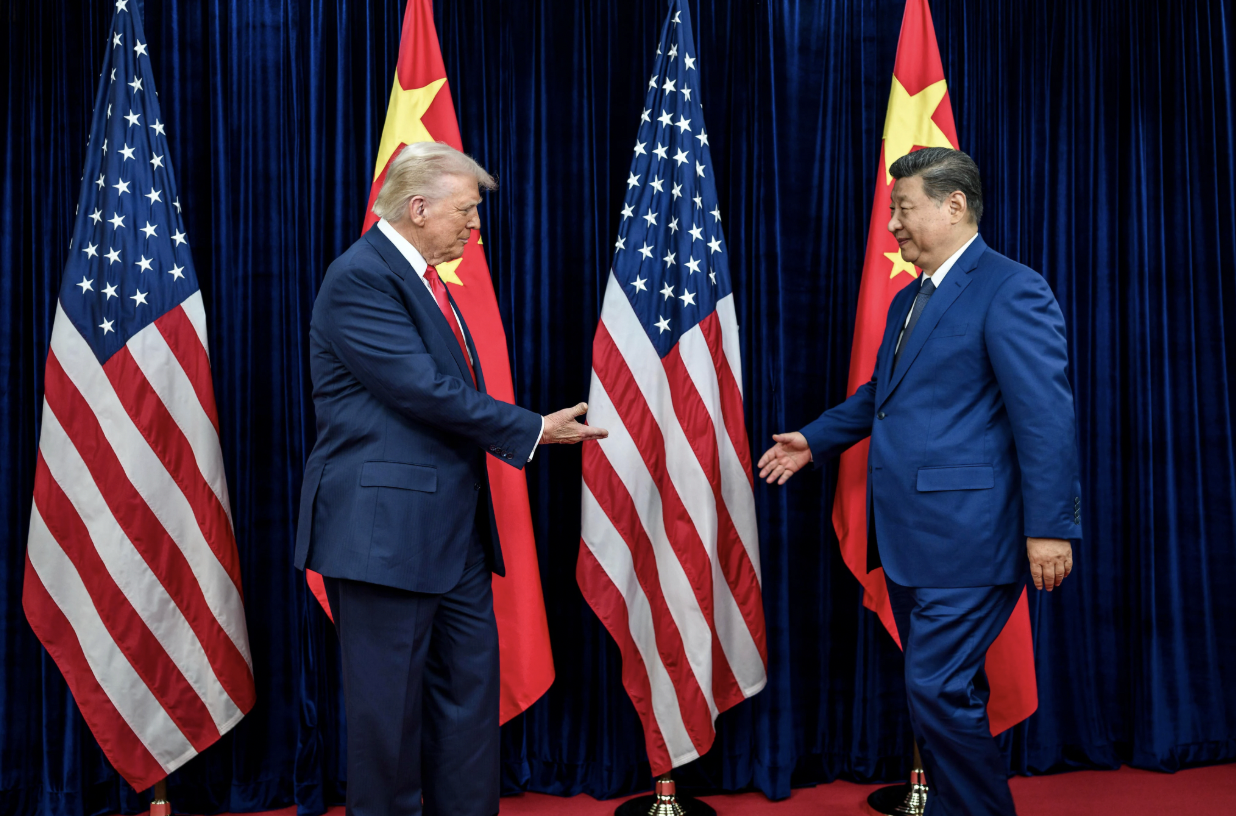
Photo via the South China Morning Post
***
On February 4, President Trump and previous trade rival President Xi Jinping had an “excellent” phone call, according to Trump. This discussion between the two presidents covered a wide range of topics including Iran, Ukraine, Trump’s future visit to China, and even increasing the volume of soybeans imported into the U.S.. However, Chinese state media accounts indicate that U.S. ties to Taiwan were a central focus of the supposedly friendly call.
On December 18, 2025, the U.S. announced an $11.1 billion arms package to Taiwan, which, if completed, would be one of the largest contributions the U.S. has made to Taiwan’s military. Taiwan is currently in conflict with China, which views Taiwan as a breakaway province and has stated its intention to assert control, including through the use of military force if necessary. As a result, this trade deal with Taiwan supposedly signaled the U.S.’s clear stance in the ongoing China-Taiwan tensions. However, it remains unclear whether this position reflected legislative requirements or the Trump Administration’s own policy priorities.
In 1979, the U.S. passed the Taiwan Relations Act. This legislative decision requires the U.S. to “preserve and promote extensive, close, and friendly commercial, cultural, and other relations between the people of the United States and the people on Taiwan.” Additionally, the act states, “ the United States shall make available to Taiwan such defense articles and defense services in such quantity as may be necessary to enable Taiwan to maintain a sufficient self-defense capacity as determined by the President and the Congress.” Although this Act supports the people of Taiwan, it also requires the United States to maintain friendly relations with other countries in the Western Pacific, including Mainland China. Since its enactment, no subsequent legislation has changed the U.S. position established by this Act. As a result, the amount of aid provided to Taiwan amid current tensions is ultimately determined by the President.
Despite the United States’ substantial military support for Taiwan, indications suggest that the Trump Administration may favor China. In 2017, President Trump explicitly told Xi Jinping, “The U.S. government adheres to the One China policy” (New York Times). This policy is described as, “The diplomatic acknowledgement of China’s position that there is only one Chinese government. Under the policy, the U.S. recognises and has formal ties with China rather than the island of Taiwan”. In addition, the Trump Administration canceled Taiwan President Lai Ching-te’s planned transit through New York en route to visiting allies in Latin America and the Caribbean, despite Taiwan’s military contributions. Although President Lai had previously traveled through the United States, the cancellation appears to have been a deliberate measure to maintain the U.S. relationship with China.
Therefore, this phone call was not only a discussion of trade regulations the U.S. plans to enforce, but also a reassurance to China that the U.S. remains an ally amid tensions over Taiwan. Xi Jinping emphasized this point when he referred to it as, “the most important issue in China-U.S. relations” and warned that “the U.S. must handle arms sales to Taiwan with extreme caution”. Given Xi’s clear prioritization of the U.S. stance on Taiwan-China relations, it appears that Trump is inclined to maintain a stable relationship with China due to other benefits.
However, despite this canceled trip and the phone call with President Xi, Taiwan’s president remains hopeful. Lai explained, “Taiwan-U.S. relations are rock-solid. All cooperation programs will continue and will not change”. In fact, Taiwan views the phone call as a positive development in managing tensions with China. Taiwan’s Deputy Minister of Foreign Affairs explains, “We believe that it will contribute to stabilize the situation, especially given the fact that China keeps on escalating the tension in the Taiwan Strait and this whole region,” he said. “I think we welcome the kind of effort to stabilize the … security situation in this region”. The U.S.’s stance with Taiwan and China is not a clear indication of whether Trump will support Taiwan, risking his relationship with mainland China. However, with Trump scheduled to meet Xi Jinping in April to discuss Taiwan and further develop trade relations aimed at strengthening U.S.-China ties, there is a significant likelihood that he may compromise the United States’ longstanding support for Taiwan.
***
This article was edited by Julianna Wottawa and Anna-Rose Barnes.
 Samantha Kornsey
  Daniela Cadena Hernandez
  Hailey Gilbert