
Image via A1Cafel/Wikimedia Commons
***
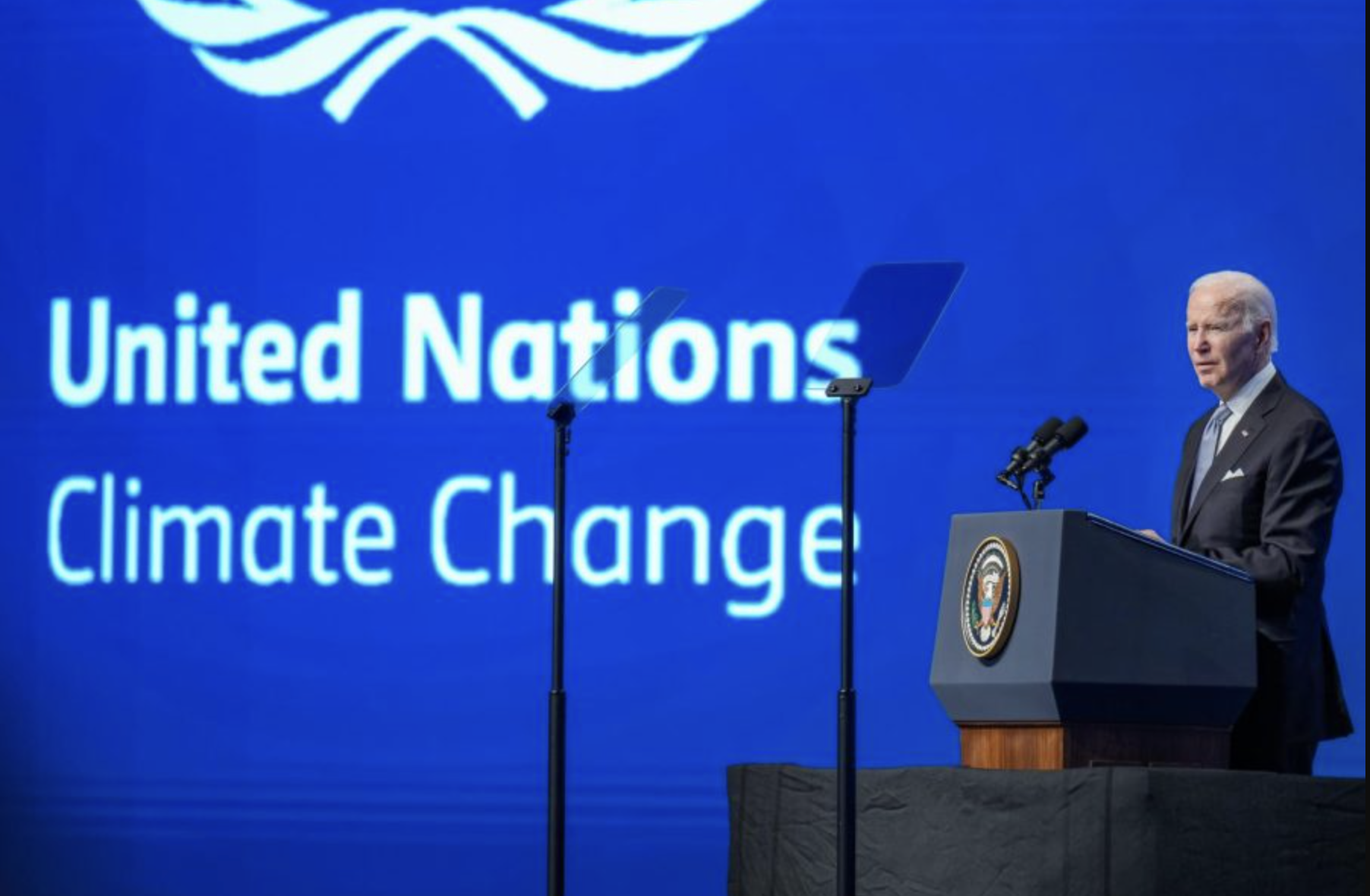
The twenty-first century has been the era of the highest multilateralism in history. The systems that govern different parts of the world are more intertwined than ever, especially when referring to the amount of international governmental bodies and organizations that tie us. At its most idyllic, the United Nations offers the world the image of unity; this has its benefits. Last week, the annual United Nations General Assembly High-level Week took place. Of its key events, several had a direct focus on climate. This overlapped with Climate Week NYC 2026, which holds “dozens of events across New York City’s five boroughs for even more connection, collaboration, and climate engagement.” These events and the bodies that facilitate them paint the image that we are heading in the right direction, but this is not the full picture.
Increased multilateral cooperation towards sustainability appears to be fixated on one thing: appearance. When the world comes together in New York City to address climate change, it appears to be a good thing, and it could be, but only if these conversations are converted into action. What the environment needs, what works, are restrictions and regulations. However, we are coming up empty with recommendations and, increasingly, reservations.
The most well-known case of this is the United Nations Sustainable Development Goals (SDGs). Established in 2012 at the United Nations Conference on Sustainable Development in Rio de Janeiro, they provide a broad scope of the shortcomings of sustainable development with the goal of achieving them all (e.g., Goal Two: Zero Hunger) by 2030. No country is close to having met all seventeen of these goals—even the highest-ranking countries are incapable of meeting them by 2030. Even these more environmentally cautious countries have less ability to impact the environment on the same scale as countries that are falling further short. The SDGs have become widely popularized and implemented beyond the state and international level, as necessary if they are to become worldwide efforts. The issue is that anyone can say they aim to achieve the SDGs, but when they fail to make meaningful progress in that direction, it is a satisfying promise no matter how empty.
New York City, for example, has voluntarily become a local leader in implementing the SDGs, or at least in saying so. The OneNYC 2050 Strategy outlines NYC’s optimistic goals, with the completion date set cleanly at the mid-century mark. These are exceptional goals to have because they highlight where we are going wrong and offer potential solutions while also proposing ambitious goals with extensive amounts of research to support them. However, it is reasonable to conclude that these goals often prove in vain. The OneNYC 2050 Strategy works by “creating and advancing policies, programs, and projects that secure the city, while making our critical infrastructure cleaner and more reliable,” and that work varies in effectiveness. Further, the AdaptNYC Plan is a research-backed climate-resiliency plan that focuses on mitigating the effects of climate change for the New York City boroughs, but not mitigating climate change itself. There are countless similar plans across the globe that outline how an area or an organization can be better prepared for climate change, and to some extent, how they can do their part to prevent further damage. These come up short in addressing how to mitigate climate change, but have the potential to prepare people for our seemingly inevitable future.
The reports show that the OneNYC 2050 Strategy has projected something different. Instead of providing an active approach, they offer suggestions and insight into exactly what is going on. The knowledge that these reports provide is critical but ultimately ineffective when there is no one to address their findings proactively. Additionally, OneNYC has produced 46 reports and publications, as well as 16 initiatives for environmental improvement.
One of the reasons that the SDGs and similar environmentally oriented frameworks are failing to make an impact in the realm of climate change is because there are no proper incentives to change the status quo, nor are there barriers preventing its continuation. It is not the SDGs alone, but the agreements that institutions at all levels are finding themselves party to, that are not legally binding—and sometimes it gets tricky.
The Paris Agreement, while legally binding through voluntary ratification, only requires progress reports, but ensuring that these parties abide by emission standards goes unmonitored. States are left with an easy way to announce a commitment without being forced or even incentivized to take meaningful measures towards sustainability and away from environmental degradation. If we look at the Kyoto Protocol as another example, parties were assigned limits on greenhouse gas emissions for different countries in order to achieve the goals in a timely manner, rather than simply asking for an empty promise. The success of the protocol was limited at best, due to the minimal participation on the part of China and the United States (who lead the world in greenhouse gas emissions), but effectively reduced emission for a number of other countries. This is why more pressure must be applied to the proper contributors; a large improvement from a country that is barely polluting might be much less necessary than a smaller improvement from a country or corporation that leads emissions.
The methods currently available for addressing the climate crisis in America, as in many other countries, are largely insufficient. Without proper tools to regulate emissions and unsustainable practices, there are no guarantees that top polluters will change their ways.
The database of solutions, then, looks smaller than ever. What is viable in a world that is increasingly hostile to efforts to combat climate change has to be more compelling to corporations than ever. This is why regulations are considered a better solution than recommendations, and therefore they cannot be treated without nuance.
According to a study done by Singapore Management University’s Sim Kee Boon Institute of Financial Economics, “while financial penalties may enforce short-term compliance, they do not necessarily bring about long-term changes in corporate behaviour regarding environmental violations,” which is why it is necessary to create a more comprehensive approach to climate change and environmental protection with corporations at the forefront, being that they are the key players in tackling the crisis.
It may be more apparent now than ever that governing bodies and corporations alike do not prioritize environmental issues in their lists of concerns, but our ongoing climate crisis demands that they do. While institutions that center climate change as an issue can provide meaningful dialogue and information, they can also shift the focus away from prioritizing an active response and receive credit for shouting buzzwords rather than taking just actions.
To create an effective change in protecting our planet, there must not only be pressure applied to those in power, but also diligence in deciphering the response. The climate crisis is complicated and deserves an equally complex solution that legally binds and incentivizes cooperation. More has to be expected and demanded in order for anything to change; it is not enough to rely on unreliable progress reports.
***
This article was edited by Maahi Kumar and Anna Marin
 Besalb Dema
 Claudia Senke
 Lauren Gracia