
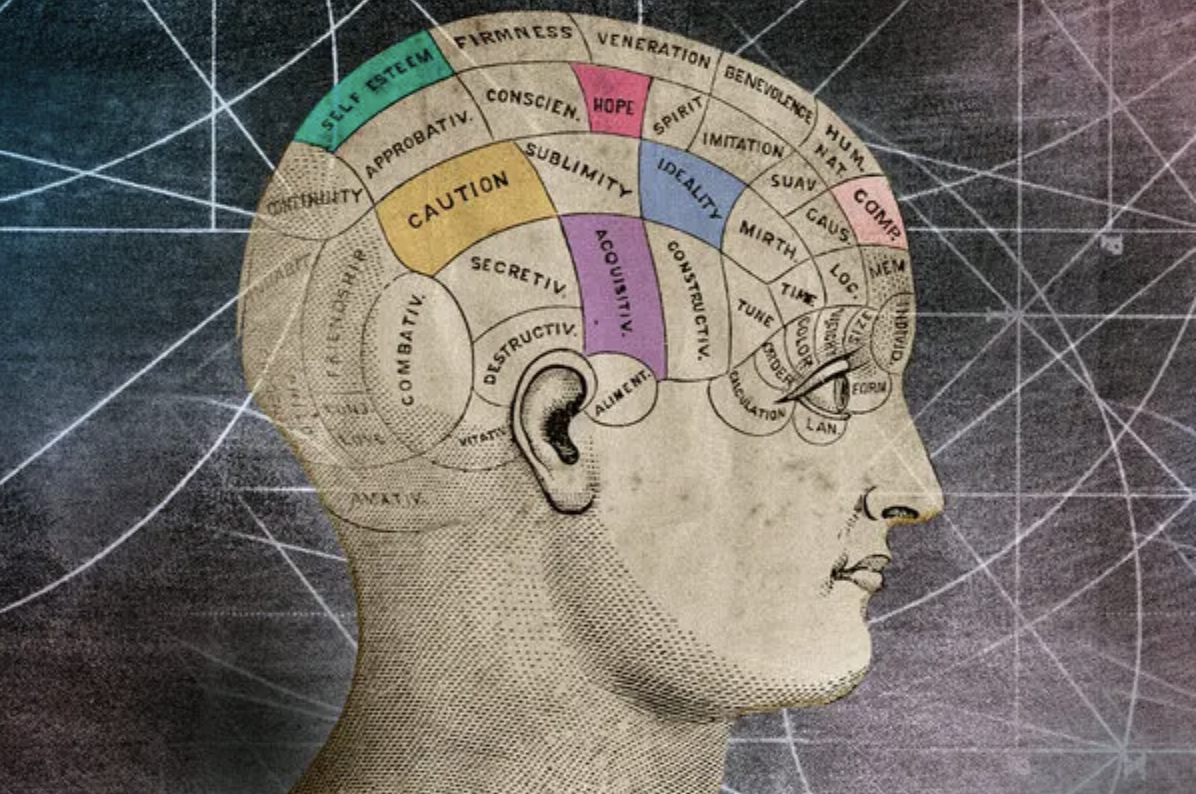
Image via the New York Times
***
The most valuable natural resource is no longer oil, labor but our attention. In a generation of i-pad kids, social media influencers, and billion-dollar ad campaigns our attention and the consumerism which follows is contributing more and more to the global economy.
Similarly to previous generation’s extractive economies, the attention economy is global and unequal. Previous exploitative examples of globalization were factories in China, minerals in the Congo or oil in the Middle East; however, today it is no longer dependent on human labor but the rectangular object living in your palm. Your phone is not just a device, but a mining rig for the human mind. Studies across fields such as psychology, neuroscience, cognitive science, and economics all point to the same conclusion: the human mind has a finite capacity for processing information. When mental effort is directed toward one activity, less of it remains available for everything else. Because attention involves choosing what to focus on while filtering out competing stimuli, it functions as a scarce mental resource that must be distributed across tasks rather than used endlessly.
The term ‘attention economy’ was first coined in 1971 by Herbert A. Simon who wrote about the scarcity of attention in an information rich world. He claimed that the information system was flawed in its lack of consideration for human attention and inability to filter irrelevant information causing a lack of attention for the information available. Now we have AI to do the filtering for us but our attention spans are continuously regressing due to overstimulation from information accessibility. Our attention is monetized through targeted advertisements on entertainment and social media platforms. The global digital advertising revenue is estimated at $567 billion in 2022 and expected to exceed $700 billion by 2025, with social media advertising alone accounting for nearly 35% of this figure.
The World-systems theory argues that the global economy is organized into core, semi-periphery, and periphery countries, with wealthy nations extracting labor, resources, and value from poorer ones. This unequal structure keeps rich countries dominant while limiting development and autonomy in poorer regions. While this the World System’s theory is traditionally applied to manufacturing, it can also be applied to the attention economy. Specifically, information and communication technology devices are designed by powerful corporations that are primarily based in powerful core and semi-periphery nations. The majority of these corporations are based in the hegemonic core of the United States. Within the present context of waning material resources across the world-system, these corporations profit from an online attention economy. Just as traditional material economies exploit the labor and natural resources from the periphery to extract wealth for core states, the attention economy exploits the psychologies and behaviors of periphery populations to extract wealth for core countries. For example, users in countries like India, Brazil, and the Philippines spend billions of hours on platforms such as Facebook, YouTube, and TikTok, generating data and advertising revenue for U.S.-based tech companies. That attention is extracted, monetized, and concentrated in the American core, while the social and psychological costs remain in the global periphery. This process has been named data colonialism.
When asked about issues of algorithms that target attention, Oxford professor, Mark Graham said, “countless humans [are] forced to work like robots, toiling in monotonous low-paid jobs just to make such remarkable machines possible.” Digital sweatshops represent exploitative digital workplaces where individuals are compelled to work long hours under high demands for minimal compensation most often in developing countries. Multinational corporations justify this through economic stimulation; however, these digital labor markets reproduce the same exploitative dynamics as earlier forms of global outsourcing. Content moderators in countries like the Philippines, Kenya, and India are paid a fraction of Western wages to filter graphic violence, hate speech, and abuse so that platforms remain profitable and palatable to users in the Global North. In this way, the psychological and emotional costs of maintaining the attention economy are placed on workers in the periphery, while the financial benefits flow upward to technology firms headquartered in the core of the world-system.
On a global scale, the attention economy is extractive, but on an individual level it is addictive. About 20% of teenagers globally suffer from a social media addiction which is defined by compulsory usage to the extent that it affects everyday life. Domestically, this contributes to our mental health crisis because people who spend over 3 hours per day on social media are double as susceptible to depression and anxiety. These rising rates of anxiety, depression, and compulsive use reveal that the attention economy is not simply a cultural shift, but a public health issue. However, because harm is experienced privately and gradually, it does not generate the same political urgency as a factory accident or an oil spill.
Yet despite the mounting evidence of psychological harm, labor exploitation, and global inequality produced by the attention economy, the system continues to expand largely unchecked. Unlike oil or physical labor, attention is invisible and difficult to measure, which allows its extraction to occur without the same political or ethical scrutiny. Because users are not paid for their data the true cost of participation in digital platforms is obscured. What feels like “free” access to social media is in fact a transaction: instant psychological gratification through exposure to consumerism and entertainment for extraction of your preferences which is translated into data.
During just the first nine months of 2025, the seven largest tech and AI companies spent a combined $50 million on federal lobbying, ensuring that policymakers remain responsive to corporate interests rather than public well-being. Meta alone spent a record $19.7 million in that same period, using its financial power to influence legislation on data privacy, antitrust enforcement, and algorithmic transparency. This level of political spending allows Big Tech to maintain a regulatory environment that treats data extraction and behavioral targeting as normal business practices rather than as forms of exploitation. Much like oil and manufacturing corporations in earlier eras, technology firms in the attention economy use their economic dominance to capture the political system.
The attention economy is wrong not because technology itself is harmful, but because its dominant business model is built on the systematic extraction of human consciousness for profit. The attention economy is ethically wrong because it survives on a finite resource that affects our daily lives and cognitive ability. In the same way earlier global systems treated land, labor, and minerals as resources to be exploited, the attention economy treats focus, emotion, and behavior as commodities. At the same time, it is important to recognize that global access to smartphones and digital platforms has brought real benefits. Mobile technology increases access to education, current events, and financial services. Additionally, social media has given marginalized communities a platform for storytelling. I do not believe in the limitation to access to technology but the limitation of data collected and employment of the attention economy in developing countries.
I believe that if attention is treated as a public resource rather than a corporate asset, digital spaces could be designed to inform rather than catch and hold attention. The attention economy does not flatten global inequality, but intensifies it. Wealth accumulates in the core where data is processed and monetized, while the psychological costs, digital labor, and social disruption are externalized to the periphery. World-systems theory thus reveals the attention economy as a new imperial system—one that extracts not land or labor, but the human mind itself.
***
This article was edited by Abigail D’Angelo.
 Samantha Kornsey
  Daniela Cadena Hernandez
  Emma Carreno