
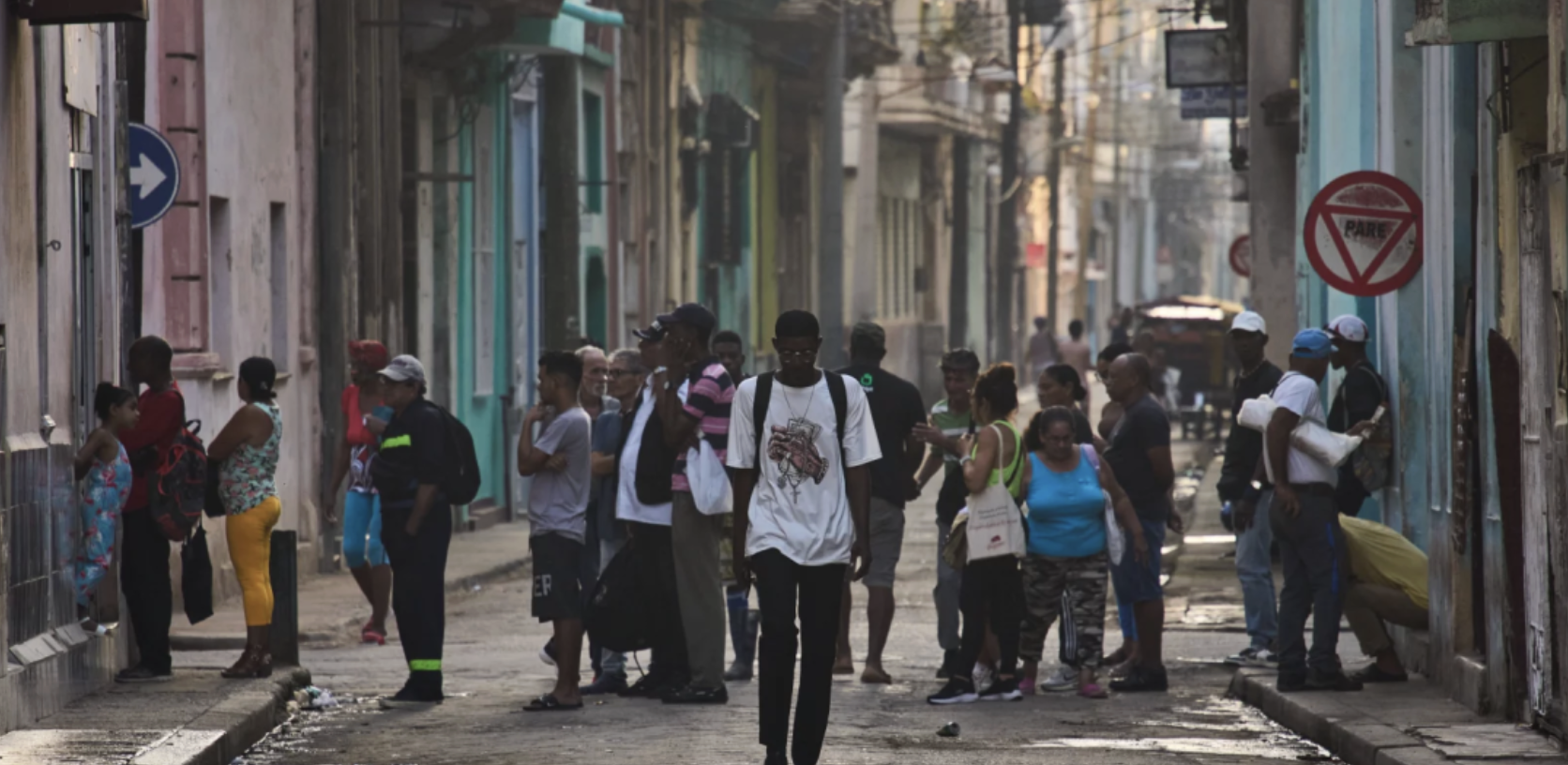
Photo via Ramon Espinosa
***
Cuba is under a severe economic crisis, making Trump’s rampant desire for total control all the more serious. In late January, Trump signed off on Executive Order 14380, formally blocking all oil imports to Cuba and threatening tariffs to any countries offering aid. While economic sanctions have perversed US and Cuban relations since the Cold War, the most recent bout has had devastating effects on the island.
Since the most recent oil embargo, nearly 10 million Cuban citizens have been affected by rampant blackouts, rendering daily activities nearly impossible. These blackouts are compounded by multiple factors beyond the blockades, such as degrading infrastructure and one of the most unstable economies in the country’s history. While headlines are now sweeping mainstream news, Cuba has battled a cycle of socioeconomic turmoil for years, partly due to decades of regime instability and predation from the US.
Cuban-American relations are historically unstable, and while most default to Cold War-era geopolitics, there are decades of forgotten history between the two nations. After the infamous Cuban Missile Crisis, about 40 years of economic isolation imposed by the US followed. Between President Ronald Reagan’s devastating travel ban in 1982 and Presidents George H.W. Bush and Bill Clinton’s Helms-Burton Act, which federally codified the first Cuban embargos, Cuba was practically fated for economic disaster.
The United States’s persistence against Cuba, both in years prior and today, reflects a desire for ideological control over the nation. Since the overthrow of US-backed dictator Fulgencio Batista by communist leader Fidel Castro, America has instated relentless coup efforts and economic embargos in an attempt to dismantle Cuba’s socialist system and uphold the international liberal order.
Amidst the Cuban Missile Crisis, America could make the argument that its efforts to preserve global order, whether through economic sanctions or regime change, were rooted in preserving freedom and democracy, that argument has since eroded. Before, US leadership could at the very least attempt to paint a picture of protecting freedom and promoting order. We helped build up NATO to promote cooperation with our allies and founded USAID to assist developing nations. At their best, they were efforts for preserving the greater international good. At their worst, they were vapid tools to promote soft American power in the wake of the USSR’s growing influence.
Today, America has dissolved USAID and frequently threatens relations with NATO. Our commitment to international cooperation and correspondence has waned, substituting a cohesive order for realist, black box approaches to foreign policy. As we continue to economically sabotage Cuba in the pursuit of supposedly upholding democracy, we are simultaneously dismantling the democratic institutions we once prided ourselves on. How can our argument for promoting American values hold any meaning when we can’t uphold them on our home turf?
The image of protecting freedom starts to falter when our actions result in threatening the livelihood of nearly 10 million Cuban citizens. The possibility of yet another regime change, with no clear plan laid out for the well-being of Cubans, only dampens an already uncertain attitude towards the future of the island.
Let it be known that this isn’t a blind defense for the Cuban government either. Once in pursuit of labor rights and equality, Cuban leadership has taken a downturn in recent years. For every issue that is attributed to US influence, there is substantial blame to be placed on Cuba’s top officials, specifically figurehead Miguel Díaz-Canel and chief authority Raúl Castro. Under their leadership, the Grupo de Administración Empresarial S.A. (GAESA) holds unchecked power over the country’s assets, leaving officials with nearly $18 billion in un-audited revenue and Cuban citizens powerless in budget allocation. As a result, infrastructure, healthcare, and agriculture are wildly underinvested, leaving Cubans with minimal institutional support.
The exploitation of the Cuban people, from within and beyond the nation, spans generations. While international governing bodies, such as the United Nations, have openly condemned the recent actions of the American government, inaction has left Cubans in the dark about the future of their home.
Díaz-Canel is set to meet with President Trump in the coming weeks. Unfortunately, after Trump’s recent declaration that he can “do anything [he] wants with [Cuba]” and Díaz-Canel’s disappointing leadership, chances for substantial progress are slim. Regardless, the Cuban people’s continuous resilience and fight for preservation point to a greater commitment towards stability, prosperity, and freedom. As the great-granddaughter of Cuban immigrants who embodied this dedication, I hope to see the day where this resilience is rewarded.
***
This article was edited by Sofia Downes.
 Sarah Olivia Sullivan
  Nathan Wellman
  Ariana Sebourne