
Image via 270TOWIN
***
In 2022, Republican congressional leaders like Mitch McConnell and Kevin McCarthy said that a “Red Wave” would hit the nation on election day, with Republicans taking both houses of Congress.
Many pundits agreed with this, citing an unpopular Biden administration and a struggling economy, but on election night Republicans only gained 9 seats in the House, giving them a slim majority, and lost a Senate seat in Pennsylvania to Democrat John Fetterman.
The results puzzled analysts because unpopular presidents usually lose seats in midterms. The Republican Revolution of 1994 and the 2006 referendum on the Iraq War demonstrate this. 2022 stands as an outlier since the shift was so small. Several factors contributed, mainly backlash against Republicans after the Dobbs v. Jackson decision, but another contributing factor that was notably acknowledged by McConnell was the weakness of Republican candidates. Candidates like Mehmet Oz in Pennsylvania and Herschel Walker in Georgia were major contributors to the Republican loss in the Senate.
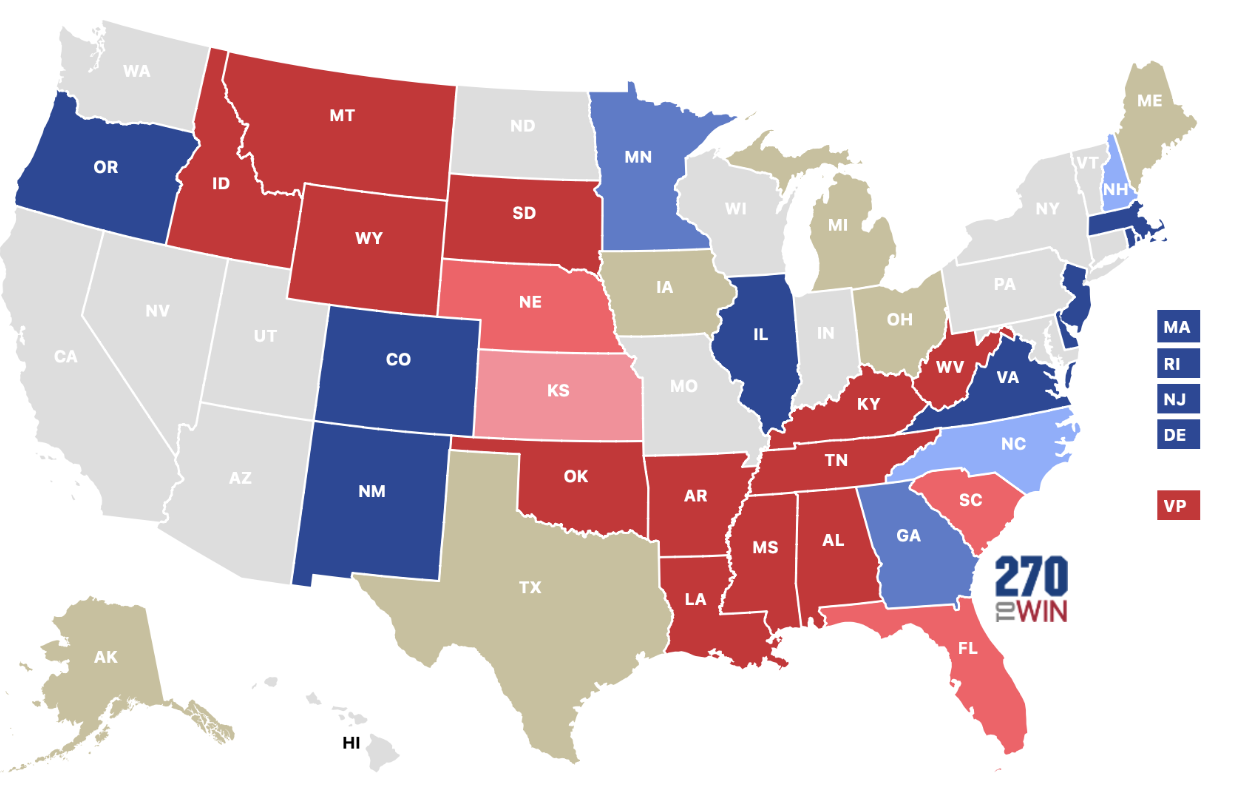
Now here we stand at another midterm with an unpopular President and a resurgent opposition, and once again we are hearing talks of a massive wave; only now it is a Democratic blue wave. Kalshi puts the odds of Democrats retaking the House at 91% and the Senate at 62%, while current polling projects gains of as many as twenty House seats and five Senate seats.
However, there are two major roadblocks to a Democratic wave, the first being polling. Kalshi measures trader expectations rather than voter preferences, and while the traditional pollsters are more reliable, they have also had their own share of inaccuracies. A September Marist poll showed Democrat Josh Turek leading Republican Ashley Hinson by eight points in Iowa. Although the race is close, a flip by that margin is near impossible. The Michigan Democratic Senate primary provides another example: polls had Abdul El-Sayed leading Haley Stevens by double digits, yet he ultimately won by only about one point. With five weeks remaining, these discrepancies make the current electoral environment difficult to read.
The second roadblock is candidate quality, the exact issue Mitch McConnell identified after the 2022 midterms. Maine provides a clear example: Democratic nominee Graham Platner had been competitive against Republican Sen. Susan Collins, but he withdrew from the race in July following sexual assault allegations, which he denied, and scrutiny over a Nazi Totenkopf tattoo. Democrats ultimately replaced him on the ballot with former state Senate President Troy Jackson.
Michigan presents a different challenge. Democratic nominee Abdul El-Sayed has faced criticism from several Jewish organizations over comments he made following a synagogue attack, as well as his joint campaign appearances with streamer Hasan Piker. El-Sayed later issued an apology for his synagogue comments and sought to distance himself from Piker.
In Texas, Democrat James Talarico has made his Christian faith central to his campaign, but his progressive interpretation of Christianity has drawn criticism from conservative evangelicals. Talarico is attempting to use Christianity to reach religious voters Democrats have historically struggled to win, but National Review notes his progressive politics still put him at odds with many of the conservative Christian voters he is trying to reach. That creates a potential candidate-quality problem: Talarico’s message may appeal to progressive Christians and Democrats looking for a different approach to religion, while making it harder to attract moderate and conservative voters in a deeply Republican state. Meanwhile, Republican Ken Paxton enters the race with significant personal and legal controversies, including his 2023 impeachment, yet the race remains competitive according to recent polling.
In Alaska, Democrat Mary Peltola’s Senate campaign has faced scrutiny after a New York Times report alleging mistreatment by former aides, claims her campaign has disputed, but it’s another headache for Senate Democrats this election cycle.
Republicans are running into similar candidate struggles. Ohio gubernatorial candidate Vivek Ramaswamy has faced pushback from parts of the conservative base over his positions and campaign style, with some Republicans worried about enthusiasm and turnout according to the Associated Press. Meanwhile, the aforementioned Ken Paxton has helped keep the Texas Senate race competitive despite the state’s firm Republican lean.
Democrats do have strong candidates elsewhere. In North Carolina, former Governor Roy Cooper currently leads Republican Michael Whatley by 11 points among likely voters in an Elon University poll. In Georgia, incumbent Senator Jon Ossoff leads Republican Mike Collins by nine points in a July AARP poll, while his growing profile is sparking speculation about a potential 2028 presidential campaign.
With just about a month left until Election Day, analysts can only offer predictions. Between ongoing foreign conflicts like the war in Iran and the looming possibility of an October surprise, anything can happen before the final votes are counted. The question is whether 2026 will prove to be the blue wave Democrats expect, or the same disappointment Republicans got in 2022.
***
This article was edited by Andrew Kravatz and Hayley Dunn.
 Cooper Toland
 Lara Ejzak
 Jonathan Kho