
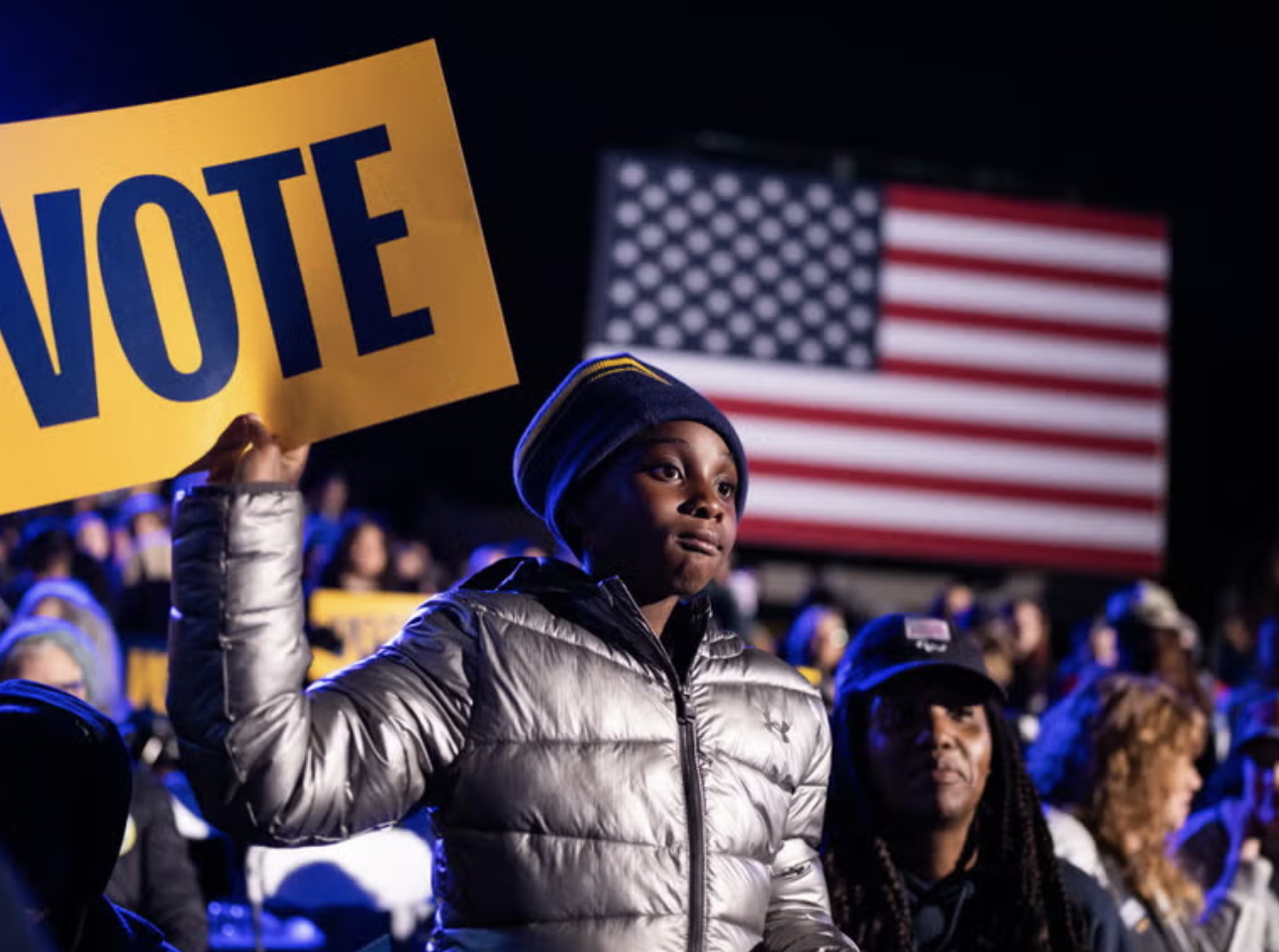
Image via Tom Williams, Getty Images
***
Around last year, Gen-Z moved beyond just being disappointed with the current political climate and now has entirely abandoned trust in both major political parties; done with democrats and republicans alike. All they saw was the grocery bills they couldn’t pay, their rent skyrocketing, and a near future that felt unaffordable. As the 2026 midterm elections approach, and Gen-Z remains unconvinced by the two major parties, the political establishment must work to ensure this generation doesn’t walk away from the table entirely.
A Fall 2025 Harvard Youth Poll found that 2,040 Americans between the ages of 18 and 29 had staggering opinions: only 13% of the population felt that our country is headed in the right direction, while 57% believed our country is on the “wrong track.” A GenFordward survey from The University of Chicago studied more than 5,300 participants aged 18-49 and found that 6-in-10 people hold unfavorable views towards both the Democratic and Republican parties. These trends demonstrate a generational rejection of the partisan system that currently dictates our politics, staggering statistics that both parties must consider.
These patterns have reflected how younger generations are starting to politically align themselves. In a January 2026 Gallup Survey, there’s a record number of Gen Z voters who identified themselves as political independents, an astounding 56%. Millennials are close behind at 54%. What’s more, when survey respondents were asked whether a third major party is needed, 62% said yes. The image below demonstrates the severity of this number, which is a record high compared to the past 3 decades. This alignment indicates that Gen Z and other generations of voters have concluded that the partisan system no longer caters to their needs.
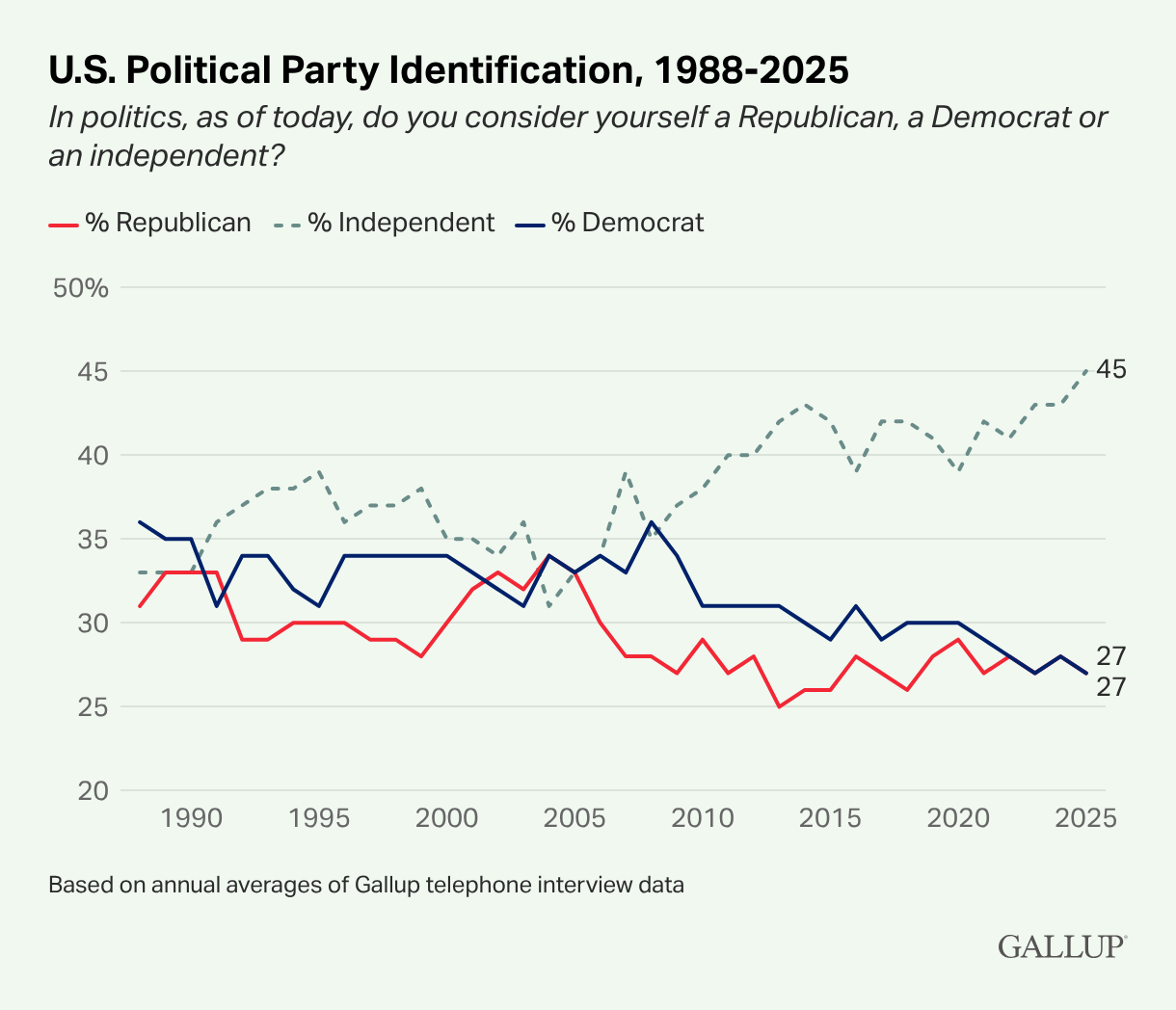
Image via Economic Security Project
***
This disaffection is truly personal and will have immediate impacts on our upcoming 2026 midterm elections. A November 2025 Economic Security Project poll demonstrated that this trend may be rooted in current economic struggles. It found that 67% of voters under 40 think the economy is doing poorly, 90% have had to make spending changes due to rising costs (e.g., buying fewer groceries/cheaper brands and delayed medical care), and 70% have undertaken credit card debt just to afford essentials. Further, since the COVID-19 pandemic, rent has surged 40% in major cities, the cost of car ownership has increased almost the same amount, and student loan debt has quadrupled since 2000. If your rent is eating your paycheck and you can hardly afford branded groceries, the question of what party “represents” you feels irrelevant. The new generation is consumed by the thought of bearing the expenses of just living day to day.
As questions of affordability grow more central during the second Trump administration, his approval rate among young voters has fallen accordingly. An Economist/YouGov poll in early February 2026 showed Trump’s approval rating to be a feeble 25% among 18- to 29-year-old voters, a dramatic fall from the 50% approval rating in February 2025. CBS News concurs with this data, showing his net approval among Gen Z dropping from +10 points to -32 points over the same time period. Many young Americans originally voted for Trump because of his campaign promises of affordability, but have since been disappointed to see those promises evaporate.
Although this trend might seem to be benefiting the Democratic party, they haven’t been picking up these votes either. The Harvard Youth Poll clarified that, although the 2026 ballot has general support from young Americans, this support “stems more from caution than genuine enthusiasm.” A Third Way Poll found that both young Republicans and Independents are most likely to skip the 2026 midterms and vote in the 2028 presidential election. Approximately 50% of Gen Z voters believe their party is not moving in the right direction, demonstrating that this frustration cuts across partisan borders. A February 2026 survey from the John Hopkins SNF Agora Institute also noted that 60% of Gen Z respondents believe the nation’s government needs “significant change,” regardless of which party is successful in November. Scott Warren, a fellow at the SNF Agora Institute, claimed, “The data suggests young people are not necessarily becoming more conservative or progressive. They are becoming more cynical and frustrated.”
As the November elections approach, Gen-Z and Millennial voters are projected to account for roughly half of eligible voters. This current disconnect from our partisan system will have dire consequences for both parties; The Republican party is at risk of losing young voters, with Democrats currently leading the generic congressional ballot 61 to 31 (seen in the previous Third Way poll), while the Democratic party is seeing voters losing party loyalty and believing less and less the idea that voting can actually better their day-to-day lives.
These consequences extend beyond the 2026 election cycle. As this generation becomes accustomed to a dysfunctional two-party system, the continued erosion of the foundational principles of American democracy becomes increasingly acceptable. As trust in the government falters, the political party that can reinstate confidence among younger voters will prevail the strongest in 2026, 2028, and future elections. As the Harvard poll’s student chair states, “We need to act now if we hope to restore young people’s faith in politics, America, and each other.”
***
This article was edited by Chapin Fish.
 Catherine Topps
  Sarah Olivia Sullivan
  Sahir Sadat