
Image via The Federalist Society
***
Churches and religious organizations have been officially tax-exempt in the United States since 1894; although this was later declared unconstitutional, it was solidified in the Revenue Act of 1913. Prior to 1894, churches and religious organizations were not officially tax-exempt but still did not pay taxes. Religious organizations like churches, mosques, and synagogues meet the Internal Revenue Service (IRS) legal definition of a church, making them automatically tax-exempt. Religious organizations that do not fit into the IRS’s legal definition of a church can become tax-exempt by filing Form 1023. Non-religious non-profits are required to file taxes and are not automatically exempt from federal income tax.
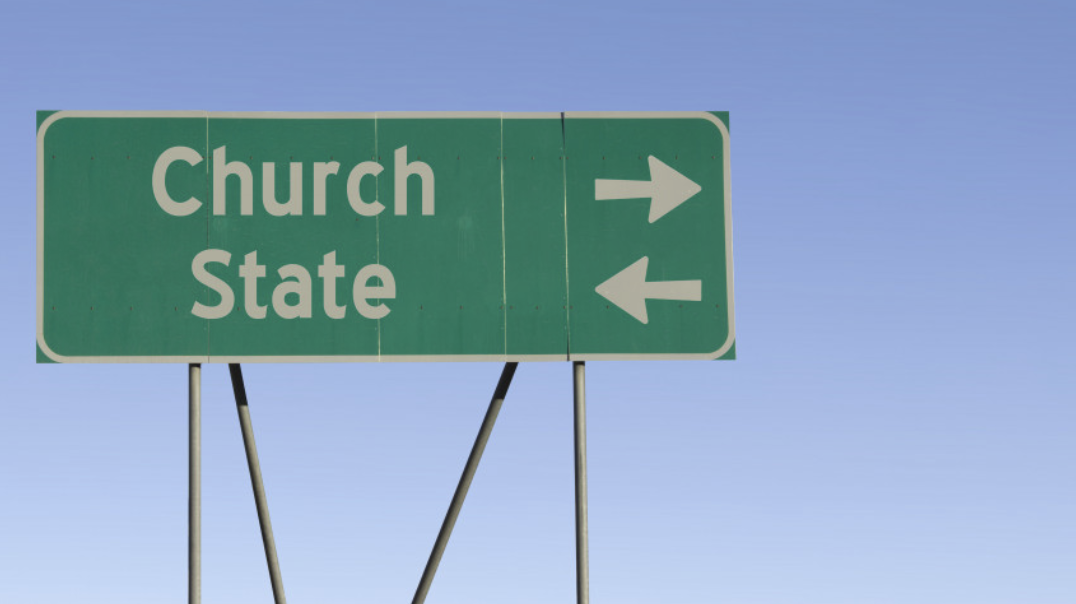
Separation of church and state is maintained through tax exemption, completely removing the government’s interference with religious organizations. The separation of church and state was outlined in the United States Constitution’s First Amendment Establishment Clause, which explicitly states, “Congress shall make no law respecting an establishment of religion or prohibiting the free exercise thereof.” Tax exemption allows the government and religion to be separate, limiting the interaction between the two. If tax-exempt status for religious organizations is removed, it would directly threaten the First Amendment. The government would directly profit from religious institutions and regulate them more closely through taxation. Furthermore, removing tax exemption from religious institutions would be a slippery slope toward further entanglements of church and state. If the government gets more involved in religious institutions, the clear separation between the two becomes murkier and moves into dangerous territory that directly violates the First Amendment.
In recent years, there have been threats to remove the tax-exempt status of academic institutions like Harvard. In 2025, President Trump threatened to remove Harvard’s lawful tax-exemption status because of its diversity, equity, and inclusion practices, to which the Trump administration is politically opposed. This attack on tax-exempt institutions sets a dangerous precedent. It suggests that the long-standing practice of tax exemption is now up for debate. This illustrates how the U.S. government has attempted to use tax policy to influence otherwise independent institutions. Both religious and educational institutions are apolitical and do not get involved in politics. The Trump administration’s threat to tax Harvard forces politics and obedience to nonpartisan entities that until now have existed completely unrelated to politics.
Some claim that the tax-exempt status of religious organizations disproportionately affects citizens because they have to pay more taxes instead of bigger religious organizations paying them. Others claim that religious organizations benefit from tax-payer funds without actually paying the taxes themselves, which many believe to be unfair. These arguments overlook the role taxes play in the separation of church and state. If the church gets taxed, the separation is less clear. The religious organization is physically a part of the community, but in regard to the government, they are separate entities. The criticism of the tax-exempt status of many institutions is not completely irrational, as many find it unfair that some have to pay taxes while others do not. Tax exemption might allow some institutions to become more powerful by leaving more money for development and growth initiatives. But that argument fails to recognize that if religious institutions lose their tax-exempt status, they are more vulnerable to being targeted. If one religious institution gets targeted and loses its tax-exempt status, then all religious institutions are at risk of being targeted.
Though many believe that the United States is a place of religious freedom, it has not always been very accepting. Anti-Catholicism was a huge issue in the United States, visible in discrimination against Irish Catholic immigrants. Not only were Catholics discriminated against, but in 1844, mobs burned Catholic churches and hunted down members, most notably in Philadelphia. The Mormon War took place from March 1857 to July 1858, in which Mormons and the U.S. army engaged in an armed confrontation resulting in the death of Joseph Smith, the founder of Mormonism. Religions have been targeted in America’s history, and without the protection of a tax-exempt status, they are at greater risk of being persecuted. If religious organizations lose their tax-exempt status, certain organizations or faiths may be disproportionately targeted, and the freedom to exercise one’s religion may be limited. This goes against some of the core reasons for our country’s founding. The ability to freely exercise one’s religion and to allow religious organizations to grow is essential to upholding the First Amendment.
Tax exemption is economically beneficial, allowing religious institutions to keep all their revenue and not have to give some to the government. But it is not only economically beneficial. Religion is a very personal and important part of many people’s lives. The Trump administration’s targeting of academic institutions illustrates an emerging threat to independent institutions’ right to choose their own policies. If this threat is applied to religious institutions as well, and their tax exemptions are removed, it would threaten one of this nation’s founding principles: the separation of church and state. Once one institution is threatened, it weakens other institutions. Thus, tax exemption is not a privilege but a necessity in order to uphold our constitutional rights. Though religious institutions are currently tax-exempt and protected, the attacks on the tax-exempt status of others should alarm those concerned about the fundamental American right to separation of church and state. Tax exemption allows church and state to be separated and allows everyone’s beliefs to be respected and protected.
***
This article was edited by Sophie Reilly.
 Nathan Wellman
  Besalb Dema
  Sarah Olivia Sullivan