
Photo via AP/Robert F. Bukaty
***
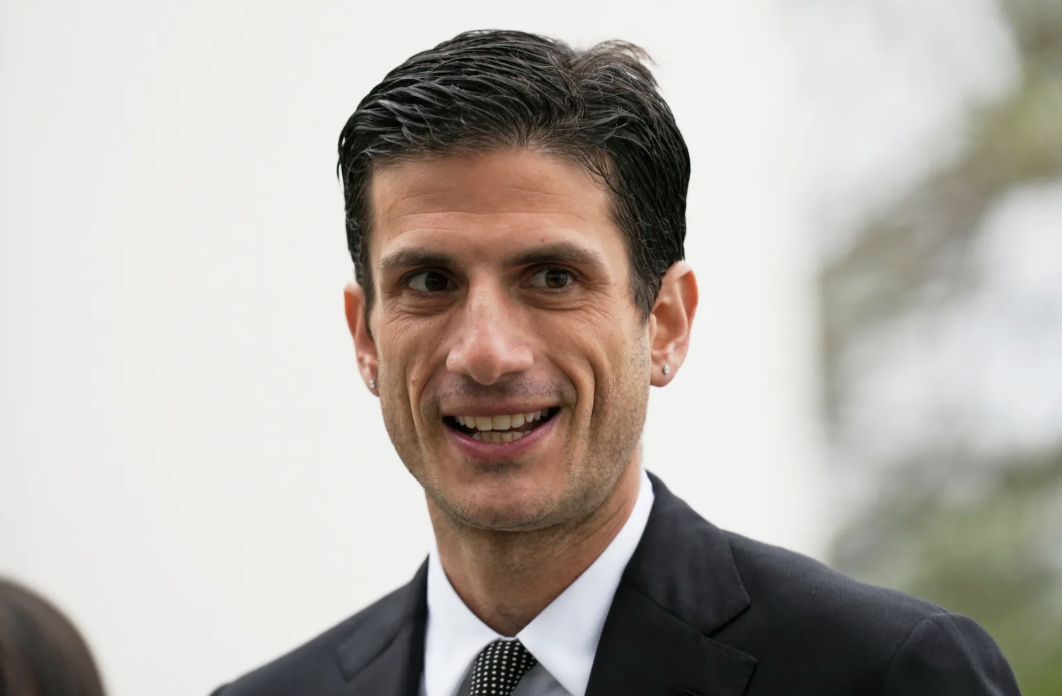
“I would continue funding the Iron Dome in Israel,” said 33-year-old Jack Schlossberg in a recent episode of the “I’ve Had It Podcast.” A political commentator and grandson of former President John F. Kennedy, Schlossberg is currently running as a Democrat for New York’s 12th district. His campaign aims to bring a new generation to the forefront of politics, emphasizing the need to go against the longstanding, though disappointing, Democratic leadership of the past decade. However, his outspoken support for the Iron Dome—a missile defense system heavily funded by the U.S.—has clashed with this image.
So far, this messaging, combined with his eccentric social media presence and serious political nepotism, is working. In a March 2026 survey conducted by Hart Research Associates, Schlossberg led with 22% of voters reporting they would vote for him, though 28% remained undecided. While updated polling data for District 12 after Schlossberg’s comments has yet to be released, young voters have taken to Schlossberg’s social channels to express their disappointment in their candidate’s stance.
“Thought you wouldn’t be a corporate dem yet here you are,” commented one user. Another account said, “No vote from me. You lost me.” With such a large portion of voters still undecided, it’s difficult to fully quantify how Schlossberg’s comments will substantially impact his campaign. This recent scandal is representative of a recent, recurring trend in politics: a young, promising, Gen-Z-backed candidate is idolized, only to eventually fall short of their promises.
Schlossberg’s entire campaign narrative was built on leading a new generation, dismantling old ideologies, and creating space for young voices. Specifically, he’s expressed his opposition to SuperPACs—political action committees that privately raise money for political candidates—and their involvement with elections. Yet his oppositional stance is difficult to believe, given that he’s accepted major support from the J Street Action Fund, a pro-Israel SuperPAC that recently announced $3 million in funding for PAC-backed midterm candidates, with Schlossberg included in this slate. While there may be trouble in paradise for this political relationship—J Street is, ironically, opposed to the Iron Dome and its U.S.-sanctioned funding—Schlossberg’s affiliations point to a larger disconnect between his messaging and his actions.
People’s reactions to Schlossberg’s stance shouldn’t come as a surprise. After all, he’s a hopeful candidate, and his campaign’s focus on generational change resonates with a voter group that has undergone a decade of outdated, tone-deaf politics. However, It wasn’t just the campaign messaging; it was how he delivered it. Few candidates can say they garnered their audience through a digital footprint as unique as his—one of his first viral TikToks was a clip of him tumbling on a ripstick reciting a Lord Byron poem. Through this absurdity, Schlossberg captured the attention of young, chronically online voters and, from there, created a political image built on progress.
But with his promises and digital appeal came an urge to put him on a pedestal. Between his familial ties to America’s most beloved political dynasty and his fresh approach to the stale landscape of American politics, Schlossberg, like many youth-oriented politicians, represented a political shift that Gen Z has desperately craved. This urge to idolize our political constituents isn’t new—the current administration is a masterclass in this—but it’s a recurring phenomenon that muddles our views as voters and robs our candidates of accountability for their actions.
Both sides of the political spectrum have fallen victim to this, and with the ease of sensationalizing political figures through social media, it’s tempting to treat politicians as celebrities rather than representatives indebted to the public good. When we boundlessly revere our politicians, their poor decision-making, controversial stances, or inconsistent platforms go unnoticed, and we risk the consequences of blind faith.
Schlossberg’s comments are too recent to fully gauge the ramifications for his campaign, though the outspoken dissent on social media hints at the general attitude of his younger voter base. When a figure like Schlossberg cultivates a tight-knit online community with his audience and becomes idolized, faults in his campaign, such as this, are felt more keenly, as they go against the initial image that drew people in. His campaign suffers, his voter base is let down, and ultimately, no one truly benefits.
Regardless of where his team decides to take his further positioning on Israel, Schlossberg is another case in a long line of online sensationalism and how political idolization often ends in a lose-lose scenario. If we want to maintain full transparency in political campaigns to prevent let-downs like these, we need to stop treating our politicians like celebrities and acknowledge them for what they truly are: representatives of the public good.
***
This article was edited by Sofia Downes.
 Luke Helmholz
  Gavin O'Sullivan
  Madelyn Marcisz