
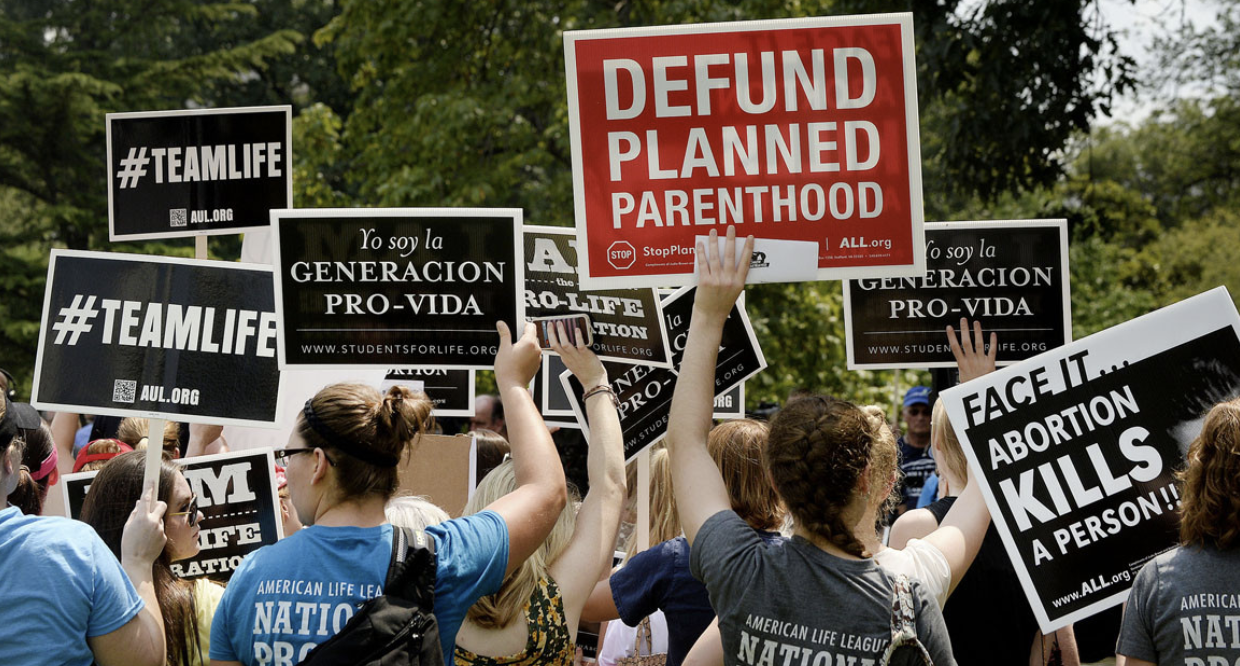
Photo via POLITICO
***
Last year, Trump’s “One Big Beautiful Bill” (OBBB) cut Planned Parenthood’s main source of federal funding for one year, granting anti-abortion extremists one of their top priorities. With the one-year ban inching closer to expiration, the same political leaders who voted for the OBBB are stuck in a bind of their own making: steering away from extremist values or undermining the reality that most American constituents do not want Planned Parenthood defunded.
The real dilemma is this: if Congress does nothing before the July deadline, millions in Medicare funding for Planned Parenthood will automatically bring back non-abortion services (i,e., birth control, STI testing, cancer screenings) to the constituents who need it. However, anti-abortion extremists are calling this a “massive taxpayer windfall,” demanding that Republican leadership enforce a longer ban, possibly 10 years or more. As the midterms come up, it looks like the GOP restoring Planned Parenthood funding risks less support from the Republican base, while not restoring this funding risks backlash from swing/independent voters and faltering Republicans who feel that this is an attack on basic healthcare.
We’ve seen this pressure campaign unfolding in public since mid-April, when Notus reported that anti-abortion leaders are treating the upcoming reconciliation funding bill about Trump’s immigration agenda as their last chance to “effectively defund Planned Parenthood for longer.” The original plan was a 10-year funding ban, but because the Senate ruled this was too high for the reconciliation budget, they settled for one year. This one-year effect already caused a multitude of clinic closures and heightened tension in the pro-choice/anti-choice debate, but these advocates are persistent and claim that anything less than a decade-long extension in our upcoming bill would be a betrayal of original promises.
Many outside groups have also involved themselves in the conversation. In a March 2026 statement, Susan B. Anthony Pro-Life America shamed the Trump-Vance administration for federal money to reach Planned Parenthood through the Title X family planning program, calling it an “inexplicable slap in the face to the pro‑life GOP base.” Their polling indicated strong Republican support, with 75% Republican base voters supporting Planned Parenthood defunding, and 33% claiming they’d be less enthusiastic about voting Republican if the party “abandons pro-life policies.” Later, on FOX News, Mike Pence warned voters of the upcoming July 4th deadline, stating that if Congress fails to act, “Planned Parenthood will celebrate America’s 250th birthday with taxpayer funding” and telling Americans they “must deliver for pro-life Americans.”
Although this is just one side of the movement, on the other side lies the rest of the country. Since 2015, the Pew Research Center has determined that a solid majority of Americans, especially women and younger voters, opposed eliminating federal funding for Planned Parenthood. More recent Democratic vs. Republican debates have reinforced a pattern that’s become visible to American voters: When Republicans bring government shutdowns and premium spikes on Planned Parenthood, it tends to steer moderates towards the clear messaging from Democrats.
This tension is especially spotlighted in the Senate. In the latest vote on the budget blueprint, Republicans narrowly defeated an amendment by Sen. Josh Hawley that would have extended the defunding law through 2035. We’ve seen in the past how moderate Republicans from swing states, such as Susan Collins and Lisa Murkowski, have broken from their party to preserve Planned Parenthood funding when the ceiling gets too high. Yet still, GOP leaders are now trying to reassure anti-abortion groups that they’ll find a way to keep the funding closed, whether it be through the reconciliation bill, creative tax penalties, a future “Phase Two,” etc. But honestly, I don’t think there’s any way they can effectively do this without segregating their own coalition.
But the true lived experiences affected by these budget cuts are the ones that are barely considered in these political debates. The 2025 GOP budget had already taken approximately $880 billion from Medicaid funding to indirectly defund Planned Parenthood, further undermining low-income patients’ access to basic care. Since Planned Parenthood clinics lost Medicaid funding, they didn’t just lose the ability to provide abortions, but also had to cut back on services like Pap tests and contraception, leaving patients to either travel further or go without basic healthcare. While Republicans look at restored funding like a “massive taxpayer windfall,” it truly is just giving back the basic healthcare necessities that were taken in the first place.
To me, all this chaos is truly a strategic move by the GOP. They choose to pass a one-year policy rather than something permanent, they trumpet this victory loudly and they continue to leverage this success to demand more extreme measures down the line. This strategy keeps anti-abortion extremists on the hook while leaving constant uncertainty in the minds of millions of healthcare patients. More visually, it feeds into the Republican argumentative rhetoric that whatever they win is never enough.
But ultimately, it’s clear that the Republican GOP wanted to make Planned Parenthood a permanent campaign issue—and they did. The problem now is for them to sit on the ticking time bomb they built, having to choose whether Americans’ access to healthcare should depend on internal GOP debates, or if they should truly give value to their constituents’ necessities.
***
This article was edited by Elaina Gibson.
 Luke Helmholz
  Gavin O'Sullivan
  Madelyn Marcisz