
Photo via People Magazine
***
In an age of political uncertainty and economic instability, nostalgia has become a form of reconciliation and self-soothing. From the resurgence of Y2K fashion to the lace-trimmed aprons of the “tradwife” aesthetic, the past has been resurrected not as memory but as refuge. Fashion’s obsession with revival reflects a deeper political impulse: the desire and search for emotional security in familiar aesthetics. As the future becomes increasingly unpredictable, the past offers comfort and refuge. Yet, this collective longing is not neutral. The cultural addiction to nostalgia mirrors broader ideological changes: in the same way nationalism often romanticizes a “lost greatness,” consumers wear the illusion of stability. Nostalgia, both aesthetic and political, has become a coping mechanism in the face of collective anxiety, a sentimental retreat that risks limiting progress.
Fashion operates as both a mirror and a mask. Recently, it has been fixated on the 1900s and early 2000s aesthetic, a time wrapped with low-rise pants, baggy jeans, and sportswear, reflecting a collective yearning for the pre-crisis decades. This revival coincides with today’s instability, marked by the pandemic lockdown, economic uncertainty, and climate anxiety. For the new generation, fashion has become a reconstruction of an era before the present political chaos and environmental collapse.
In this sense, fashion functions as a nonverbal coping mechanism. The emergence of various aesthetics and trends–cottagecore, soft girl, streetwear, clean girl–can be viewed as a form of escapism, allowing followers to opt out of the present. This pattern is less about appearance than emotional regulation. Together, these aesthetics work to evoke trust and ease silent panic.
But this longing for the past creates a subtle fantasy of predictability, a utopia distant from the current political climate. In recycling old styles and lifestyles, consumers relive an idealized world of stability. In this way, when fashion repeats, it signals not innovation but paralysis: a society uncertain of what the future holds, turning instead to the comfort of what it once was. In this way, nostalgia becomes political because it reflects society’s present collective fatigue.
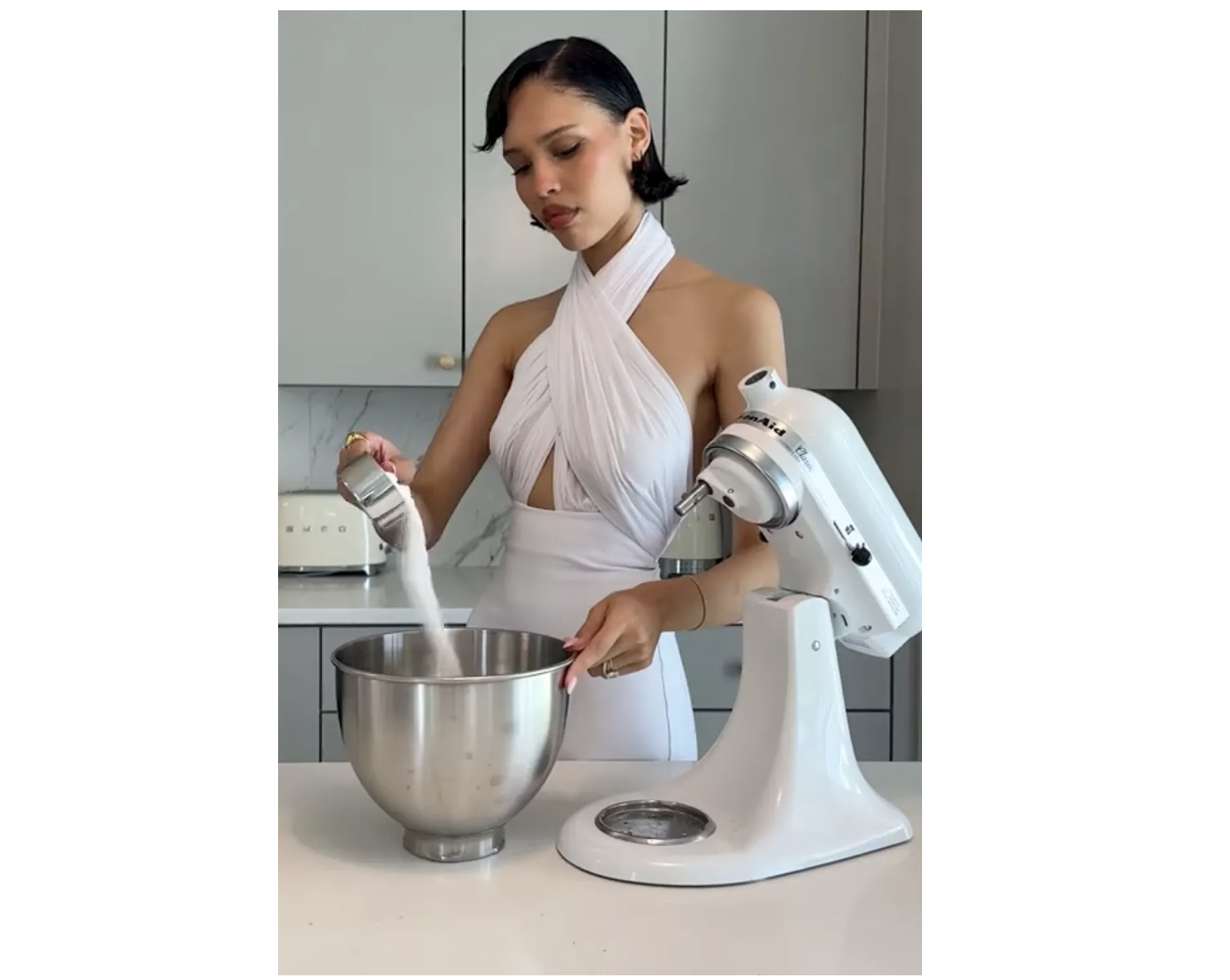
To that extent, the “tradwife” aesthetic manifests nostalgia through order and submission. “Tradwives,” or traditional wives, represent a hyper-feminine, submissive, domesticated ideal, with homesteading, flowing skirts, and aprons. This aesthetic is depicted through celebrating obedience, motherhood, and an emphasis on religious virtue, typically Christian beliefs. The movement embraces traditional gender roles and identities with stay-at-home mothers and homemakers. However, this lifestyle is more than an aesthetic; it carries deep ideological roots. The “tradwife” lifestyle present on social media platforms is saturated with themes of colonial nostalgia and longing for a past, structured world defined by clear hierarchies. The movement echoes colonial themes of rugged individualism and a distrust of government, romanticizing a form of femininity that is “white, maternal, self-sufficient, and skeptical of the government.” The supposed “return to femininity” discourse embodies a broader project, an ideal that moral order can be restored through fashion and gender conformity.
However, the tradwife phenomenon is not monolithic. Some influencers frame it as empowerment, an example of “choice feminism” in a world that undervalues domestic labor and overvalues joining the workforce. Yet, this aesthetic of curated homes and modest fashion is conditioned by privilege, relying on forgetting the women who never had the choice between staying home or leaving. Ultimately, the tradwife aesthetic reveals a longing for stability and comfort, while mistaking regression for restoration. By turning femininity into costume, the tradwife trend transforms political anxiety into a ritual that rehearses a past, lost order instead of finding solace in the present.
The political sphere mirrors fashion’s sentimental retreat. “Make America Great Again,” perhaps the most potent slogan of 21st-century politics, breeds nostalgia into a mobilizing ideology. It promised a return to an imagined moral and cultural purity. Referred to as collective nostalgia, it describes a longing for a past shared by a group identity, even if that past never existed or may not have been personally experienced but known indirectly. While personal nostalgia comforts the self, collective nostalgia comforts the nation. This form of national nostalgia is mostly experienced by people on the political right. Conservatives, driven by the belief that society is in decline, view the past as “a time of lost greatness.” In fact, the feeling is associated with strongly positive attitudes toward President Donald Trump “among those high in racial prejudice.” Through this attitude, nostalgia becomes a justification for exclusion, racism, and sexism in the effort to preserve what once was.
National nostalgia further strengthens autochthony beliefs, the belief that only those native or “from the soil” truly belong. Such nostalgia is correlated with xenophobia and Islamophobia, particularly in Western nations confronting immigration issues. The rhetoric of “the good old days” becomes opposition to multiculturalism, diversity, and minorities, turning national nostalgia into support for nativist sentiment.
Yet, nostalgia is not exclusive to the political right. Following the 2016 U.S. presidential election, “Obama nostalgia” became vibrant on social media, a longing for the days of former U.S. President Barack Obama. This movement was an emotional refuge for those grieving political loss, both conservative and liberal. Here, the past was used to make sense of the present, to reconcile with the impending future. Whether right or left politically, nostalgia comforts by erasing feelings of uncertainty and instability. It is a political aesthetic that dulls collective pain while simultaneously dividing people socially, even through fashion.
The parallels between fashion nostalgia and political nostalgia are clear. Both idealize an imagined “simpler” past, both thrive on chaos, and both make fear into an aesthetic. As “Make America Great Again” hats symbolize a desire for moral clarity, Y2K baby tees and miniskirts symbolize a yearning for carefree optimism. In both, the past is not recreated but reinvented based on an idea of stability in unstable times.
Cultural recycling is never apolitical. When societies rebirth old trends or influencers mimic 1950s housewife lifestyles, they participate in a larger ideological resurrection. The act of repetition makes it seem as though all we can do is repackage what has already been done. In this way, nostalgia facilitates loops of remembrance, not progressing but decaying.
Our cultural addiction to nostalgia reveals a profound discomfort with the present. In fashion, it manifests as “retro” aesthetics and domesticity. In politics, it shows up in populist and nationalist rhetoric. Both serve the same purpose: to soothe collective anxiety. But this comfort is deceptive. It distorts history and narrows our imagination. As long as our politics remain unstable, we will keep finding comfort not in progress, but in polyester and cotton. The question is not whether nostalgia will fade but whether we can learn to live with the present and future instead of hiding from them. To move forward, we must resist the sentimental yearning for the past and envision new aesthetics, new orders, new ways. Only once this is found can we design a future that feels, once again, possible.
***
This article was edited by Griffin Straus.
 Lara Ejzak
  Nadia Garriga
  Andrew Kravatz