
Photo Credit: CNN
***
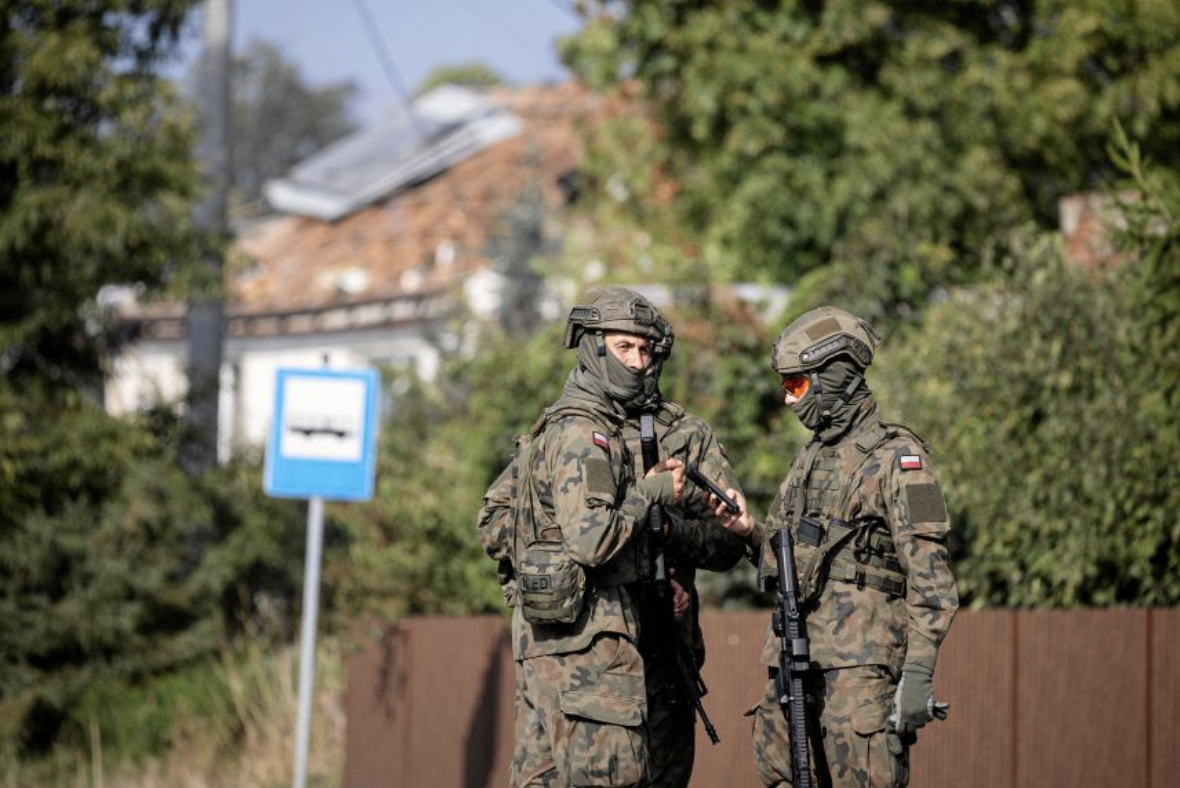
On the night of September 9th, 2025, Poland detected a wave of mysterious aircrafts entering its airspace. Estimates placed between 19 and 23 drones entering from the East, via Belarus and Ukraine, during an intense incursion lasting into the early hours of the morning.
Polish and North Atlantic Treaty Organization (NATO) air forces scrambled to respond when these drones breached Polish airspace. Up to four drones were confirmed downed. Airports across Poland were temporarily closed due to the incident. Responding to what it called a “direct threat,” the Polish Government formally requested a meeting under NATO’s Article 4, the mechanism that allows alliance members to convene when one believes its security, territorial integrity, or political independence is threatened.
On September 19, NATO member Estonia reported that three Russian MiG-31 fighter jets violated its airspace for twelve minutes in the Gulf of Finland. Estonia’s authorities said the Russian aircraft entered without flight plans, had communication equipment turned off, and ignored warnings relayed by NATO aircraft. Italian F-35s, operating as part of NATO’s Baltic Air Mission, scrambled to intercept. Estonia’s Foreign and Defense Ministers described the incursion as “unprecedentedly brazen.” Like Poland, Estonia has invoked Article 4 consultations, reflecting concern among NATO members over airspace violations and the possibility of more direct aggressive Russian behaviour.
Moscow denies having violated Estonia’s airspace in the incident, claiming they flew over international waters in the Baltic Sea on a normal flight path from Karelia to Russia’s Kaliningrad Oblast. Estonia and NATO dispute the account, citing visual confirmation, radar tracking, and warning signals given to the Russian aircraft. The drone incursion over Poland, coupled with multiple different airspace violations, is seen as a test of NATO’s resolve and readiness, potentially part of a broader Russian strategy of pressure and probing of NATO’s ability and response.
These events have caused both Poland and Estonia to trigger NATO’s Article 4. It is important to clarify what that means and how it differs from Article 5, often called the collective defense clause.
Article 4 of the NATO treaty states that any member may request consultations when it believes its “territorial integrity, political independence or security” is threatened. These meetings are political: they create a forum for allies to discuss, share information, coordinate diplomatic or defensive responses, and determine whether further action is needed.
Article 5, by contrast, is the mutual defense provision: an armed attack against one or more members is considered an attack against all. When Article 5 is invoked, NATO members are committed to mutual defense, which may include military action. It has only been invoked once, after the September 11, 2001, attacks in the U.S. So far, neither Poland nor Estonia has claimed that an attack has been launched against it that would meet the threshold for Article 5.
For Poland, shooting down drones on its territory marked a rare direct military engagement of Russian assets with NATO assistance. For Estonia, the jet incursion represents an obvious breach of their national sovereignty. In both cases, foreign ministers and defence officials have stated that there is a need for stronger deterrents. They want more air defense systems, improved early detection, faster reaction times, and perhaps even expanded NATO air policing. Whether these actions provoke a strong response remains to be seen. Moscow’s denials, while consistent, do little to reduce concerns in NATO countries. The alliance now faces a difficult balancing act, responding strongly enough to deter further incursions, while avoiding being drawn into full-scale military conflict with the Kremlin.
The recent Russian drone activity over Poland and the fighter-jet incursion into Estonia’s airspace have pushed NATO into action, forcing two members to trigger the alliance’s Article 4. While not yet at the threshold of collective defence under Article 5, these events signal a serious escalation to the ongoing tension between Russia and the Alliance. Whether or not NATO responds, and in what capacity, will create important precedents for Eastern Europe and their ability to respond to Russian aggression in the coming years. Russia may even find the old adage to be true: play stupid games, win stupid prizes.
***
This article was edited by Naba Syed and Sarah Davey.
 John Virgil Aton
  Lara Ejzak
  Nadia Garriga