
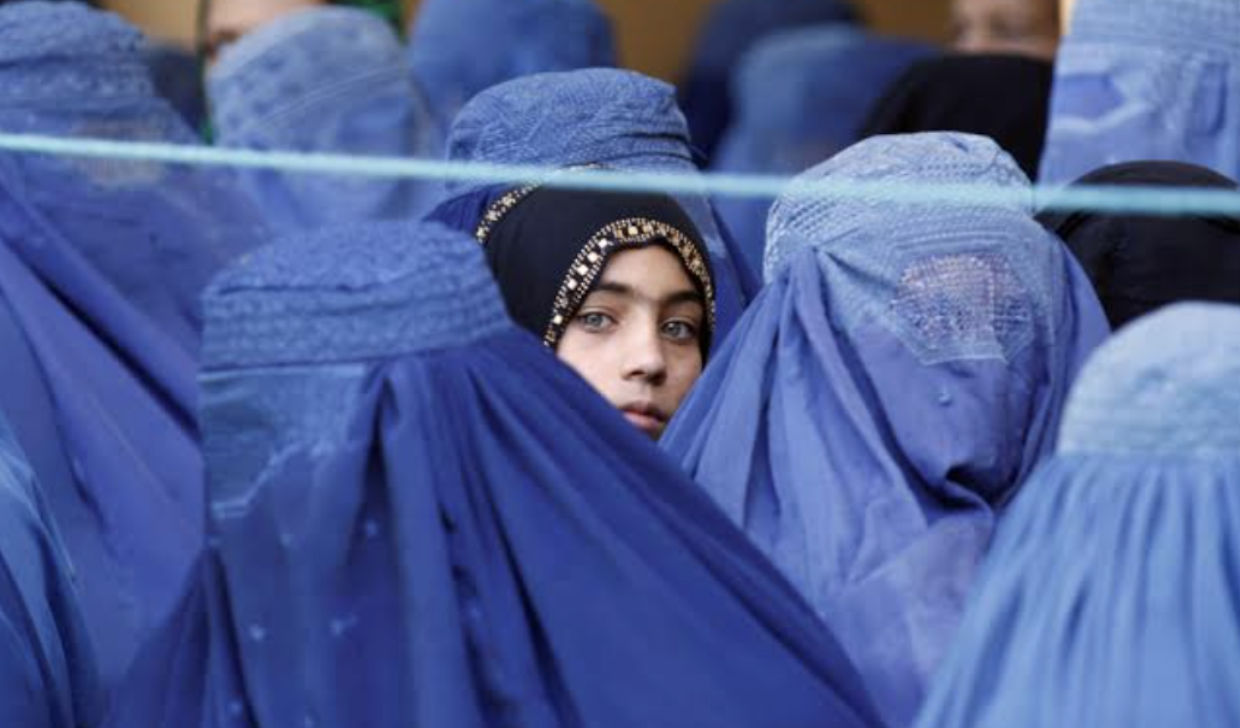
Image via PBS
***
A few months ago, a viral TikTok trend emerged in which participants (typically girls) would show a picture of themselves and then, to the words, “And why across the world, there is a woman just like me, with the same abilities and the same desire, same work ethic and love for her family… only she sits in a refugee camp, and she has no voice,” and then show a picture of a woman in Afghanistan or the Congo to “advocate” for and raise awareness of the oppression women in these countries face. However, this trend clearly illustrates the divide between the Global North and the Global South in feminism and highlights the lack of a postcolonial lens used by feminists from the Global North when examining women in the Global South. This often leads their activism to be rooted in white saviorism and, more often than not, causes a divide between the transnational feminist movements around the globe.
This divide between the Global North and the Global South can be traced back to the origins of transnational feminism, which began in the mid- to late 1800s as globalization accelerated, making the world more socially interconnected and allowing ideas and movements to appear on a world stage like never before. The first instance of a transnational feminist movement can be traced back to 1868, in Geneva, Switzerland, where the Association Internationale des Femmes was founded, rooted in the promotion of a ‘universal sisterhood’: The position of women anywhere affects the position of women everywhere. After this, more organizations and member groups were created worldwide. In 1904, representatives from England, Australia, Canada, Norway, Sweden, Germany, Russia, Turkey, Chile, and the United States founded the International Women’s Suffrage Alliance (IWSA). To reach a wider audience, IWSA representatives conducted tours in Latin America and Asia to visit additional countries and establish chapters in different regions. From here, several more groups formed, generally united by the idea that women should organize across national borders, viewing international cooperation as a necessary means to achieve their goals. Then, in 1915, as World War I broke out, more than 1,000 women from various countries gathered at the International Congress of Women in The Hague to develop a comprehensive plan to prevent war and present it to heads of state.
However, this only tells a partial story, as this history largely leaves ethnic groups, non-Western countries, and women from these regions out of the picture. Mass immigration during this period brought a multitude of women from different nations to the United States, who introduced anti-capitalist feminist viewpoints and helped shape more nuanced perspectives. Broadening the lens to include a postcolonial viewpoint brings issues of imperialism and racism to the forefront, which deepen and divide the relationship between the feminist movements in the Global North and Global South. The idea of a universal sisterhood also becomes more complicated. Many of the larger early transnational feminist movements were pioneered by white, elite Protestant European women from the Global North. Their viewpoints reflected colonial assumptions and hierarchical thinking, which they used to “other” different groups of women and advance their feminism through a Eurocentric lens. This aligns with the ideas of the color line and core-periphery structure that would come to label the world order in the years to come.
Alongside this one-sided framework, a social divide emerged between feminists in the Global North and those in the Global South. The post-World War II era is when this divide becomes evident. The creation of the United Nations once again transformed the structure of transnational feminist groups. The decolonization process and the collapse of the Soviet bloc drastically transformed global relations and intensified neoliberal globalization. UN Non-Governmental Organization conferences brought women together for the first time in a global forum where they could actually meet and interact. This is when the idea of a ‘universal sisterhood’ began to be heavily critiqued by the Global South. During the decolonization period, there was considerable contention over what should be included in feminist liberation, which intersections were taken into account and which were not. Should colonialism be included in a woman’s fight for liberation? Should LGBTQ+ rights be thought about? For example, in 1975 in Copenhagen, women from Africa and the Middle East resisted Western women’s campaigns against clitoridectomy and similar practices, which they portrayed as human rights violations. They argued that First World women’s promotion of the issue and characterization of the victims of such practices only reestablished a hierarchical relationship. This perspective takes into account the existing global framework, which thinkers of the Global North did not consider because they actively benefit from it. The idea that feminists from the Global North are saviors of women from the Global South is also prevalent here. In turn, this paints the women from the Global South as inferior and as victims of their circumstances, rather than addressing the real reason for their situation: years of colonialism and imperialism.
A modern example of this phenomenon is the attitudes of feminists from the Global North toward Afghanistan. Currently, women in Afghanistan are living under the oppressive rule of the taliban, where they are being stripped of their fundamental rights. They are banned from attending schools that exceed the primary level of education and face severe restrictions on their movement throughout the country as well.
The approach feminists from the Global North have taken is usually rooted in a savior complex and paints the women in the country as passive victims and in need of Western military intervention. More specifically, during the 2001 invasion, then First Lady Laura Bush supported the war on terror by saying that it was a “fight for the rights and dignity of women.” In reality, this was only a tool of instrumentalization in order to get the U.S. public to be complacent about the invasion of the country, and real feminist ideals were not at the forefront of this effort. Additionally, for two decades after the invasion, many Global North donors funded top-down aid programs in the area, including gender equality initiatives, workshops, and legal frameworks within Kabul’s secure zones. This model relied heavily on foreign aid and Western military intervention, and when the US withdrew in 2021, these institutional structures collapsed almost instantly because they were not deeply rooted in local communities. Furthermore, the rhetoric surrounding the burqa and forced covering as the vital symbol of Afghan women’s victimhood reduced the complex sociopolitical struggles of Afghan women down to a single piece of clothing, ignored the diverse realities of women in the area, and imposed a white savior/liberator complex onto the issue.
In comparison, feminists from the Global South would provide a different perspective and set of solutions to this issue. For example, in 1977, the Revolutionary Association of the Women of Afghanistan was founded and fought against the Soviet occupation, fundamentalist Mujahideen, the Taliban, and the U.S. occupation, showing that women were not passive victims but political fighters in their own movement. Additionally, they directly critique the white savior complex that is usually included in conversations surrounding women in Afghanistan as needing to be saved by Western powers. The focus on Afghan women served to distract from the historical and geopolitical roles Western powers played in destabilizing the region in the first place, reflecting an anti-imperialist viewpoint. This is one of the biggest divides between the two blocs, and much of the history of oppression in the region is not addressed by the Global North because it was perpetrated by the Global North. During the Cold War, the U.S. funded Afghanistan with weapons in order to fight the Soviet bloc. Once the Soviets left the area, a devastating power vacuum was created, resulting in a multi-faction civil war and the eventual rise of the Taliban. This context is never really thought about when feminists from the Global North talk about women in Afghanistan, creating a significant disconnect between the two groups.
Ultimately, feminism cannot be truly universal if it ignores the historical and political forces that shape women’s oppression across the globe. The experiences of Afghan women demonstrate that liberation cannot be imposed by Western powers, nor can it be reduced to a narrative of helpless victims in need of saving. Instead, transnational feminism must move beyond a white savior mentality and recognize the agency, voices, and resistance of women in the Global South. True solidarity requires more than raising awareness; it requires confronting the imperialism and colonialism that have shaped these inequalities and listening to the women who are fighting them firsthand.
***
This article was edited by Emmerson Oskay and Karol Quinde.
 Cooper Toland
 Lara Ejzak
 Jonathan Kho