
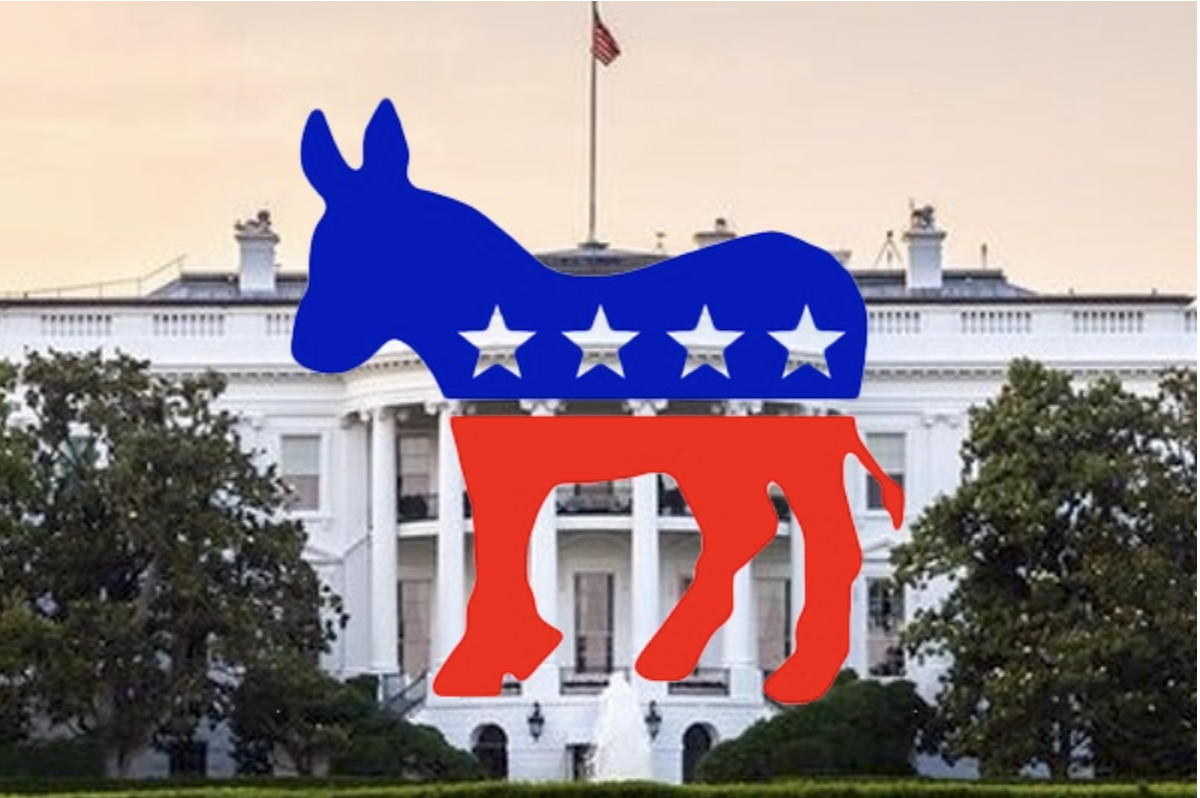
Photo via History News Network
***
The Democratic Party was once proudly viewed as the voice of the average working American, the union builder, the wage raiser, and the defender of the middle class. But in these unprecedented times of polarization, that identity has quietly faded. In the 2024 presidential election, the working class proved to be tuning out the left as 56 percent voted for Donald Trump, while only 43 percent voted for Kamala Harris. Some have drifted to the Republican Party, while many others have drifted away from both, convinced that neither side of the aisle truly speaks for them anymore.
This shift isn’t solely a result of economic hardship, but also a matter of identity, a sense of belonging, and a perception. To many, today’s politics often feels like a contest to prove greater moral high ground. Democrats, in particular, have built their brand around social justice, equality, and human rights. This messaging, while crucial, alone is insufficient for working-class voters, whose top priority is often making ends meet.
Now, it is easy to become frustrated and dismiss unsupportive voters, but the reality is that Democrats can’t win elections without their support. So, the left should dig deep to understand where the lack of support is coming from and what needs to be done to win back these voters rather than treating them as a lost cause.
Past elections have shown that Democrats cannot rely solely on empathy. When the average American is juggling rent, inflation, and job insecurity, abstract appeals to global justice can sound distant, even elitist.
Thus, attitudes toward the Democratic Party have shifted, with a growing belief that their priorities are on “progress for others” rather than “stability for me.” A Reuters report from 2024 found that independents made up 34 percent of voters, surpassing Democrats for the first time.
This erosion of trust among young Americans may be the party’s most overlooked challenge. A Vox analysis titled “There Are Two Gen Zs” found that between 2020 and 2024, Republican support among Gen Z rose noticeably. There is also a growing divide within the generation itself, as older Gen Z voters, ages 25–29, remain largely progressive. In comparison, younger Gen Z voters, those under 25, are more conservative and skeptical of the left.
Online spaces have deepened this divide. Social media influencers like Andrew Tate have turned male frustration into a movement. To combat this, Democrats need to modernize their campaign strategies and meet younger Gen Z men where they are in online spaces and build competing influence against right-wing podcasters. These voices have built powerful emotional connections with young men, the kind of connection the Democratic Party has largely failed to match. They frame Democrats as out-of-touch and anti-men. Meanwhile, Democrats have been unable to counter this with a confident, relatable economic story.
The ultimate paradox is that, by nearly every measure, Democrats have managed the economy better than Republicans. The Economic Policy Institute reports that real GDP growth under Democratic presidents has averaged 3.8 percent, compared with 2.6 percent under Republicans, about 1.2 percentage points faster. Job creation has been more than twice as high. According to the Joint Economic Committee, under Democratic presidencies, the stock market performs better, unemployment rates are lower, and national debt grows more slowly.
So if Democrats are objectively better for the economy, why do so many voters still trust Republicans more on money, jobs, and growth?
The answer lies in communication. Republicans speak the language of strength while Democrats speak the language of sympathy. When Republicans talk about the economy, they talk to the individual and the values of freedom, hard work, and winning. It feels personal. When Democrats talk about the economy, they reach for charts, statistics, and equity. It feels like homework Americans don’t want to do.
Even when Democrats achieve real gains, historic job growth, rising wages, and infrastructure investment, they fail to brand them with emotional resonance. Instead, they pivot back to social issues that, while worthy, don’t move undecided or struggling voters. It’s not that people reject progress; they just want progress that feels tangible and doesn’t risk their own benefits.
If Democrats want to end the Trump-era red wave, they must reclaim the economic narrative that built the party in the first place. Emphasizing the goal to make sure paychecks go farther lands far better than a speech about economic equity. People don’t want to feel like they’re working to death, while others don’t have to work as hard and get the same benefits.
Democrats also need to reclaim the value of hard work and connect their messages of equality to creating prosperity for all. The message should shift from “we’re helping others,” to “we’re all better off when we succeed together.” When women and minorities earn more, families spend more, and the economy grows for everyone.
There is also a need to brand the wins. Every success should be bragged about. Republicans overemphasize every victory. Democrats should compete with this and ensure their accomplishments are known to all.
Democrats also must drop the complicated policy talk and focus on the story. What made Donald Trump an appealing candidate was that he didn’t talk like every other politician. Trump appealed not through policy detail but through persona, a leader for those who felt forgotten. Studies show that most voters don’t care about policies as much as they do the personality of the candidate and their trust in them.
A 2023 study by Filipe Falcão and colleagues found that voting behavior in Western democracies is now driven more by personality than policy. The research shows that politics today is less about policy and more about personality. Voters respond to how a candidate makes them feel, which in many ways has turned elections into personality contests. Americans want leaders who are confident yet down-to-earth, intelligent yet personable.
Democrats lose traction when their speeches sound like every other politically correct politician rather than grounded advocates for the average American’s struggles.
Republicans have mastered the art of the sound bite. Their success comes from framing short, visceral phrases that signal identity and confidence: “Make America Great Again.” “America First.” These phrases don’t entail specific policy plans; they define belonging and purpose. Republican messaging relies on repetition, simplicity, and moral contrast. The Republican narrative is meant to spark passion in voters and fear of the other side. Democrats, by contrast, tend to lead with nuance and moral high-ground framing, which too often fails to cut through the noise of the Republicans’ slander against them.
The Democrats have allowed Republicans to dominate the discussion in defining who they are, building a false image of being weak, illogical, and out of touch with reality. Many people aren’t leaving the Democrats because they necessarily hate social progress; they’re leaving because they don’t feel included in it. Many who have turned independent and moderate just want stability and to feel represented in a political climate of polarized chaos.
Since the rise of Trump, Republicans have shown that they do not play fair. Democrats cannot afford to stay on the defensive. They should lead with their strong economic record and make clear that Republican tax breaks for America’s wealthiest only deepen inequality. While the GOP has successfully branded Democrats as elitist, their own campaigns are fueled by billionaires and corporate tax cuts.
Zohran Mamdani, the mayor-elect of New York City, is a prime example of the marketing direction Democrats need to go next. While Republicans go low, Democrats must go high and choose strong spokespeople who brand themselves as authentic, unbought by corporate influence or AIPAC dollars, and eager to address everyday struggles. As Mamdani said, “No longer should we think about our political process as settling for the lesser of two evils. We can demand a greater good.” Democrats must regain trust and use the failures and lies of the Trump era to their advantage.
A progressive America, one that works for everyone, is not out of reach. It is a matter of rewriting the narrative and telling the story in a way that resonates and is believable.
Democrats already have a stronger economic record and practical policies. But until they start communicating success in terms that reach individual concerns, your bills, your job, your security, they’ll keep losing to a right-wing movement built on simple, confident storytelling.
The party that once built America’s middle class must remind voters it still fights for them. To win back the working class and the White House, Democrats need to reclaim their story and speak directly to the struggles that define everyday life.
***
This article was edited by Hayley Dunn.
 John Virgil Aton
  Stan Refermat
  David Tomanelli