
Image via Sortiz Raw
***
In the decades following World War II, amid economic disparities, hundreds of thousands of Puerto Ricans left our homeland in search of better opportunities in the United States, many dreaming of returning someday. I can only imagine that many of them hoped future generations would not have to make the same decision. Yet several generations later, on January 7, 2026, I left Puerto Rico for New York City, and I haven’t been back since. Since moving, I’ve been asked the same question countless times: “Why would you leave Puerto Rico?” Every time, I feel a pit in my stomach because while they picture paradise, what flashes through my mind are the power outages, my parents not having access to running water, and the rising cost of living.
I don’t blame them for asking. I love Puerto Rico for many of the same reasons the world has grown to love it as well. But while the world enjoys our beaches and dances to our music, the struggles of the people who call Puerto Rico home rarely receive the same attention. As our culture gains international recognition, the island continues to face failing infrastructure, limited opportunities, and development policies such as Act 60. It makes me wonder who is really benefiting from Puerto Rico’s growing popularity, and what will be left of the island we know for future generations if the struggles of its people continue to go unheard.
According to the U.S. Energy Information Administration, Puerto Ricans experienced an average of 59 hours of power outages in 2025, including the influence of harsh weather conditions. Although Hurricane María exposed just how fragile the electrical system was in 2017, these problems existed long before it. Years of underinvestment, poor maintenance, and mounting debt had already weakened the grid. In 2021, LUMA Energy, a private company contracted to improve and maintain Puerto Rico’s electricity system, took over transmission and distribution operations, yet five years later, Puerto Ricans are still dealing with unreliable electricity.
And as if that weren’t enough, we are now being asked to pay even more for it. In October 2026, electricity rates increased by 18.5%, bringing the estimated monthly bill for a household using 800 kWh to $270.86. Meanwhile, the median annual household income in Puerto Rico was just $26,297 according to U.S. Census Bureau figures for 2020–2024. For a household earning that amount, a single electricity bill would account for roughly 12% of its monthly income. Increasingly, people have been required to invest more in a service they cannot rely on.
For someone visiting Puerto Rico, staying at a hotel or an Airbnb equipped with generators and water cisterns, these injustices go unnoticed. But that is not the reality for everyone living on the island. Not every family can afford a generator or has the means to store water during an outage. And with 26% of Puerto Rico’s population now over the age of 65, we also have to consider elderly residents who may not be physically able to collect water themselves or who may not have the money to prepare for these interruptions. These are basic necessities that many people in the United States can take for granted.
But electricity is not the only thing becoming harder to afford in Puerto Rico. For many Puerto Ricans, especially younger generations, even buying a home is becoming increasingly difficult. There are several reasons behind this, but one controversial policy worth discussing is Act 60, which offers significant tax benefits to qualifying investors who move to the island. The goal is to attract investment, and the city of Dorado is one example of the luxury housing market that has become increasingly attractive to wealthy outsiders. While Puerto Rico faces a shortage of newly built homes under $250,000, properties in Dorado Beach have been listed for as much as $40.5 million. A federal report also found that Act 60 investors who owned homes on the island in 2020 had properties valued at over $5 million on average.
These numbers show just how divided the housing market has become. In a 2026 survey, 74.1% of respondents favored prioritizing affordable housing for residents over tourism and foreign investment, compared with just 2.1% who preferred prioritizing the latter. To be clear, the dilemma is not that the government seeks to attract investment, but rather the kinds of developments being prioritized and the groups who benefit most from these laws. Young Puerto Rican professionals who want to stay and build families on the island are struggling to afford homes, even as Puerto Rico continues to be marketed as a “tax haven” for wealthy investors. If our government can create incentives for outsiders to make Puerto Rico their home, why aren’t we doing more to help locals build theirs?
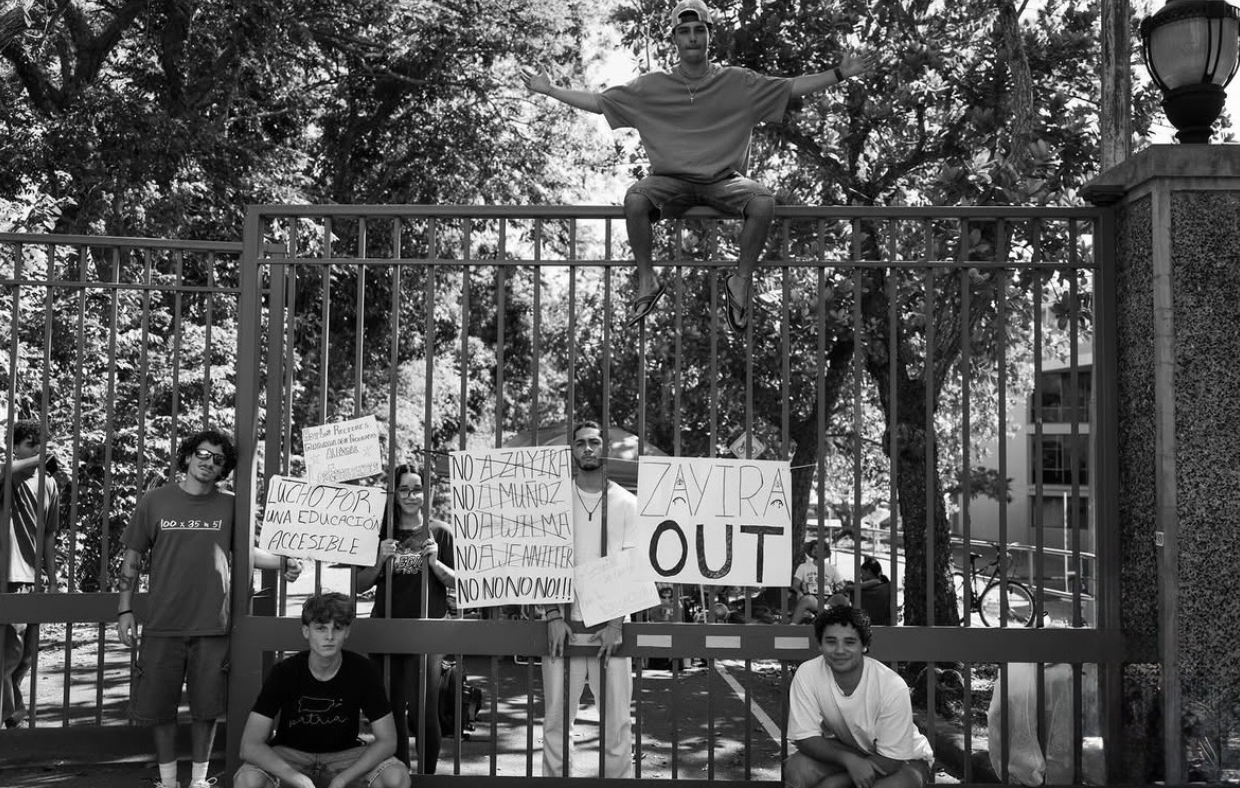
While the government offers tax incentives to attract new residents, another concern is whether we are doing enough to keep the people already here. One particularly prominent issue is the state of public education on the island. This past spring, students across all five University of Puerto Rico (UPR) campuses protested for over six weeks, demanding the resignation of UPR president Zayira Jordán Conde and sufficient funding for the university. Before transferring to Fordham, I attended the University of Puerto Rico Mayagüez, a part of a public university system that has long been a symbol of resistance and education for the people, defended by the people. The frustration is not with the students protesting. If anything, their willingness to fight to protect our public education is something to be proud of. What is frustrating is that they must fight for it in the first place.
And this uncertainty is part of a much larger problem. In 2024, approximately 38,500 people moved from Puerto Rico to the United States, including an estimated 8,754 adults aged 25 and older with at least a bachelor’s degree. Their departure has contributed to Puerto Rico’s struggles; thousands of professionals, specifically doctors, have left, leaving us with fewer medical professionals to care for an aging population. The protests alone do not explain why people leave, but when young Puerto Ricans face uncertainty in their education, limited career opportunities, and rising living costs, the reasons to stay become more complex.
The country’s recent popularity has brought economic opportunities that should not be overlooked. Evidently, tourism supports local businesses and creates jobs, while outside investment has the potential to contribute to the island’s development. And seeing Puerto Rican culture celebrated around the world is something worth being proud of. However, these benefits should not distract from the conditions that continue to make life difficult for residents. Economic growth should also be measured by whether Puerto Ricans can afford housing, rely on basic public services, and pursue careers without having to leave home. The question is not whether Puerto Rico should welcome visitors and investors, but whether its image as a paradise is overshadowing the realities of the people who live there.
Puerto Rico has never lacked something to offer the world. From our music and literature to our athletes, professionals, and nature, there are countless reasons to celebrate our island. But Puerto Rico deserves more than admiration; it deserves to be understood beyond the spoon-fed version of paradise it’s been portrayed as, including the struggles that threaten the future of the island’s economic and political stability. If our government can create incentives to attract wealthy investors, it should show that same commitment to making housing, education, and basic necessities accessible to the people. This is why international recognition should work as a tool to attract more attention to these realities, not overshadow them. Generations ago, our great-grandparents left hoping those who came after them would not have to make the same decision. Yet here we are, still leaving. Everyone loves Puerto Rico, but its future should depend on more than how much the world wants to experience our land and culture. It should depend on whether Puerto Ricans can afford to stay and preserve it for generations to come.
***
This article was edited by Mia Kirch and Anna Marin
 Sarah Olivia Sullivan
  Luke Helmholz
  Sidney Levitt