
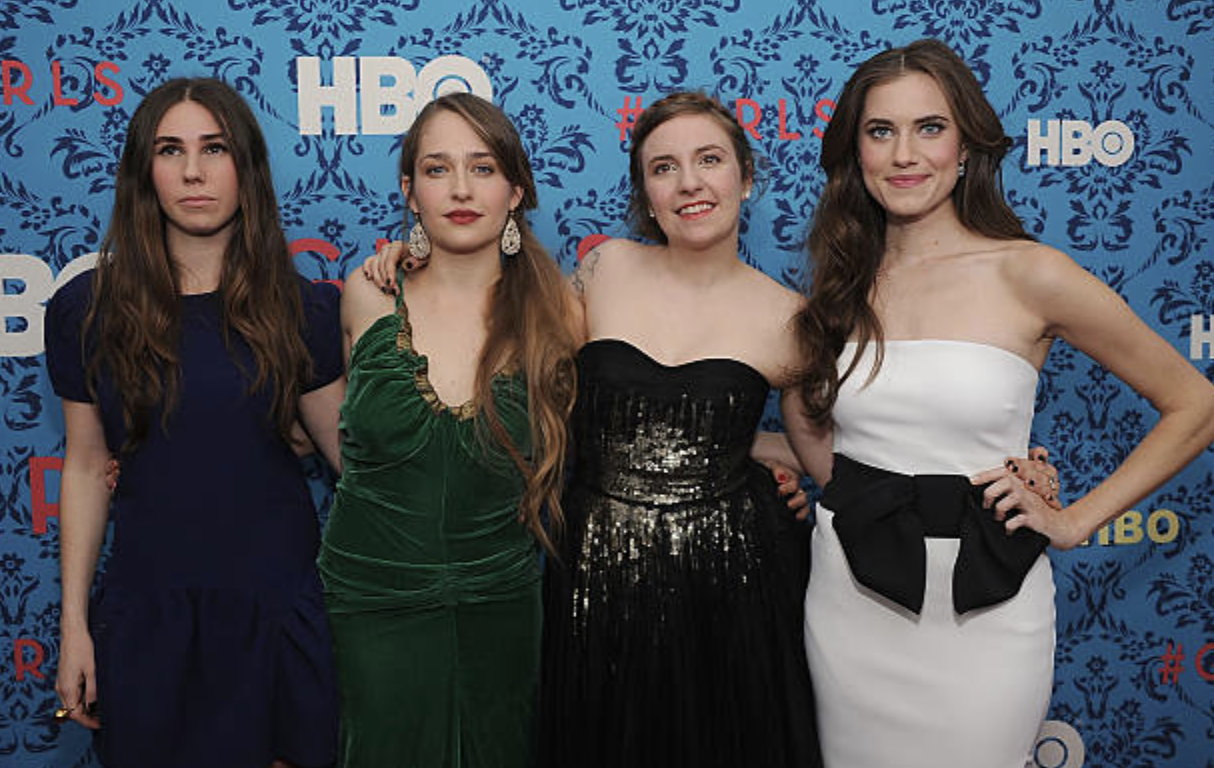
Photo via Getty Images/Dimitrios Kambouris
***
HBO has recently greenlit a special edition reboot of Lena Dunham’s iconic 2012 TV show, “Girls.” While there is a sense of excitement among long-time fans eager to relive the glory days of the 2010s, the revival has resurrected some of the more unsavory cultural practices common during the original show. This period of reminiscing a looking glass to assess how much — or little — our society has progressed when it comes to minimizing misogynistic remarks and commenting on women’s bodies.
The recollection of “Girls” elicits nostalgic emotions for the days of smokey eyes, early-stage social media, and when Rihanna was still releasing music. However, both the show and the discourse that accompanied it during the initial airing recall some less glamorous trends of the era.
It is not breaking news that women in entertainment are frequently subject to ridicule. As public figures, celebrities are signing up to be under the spotlight, judged on their personality and physical appearance. However, women are more likely to be the recipients of comments about their bodies than men.
The coinciding release of “Girls” and the growth of social media in 2012 propelled the rampant, widespread conversations on women’s appearances. The body standards of the early 2010s idolized a slender, thinner figure. In 2012, Lena Dunham, who played the character Hannah Horvath in the show, received relentless criticism about her weight and its deviation from typical beauty standards.
Dunham went on to embrace these comments, directing a plus-sized model shoot for Stylist magazine in 2014. Unsurprisingly, the shoot did not squash negative commentary online about body sizes, but became a representation of the increased effort to address and negate the prevalence of these judgemental remarks.
One would like to think that our society has only been making progress in accepting and supporting body diversity and positivity. There are countless videos online featuring influencers speaking to their audiences about self-love and embracing their body. Clothing companies are taking steps to be more inclusive with their models. Despite the popularity that body-positivity movements are generating online, it is hard to say that we have progressed that far from the fixation on superficiality of the last decade.
The most recent popular example of this focus is the concerns over Ariana Grande’s weight and diet, which have taken over the pop culture discourse for the past couple of months. This criticism comes from the opposite side of the spectrum from that of Dunham’s in the 2010s; however, both stem from the same problematic, incessant obsession with talking about female celebrities’ appearance.
Gen Z emphasizes being more inclusive of physical appearances and prioritizes feeling healthy and comfortable in your skin; however, what accompanies every body-positivity message is a video instructing you how to change your diet or exercise schedule. There is a perpetual tug-of-war between encouragement to throw body standards to the wind and decentralize weight from your mind, and lifestyle videos advising you on how much protein to consume and the newest breakthrough of the actual exercises you should be doing.
Maybe we have distanced ourselves from romanticizing the ultra-skinny lifestyle, but it is ignorant to claim that society has become less fixated on body image. While there is more “body-positive” messaging, there are more platforms letting the body-image narrative take center stage.
Many clothing ad campaigns advocate for women to reclaim their body confidence and say “To hell with what people think!” Ironically, this is making female bodies more of a talking point. We are stuck in a vicious cycle of trying to convince everyone not to concern themselves with their appearance, yet perpetually reiterating messages that promote that sort of mindset. No matter where you turn on the internet, you are bound to find someone talking about their own body, your body, or someone else’s body.
Revisiting the cultural zeitgeist of the original “Girls” days and seeing the norms and discussions that were so common at the time should have us questioning if that reality is really so distant. We are talking about body image in a different manner, but we continue to bring it up and elevate it.
All this begs the question of whether adding more commentary and perspective on this issue helps to mitigate judgment in the world, or if we are only pushing body image further into the spotlight. Have we learned our lesson in decentralizing scrutiny of physical appearances, or will this nostalgic TV reboot only prove that we have dug ourselves deeper into body obsession?
***
This article was edited by Corrina Gapp and Reva Maslekar.
 Samantha Kornsey
 Matthew Subramani
 Jackson Cutrone