
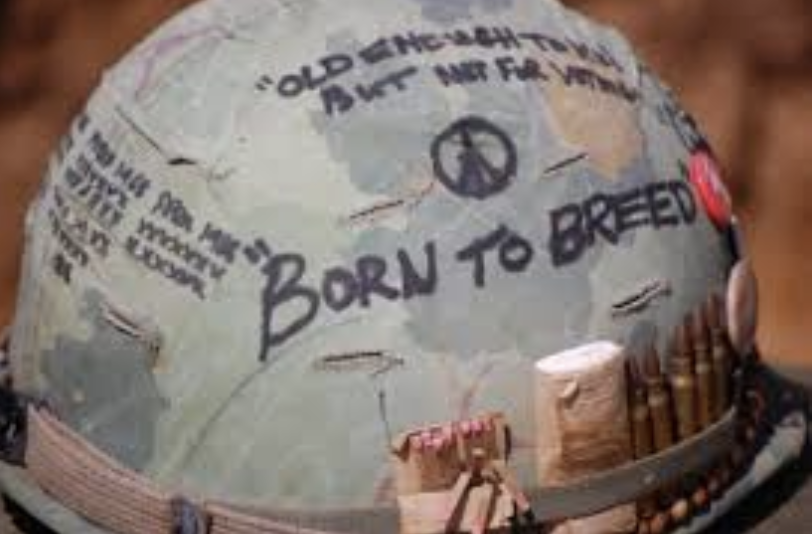
Image via War History Online
***
On October 1st, 1966, Robert McNamara, Secretary of Defense, instituted “Project 100,000”, an experiment designed to accept 100,000 men per year who had previously been disqualified for failing mental and physical standards. These men were referred to as the New Standards Men in documentation, but they were more commonly known as “McNamara’s Morons” or the “Moron Corps”. Throughout this article, I will refer to them exclusively as the New Standards Men.
The New Standards Men were men of low intelligence, physical disabilities, or criminal records (or had previous trouble with law enforcement). These men all scored in the bottom percentiles on the Armed Forces Qualification Test, were illiterate, and many were non-English speakers. The physical defects included partial blindness, being underweight, malnourished, or overweight, missing fingers, and more. McNamara himself said that, “…a low aptitude student can use videotapes as an aid to his formal instruction and end up by becoming as proficient as a high aptitude student.” He truly believed that technological strategies could transform the New Standards Men into qualified soldiers, and throughout his lifetime, he never condemned this view or the project in general.
The Medically Remedial Enlistment Program was created to “correct” the physical disabilities of the New Standards Men with physical conditioning or minor surgery. Approximately 9% of the men were entered in the program, and over 80% of these cases were weight-related.
McNamara’s aspirations for technological or medical miracles were unfounded, and the New Standards Men suffered because of McNamara’s naivety. The men were held to the same standards as all recruits in basic training, and when they could not meet them, they were humiliated by sergeants, officers, and comrades. In McNamara’s Folly: The Use of Low-IQ Troops in the Vietnam War, Hamilton Gregory writes that the men in his basic training groups could not tie their shoes, button their uniforms, or follow marching orders. In the physical artillery tests, Gregory states that the New Standards Men could not grasp the concept of throwing a grenade. The heaviness of the object, the arc required to throw it, or how to aim for the bullseye were all challenges in and of themselves. Still, 91% of these men were accepted, and only 9% were deemed ineligible. By December 1971, 354,000 New Standards Men entered service, with 71% entering the Army, 10% in the Marine Corps, 10% in the Navy, and 9% in the Air Force.
In combat, the New Standards Men performed as well as any sane or empathetic person could imagine. A heartbreaking number of men died in service, and their fatality rate was three times higher than that of the average soldier. In total, 5,478 men died in combat. Gregory said, “Men who were slow in their thinking were very vulnerable. To survive in combat, you had to be smart, and you had to think quickly.” They were helpless in the jungles; they had to maintain stealth, silence, and rapid movements, which many were intellectually incapable of.
Many commanders took pity on the men and begged their higher-ups to discharge them, but were denied due to severe personnel shortages, especially in the Army and Marine Corps. The government was well aware of the results of their experiment happening in Vietnam. Pentagon official Elliot Coin wrote, “The dull-witted soldier does not simply get himself killed; he causes the death of others as well.” In a failing war for the United States, the government knowingly sent underqualified soldiers into battle, endangering themselves and their fellow counterparts. This band-aid on a bullet hole situation was not even that; it was a death sentence.
So this evidence raises the question: why did McNamara think that sending low-intelligence men to Vietnam was the most effective way to address the manpower shortage? Well, as most things in the United States boil down to, it was because of politics and capitalism. McNamara believed that Project 100,000 would be reformatory for the men it enlisted. In accordance with the Johnson administration’s War on Poverty, the G.I. Bill would offer future veterans the opportunity to serve in the military to help them get out of poverty. Senior officials on President Ford’s Clemency Board, Lawrence M. Baskir and William A. Strauss, remarked on the project writing, “For them, it was an ironic and tragic conclusion to a program that promised special treatment and a brighter future, and denied both.” The Project failed these men again with a false promise of financial aid.
Were these men ever meant to succeed? Lyndon B. Johnson and Robert McNamara sought out men who would not interfere with the voter population or affect public image. The men eligible for the draft were politically unavailable to Johnson because they belonged to the powerful upper-middle class. College students were often exempt with student deferments or sent to the National Guard, which were not often sent to Vietnam. Bronze Star with Valor medalist and war correspondent, Joe Galloway wrote, “[the men] were, to put it bluntly, mentally deficient. Illiterate. Mostly blacks and redneck whites, hailing from the mean big city ghettos and the remote Appalachian valleys. By drafting them, the Pentagon would not have to draft an equal number of middle-class and elite college boys whose mothers could and would raise hell with their representatives in Washington.” Project 100,000 systematically targeted poor populations and men of color. 76% of the New Standards Men were from the South, 48% were not white, 14% were reading below a fourth-grade level, and their average age was about 20. In a secret White House tape recording, Johnson referred to these men as “second-class fellows.”
Gregory’s book explains a personal experience he had with a man he calls Johnny Gupton (an alias), a member of the New Standards Men. He was from the isolated Appalachian Mountain range of Eastern Tennessee, which Gregory referred to as one of the “poverty pockets” in America. Gupton could not read or write, was unhealthily thin, did not even know that the United States was at war, and could not grasp the tasks he was assigned in basic training. Sergeants often screamed at him and called him one of McNamara’s Morons. Gregory said Gupton was often terrified and confused. This is disgusting abuse. McNamara abused the disabled men of America, the poor men, the black and brown men, and Johnson abused them with his knowledge of this and manipulated them for his own political gain. To restate Gregory and other career military people’s sentiments, Robert McNamara can remain one of the most hated men in America and “deserved to burn in hell.”
For the New Standards Men who did survive Vietnam, one might imagine that they were compensated fairly, but they weren’t. On average, they earned $7,000 less per year than their civilian counterparts who did not serve in the military. One might also imagine that the government would reflect on Project 100,000 as an utter failure and would not repeat its mistakes, but this did not happen either. In 2008, Newsweek Magazine published an article titled “He Should Have Never Gone to Iraq,” which details the tragic story of David Dietrich. Dietrich was considered mentally slow and had issues with information retention. He showed signs during basic training, such as his inability to hit targets on the rifle range. His comrades referred to him as “Forrest Gump.” His commanding officer requested that the Pentagon discharge him as he posed a threat to himself and others; this request was denied because there was yet again another personnel shortage in Iraq. In the first few minutes of his first assignment, Dietrich was almost immediately shot and killed. To this day, the Army and Marine Corps have monthly recruiting quotas, and if they do not meet them, they are authorized to recruit men of low intelligence.
There is a sick and twisted reason that many military recruitment stations are in high schools across America, and why they offer financial benefits for college students. These practices help the military recruit as many working-class or lower-middle-class bodies as possible. The military benefits from the population’s inability to fund a collegiate career and the inaccessibility of other career opportunities. The government benefits from this because it manipulates its voting population, which depends on the respect of the upper-middle class and wealthy populations. The untold stories of Project 100,000 are case studies of the United States government’s lack of concern for Americans’ quality of life. At the end of the day, we are all metrics for America’s capitalist and political goals.
***
This article was edited by Ria Mukherjee and Mila Cabanlit.
 Matthew Subramani
 Jackson Cutrone
 Ryan Scriven