
Image via ABC News
***
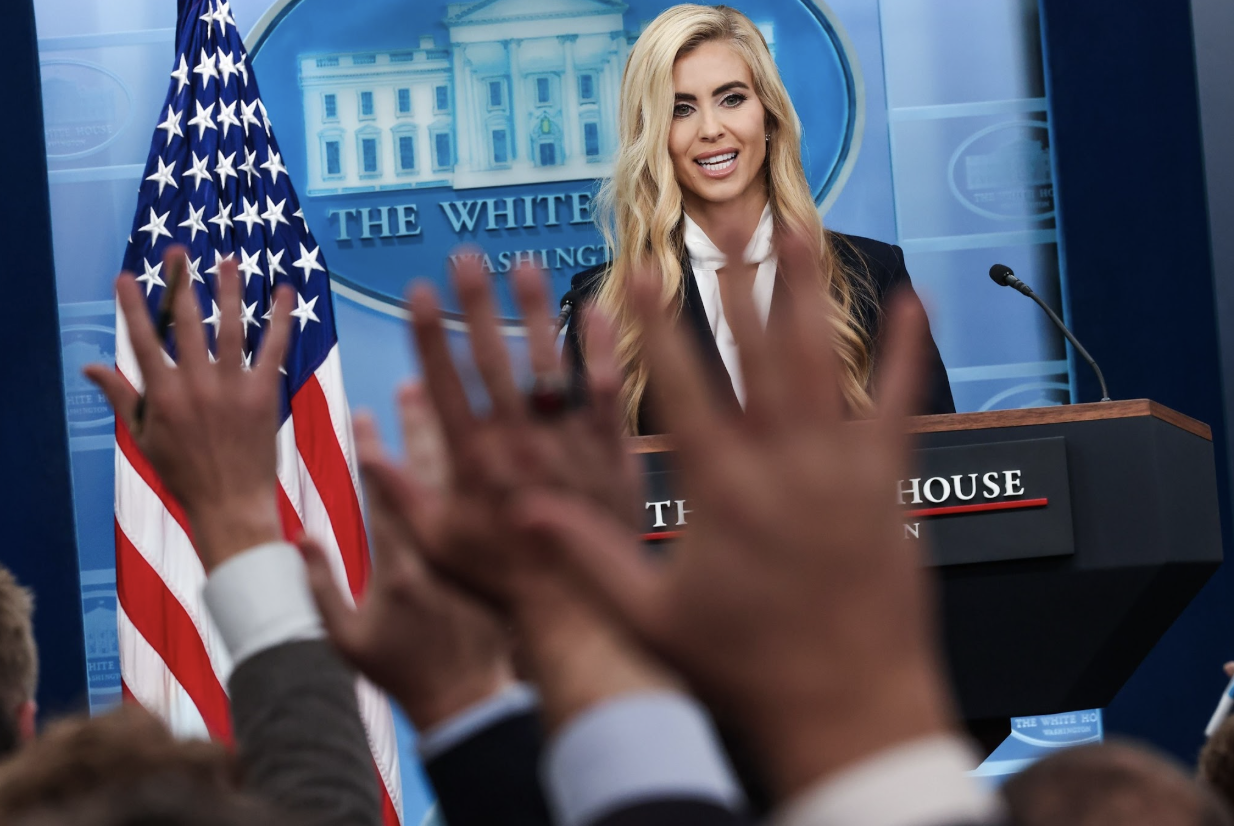
The White House recently said goodbye to the shortest-serving press secretary ever, followed only by another Trump press secretary, Anthony Scaramucci. My Instagram feed for those few days was flooded with videos of Trump’s new–now former–press secretary, Katie Zacharia, during her first press conference. The palpable anxiety and unflinching gaze at her notes completely fractured the contents of her speech. The absurdity extended beyond public speaking incompetence; her ambiguous statements about being a lawyer, when she, in fact, is not, only made it worse. The ordeal and the swaths of content it prompted, like watching a bad reality TV show, were entirely transfixing.
There is a German word for this exact phenomenon: Schadenfreude. Merriam-Webster defines this as the “enjoyment obtained from seeing or hearing about the troubles of others.” According to psychological researchers, the feeling boils down to three sources: aggression, rivalry, and justice. Undoubtedly, the questions of Zacharia’s credentials and overall composure during that first press conference lent themselves to that third interpretation: Justice. Watching an individual who had built a public profile on inauthentic credentials, then failed, likely left many feeling that the scrutiny was warranted. In an administration where sycophants are granted impunity for their incompetencies, this episode and the subsequent consequences coming to fruition felt like some semblance of justice.
In defense of Zacharia, her appointment did come at a time marked by scandal and discontent with the administration’s actions. From the Iran war to Former Ambassador Guilfoyle’s resignation in disgrace, the Trump administration is hitting a new low; a low recognized even by his most sympathetic media outlet, Fox News, which released a poll on October 14th that placed Trump’s approval at a “record low” of 36%. A number that surpasses even Fox News’ lowest approval rating poll for Joe Biden, which they found to be 40%. The role Zacharia was stepping into was the spokesperson for an administration already in a PR crisis.
Still, why was there such a media frenzy surrounding her short tenure? A major part of this is what America has come to expect of Trump administration officials. Trump and the officials he employs, especially in outward-facing roles, posture themselves with an air of confidence, even when their statements are not rooted in truth. Zacharia’s predecessor, Karoline Leavitt, was adept at this task: her press appearances were marked by confrontation and confidence, even when her statements were categorically false, like when she claimed that the US government was sending 50 million dollars in condoms to Gaza. Zacharia immediately diverged from this posturing, reading entirely from her notes and refusing to field questions from the reporters. This resulted in one part of her failure: the gap between what the public had come to expect and what she delivered.
The bigger factor lies in how this media takeover is shaped. There was drama throughout the ordeal, exemplified by Trump’s ambivalent statements: praising her, then doing the opposite by telling the press he had urged her to step down. Discussing these issues so publicly turned the saga into reality TV—a theatricality characteristic of Trump, who made his image on reality TV through The Apprentice. Throughout this drama, Trump became the judge framing the media narrative until he determined she should be ousted.
The entertainment is immensely political. Trump likely understood that people were enjoying watching an individual in his administration fail brutally. But by drawing attention to his press secretary, he evades accountability for the administration’s many shortcomings, most notably the war in Iran. His lightning rod becomes a spectacle that deliberately distracts.
The spectacle surrounding Zacharia ultimately reveals something beyond our capacity for Schadenfreude alone. However, as these issues of personalities and gossip hog the limelight, the real issues are forgotten. The spectacle begins obscuring things like the war in Iran and the still-lack of transparency regarding the Epstein files. If this escapade invites any analysis, it should be in the continued use of distraction to avoid accountability.
***
This article was edited by Nicholas Meetze and Adam Sharqawe.
 Samantha Kornsey
 Matthew Subramani
 Jackson Cutrone