
Image via Metropolitan Transportation Authority
***
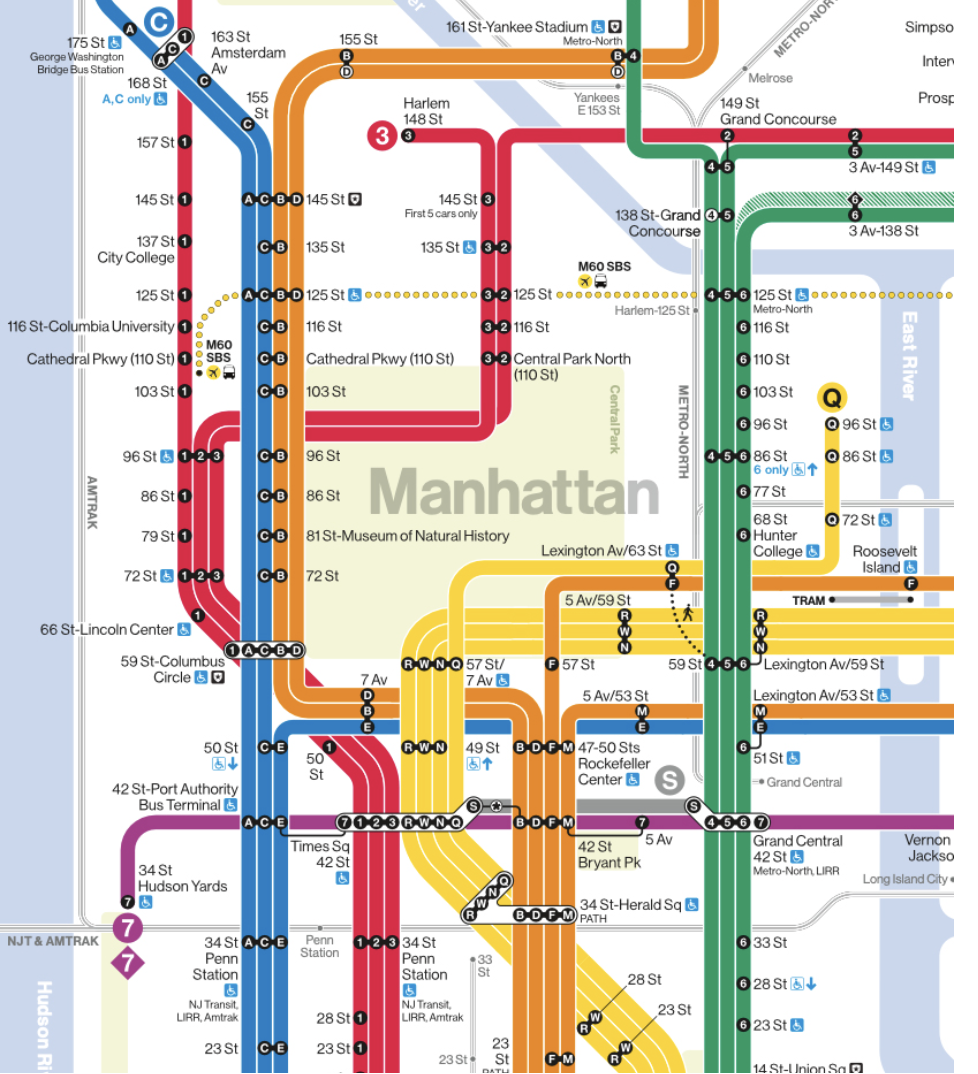
One of the most significant developments in New York City transportation policy is the expansion of the Second Avenue Subway. The goals for this project include reducing congestion and overcrowding, improving subway access for communities currently underserved by transit, and improving air quality and environmental conditions.
While the idea of the Second Avenue Subway was first officially put forth in 1929, the modern iteration of the project began pre-planning in April 2004. On January 1st, 2017, Phase 1 of the project opened, extending the Q train to 96th Street in Manhattan. One major improvement this initial renovation brought was an additional subway line to the Upper East Side, which previously had access only to the Lexington Avenue 4, 5, and 6 trains.
The opening of Phase 1 resulted in approximately 155,000 daily riders during its first month of operation, alongside a decrease of over 87,000 daily riders on the Lexington Avenue line. Nearly a decade later, over 200,000 riders per day use the extension, and congestion on the Lexington Avenue trains has decreased by 40 percent, demonstrating that the initial stage of the investment has succeeded in satisfying demand and easing congestion.
The second phase of the project was approved by the Federal Transit Administration in November 2018, with construction of the tunnel set to begin this year. Tunnel boring and construction of the 116th Street station will occur in 2027, and the entire phase is expected to be completed by 2032. The first and second phases together are projected to serve around 300,000 daily riders, with the second phase expected to continue improving convenience, reducing congestion on the existing subway and bus lines, and reducing commute times. Cost-saving measures undertaken by the Metropolitan Transportation Authority (M.T.A.) have also resulted in $1.3 billion saved on Phase 2 construction.
Setbacks have occurred, however. During the October 2025 government shutdown, the United States Department of Transportation under U.S. President Donald Trump froze $12 billion of federal funding for the second phase of the project, and for the Gateway Tunnel Project, which was aiming to build a rail tunnel between New York City and New Jersey. While the Second Avenue Subway can continue construction into East Harlem, the M.T.A.’s ability to begin work on the new 106th and 125th Street stations will likely be affected if the funds are not restored by March.
This January, Governor Hochul announced a significant departure from decades-long plans during her “State of the State” address, declaring that instead of extending the Second Avenue Subway southward toward the Financial District, the M.T.A. will add three additional stations to the west of the expansion along 125th Street, ending the line in the Morningside Heights neighborhood and providing an east-west subway line through Upper Manhattan.
This extension of Phase 2 will cost $7.7 billion, making it the most expensive subway expansion per mile of track in history, in part because of the proposed width of the underground stations. However, this plan is also able to offer significant cost and time savings due to the construction of the second phase of the project already occurring. This can be capitalized on by continuing to use the already operating tunnel boring machines and by continuing the work of the preexisting consulting and construction teams.
While funding for a full crosstown extension likely would not be granted until at least 2029, this development has the potential to increase access to employment and housing for local residents, fulfill a decades-long promise of increased mobility for local residents, and enhance connectivity with the rest of Manhattan.
During Phases 3 and 4 of the project, the M.T.A. has proposed a new T subway line that would continue to meet growing demand, running from 125th Street in Upper Manhattan to Houston Street in Lower Manhattan in Phase 3, and extending to Hanover Square in Phase 4. The last two phases are expected to cost $4.8 billion each and carry approximately 560,000 riders each weekday.
There is strong demand for additional public transit expansions throughout the city as well. Penn Station Access, a similar project with an expected completion date of 2027, is being built to provide the Metro-North Railroad with access to Penn Station, building four new accessible stations in the Bronx, and providing residents with a shorter commute into Manhattan. Among potential future improvements to reach these residents are a 14-mile-long Interborough Express to connect Queens and Brooklyn, a trip that residents often complete in cars today or are required to take the subway through Manhattan first.
Alongside Governor Hochul’s announcement of a renovation of Jamaica Station in Queens, these projects represent part of a substantial acknowledgement by government officials of the necessity to invest in new infrastructure. These investments increase affordability and quality of life, provide economic opportunity for local residents, lessen the effects of climate change, help protect the environment, and are reflective of a government more responsive to communities previously underserved by transit. Despite the high costs, long time frame, and the balancing act between federal, state, and local politics, the benefits of continued investment in transit infrastructure will continue to far outweigh its drawbacks for New York City.
***
This article was edited by Vedha Gokul.
 Saad Sandhu
  Campbell Brown
  Christian Dziura