

Photo via the New York Daily News
***
New York City is experiencing a drought of housing unlike anything seen in the city for decades especially when it comes to affordable housing for low-income New Yorkers. According to a study from May of 2024 New York City rental vacancy rates had fallen to just 1.4% the lowest rate since the city began tracking in the 60s. This indicates a severe dearth of available housing in the city. Furthermore according to the city comptroller’s office the average asking rent of an apartment at the end of 2023 was $3,600 up from $2,900 just before the pandemic, an increase of about 17%. This is despite the fact that the city’s population has been decreasing rapidly over the past few years which should lower demand for housing and therefore lower prices as well. In 2022 alone New York City experienced a net loss of 160,000 residents partially due to housing scarcity and increasing rent prices. This is estimated to have cost the city upwards of $300 million in income and sales tax. These stats present a dire situation for New York City where finding affordable housing is more difficult than ever before.
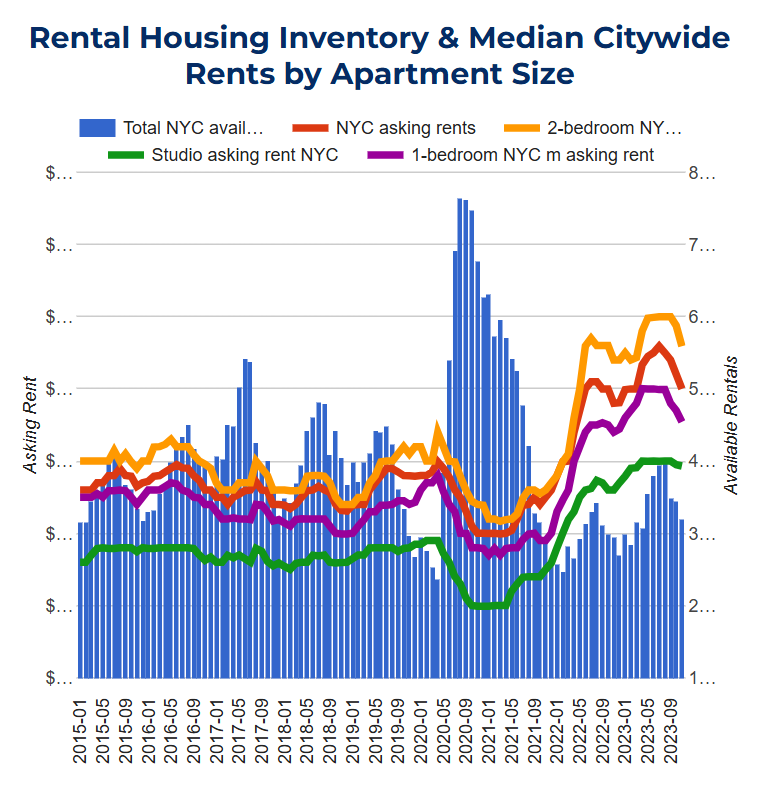
Image via NYC Comptroller Mark Levine
***
Fortunately, ballot measures 2-5 from last year’s mayoral election were designed to address this exact issue. Those ballot measures established the Expedited Land Use Review Procedure or ELURP, a new approval process for zoning changes in the city. Expectations for the ELURP process within the state government have been high with Governor Hochul going on Twitter just a week before the election to write “Affordability starts with housing, and every family deserves a safe, affordable home. Voting ‘yes’ for Propositions 2–5 would give New York City the tools to build housing faster, cut red tape, and lower costs for New Yorkers.” The high praise of figures like Governor Hochul and then mayoral candidate Mamdani was well received as the public voted to confirm these revisions to the city charter in November. With the revisions taking effect on January 1st of this year one question still remains: with New Yorkers struggling under the burden of high cost of living and the future of this city at risk will ELURP be enough?
To understand what ELURP is and how it could help this mounting crisis we have to first understand its predecessor, ULURP or the Uniform Land Use Review Procedure. This is the process used to review land use changes in New York City and has been doing so since 1976. The main goal of this process is providing a “standardized and transparent review process” so New Yorkers could have a stronger say in how their communities change and develop over time. Let’s say you’re a looking to apply for a change in zoning this could mean you’re a property development company looking to build offices in a residential area or even a local looking to turn an abandoned lot into a playground, anyone can file an application for zoning changes and all of those changes went through ULURP. Even if the city themselves is the one applying it still goes through ULURP so this process was the starting point for almost every major project in New York City and here’s how it works.
The first step of ULURP is the City Planning Commission (CPC) certification where the CPC reviews your application and if filled out correctly certifies it beginning the ULURP process which will continue for seven months. It then is passed onto the Community Boards, where they have 60 days to hold a hearing open to the public on the project. Following this hearing the Community Board votes and can recommend proposals or modifications. The next step is the Borough President review where the Borough President has 30 days to review the proposal. After the Borough President, the CPC has 60 days to hold another public hearing and then vote on the application based on public testimony and their own opinions on the project. Should the CPC vote no, ULURP ends immediately. If approved it then moves to the City Council who also must hold a public hearing and can modify the proposal.. Finally it moves on to the Mayoral Review in which the mayor has 5 days in which they can veto the decision.
This process was designed for transparency and public involvement, something it goes to great lengths to achieve; however, it is incredibly slow and bureaucratic. With a city in crisis ULURP slows construction and limits our ability to produce affordable housing. That’s why in November of last year New Yorkers voted 56.94% in favor of ratifying the new Expedited Land Use Review Procedure or ELURP as a faster alternative to ULURP. Eligible projects for this procedure include things such as affordable housing and flood mitigation infrastructure. What makes this process different from ULURP is instead of being seven months the process takes only ninety days. After CPC certification the Borough President and local Community Board have a sixty day window in which they simultaneously review the project, hold a public hearing, and finally vote on it. No matter what they vote, the application then moves onto the CPC who votes on it within thirty days and has the binding vote. This is a very significant change which shortens ULURP by almost six months and provides a fast track to some of the cities most direly needed projects.
To figure out whether or not ELURP will be an effective solution to the housing crisis we first have to figure out whether building more units will be effective. The idea of building more housing seems fairly self-explanatory, there isn’t enough housing so build more houses. However it’s more complicated than it seems. A study by the Georgetown Law Center of Poverty and Inequality on metropolitan areas with high levels of construction such as Seattle, Dallas, and Phoenix has shown rather mixed results. In Seattle units built since 2010 had a vacancy rate of 7.8% whereas units built before 2010 had a vacancy rate of only 4.8%. Numbers like this are consistent across other high-growth metros which tend to demonstrate higher vacancy in new construction than in old construction. This may seem good on the surface as it indicates high housing availability however in these cities 55% of new construction is catered to moderate, middle, and high income renters rather than the low-income renters who demonstrate the highest housing demand. As a result the share of total units serving renters with low incomes actually decreased. For example in Phoenix though there was an increase in the total number of units between 2015 and 2023 the number of units for those earning less than 30,000 decreased by 27%. Furthermore rents for these low-income renters have increased 26.7% in the same amount of time whereas high income households have seen a 5.3% decrease.
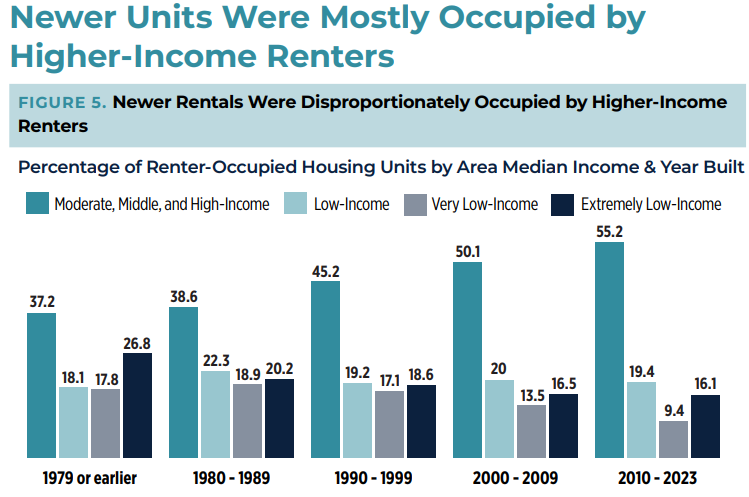
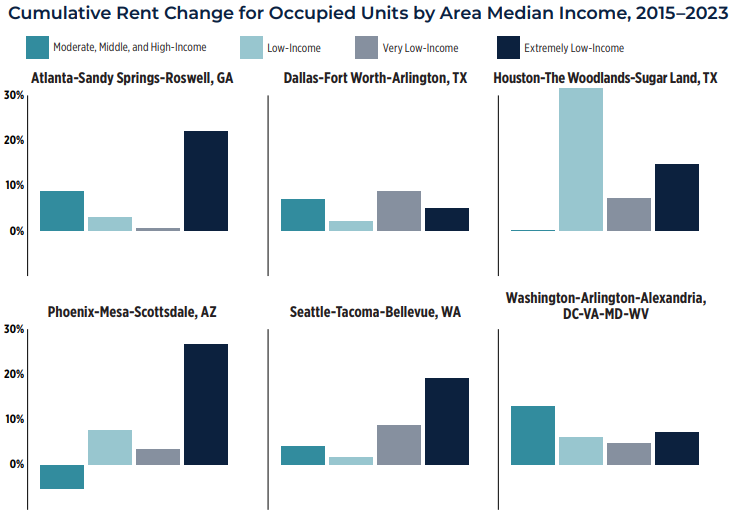
Image via Center on Poverty and Inequality, Georgetown Law
***
The important point to pay attention to here is that the kind of housing they were building was what was causing these adverse impacts on low-income renters. Many of these constructions were on studio or one-bedroom apartments with high rents meant to accommodate working professionals rather than large apartments made for low-income families. This is largely due to the costs of building construction and especially the rising costs of insurance premiums for landlords which increased 25% in 2023 alone. This means developers want to build residences with as many units as possible at a high cost so they can better make their money back. This is why luxury apartments are popping up left and right. Cities with high construction haven’t seen that construction match the actual need of their residents. In addition there is a serious lack of buildings that have some sort of rental subsidy as in the six high construction metros in buildings made prior to 1980 around 20% of units had a rental subsidy compared to just 15% in buildings made since 2023. So the kinds of units being built just do not match what the people in these metros needed and that is why construction in these cities has not benefitted low-income residents.
One may come away from this thinking that ELURP then is going to have a negligible or possibly even detrimental effect on New York City’s housing crisis. However, this is where the specific language of ELURP comes into play as it mandates this process only applies to “enable or facilitate a project for the development or preservation of affordable housing developed or preserved by a company that has been organized exclusively to develop housing projects for persons of low income.” If the city and state government are diligent about making sure that all projects going through ELURP follow this requirement by cracking down on potential loopholes this program could be a net positive for the city. That being said, ELURP is a minor boon at best and increasing the housing supply is not a guaranteed solution as shown by Phoenix and Seattle. Instead a combination of ELURP with other programs like rent assistance and preservation of existing low-income housing is probably needed. In conclusion, as part of a broader affordable housing policy and with proper eligibility compliance ELURP has the potential to be very positive but by itself it is not nearly enough to solve New York City’s multifaceted housing crisis.
***
This article was edited by Samantha Poillucci.
 Javeer Khan
  Thomas Tisdale
  Samuel Speiser