
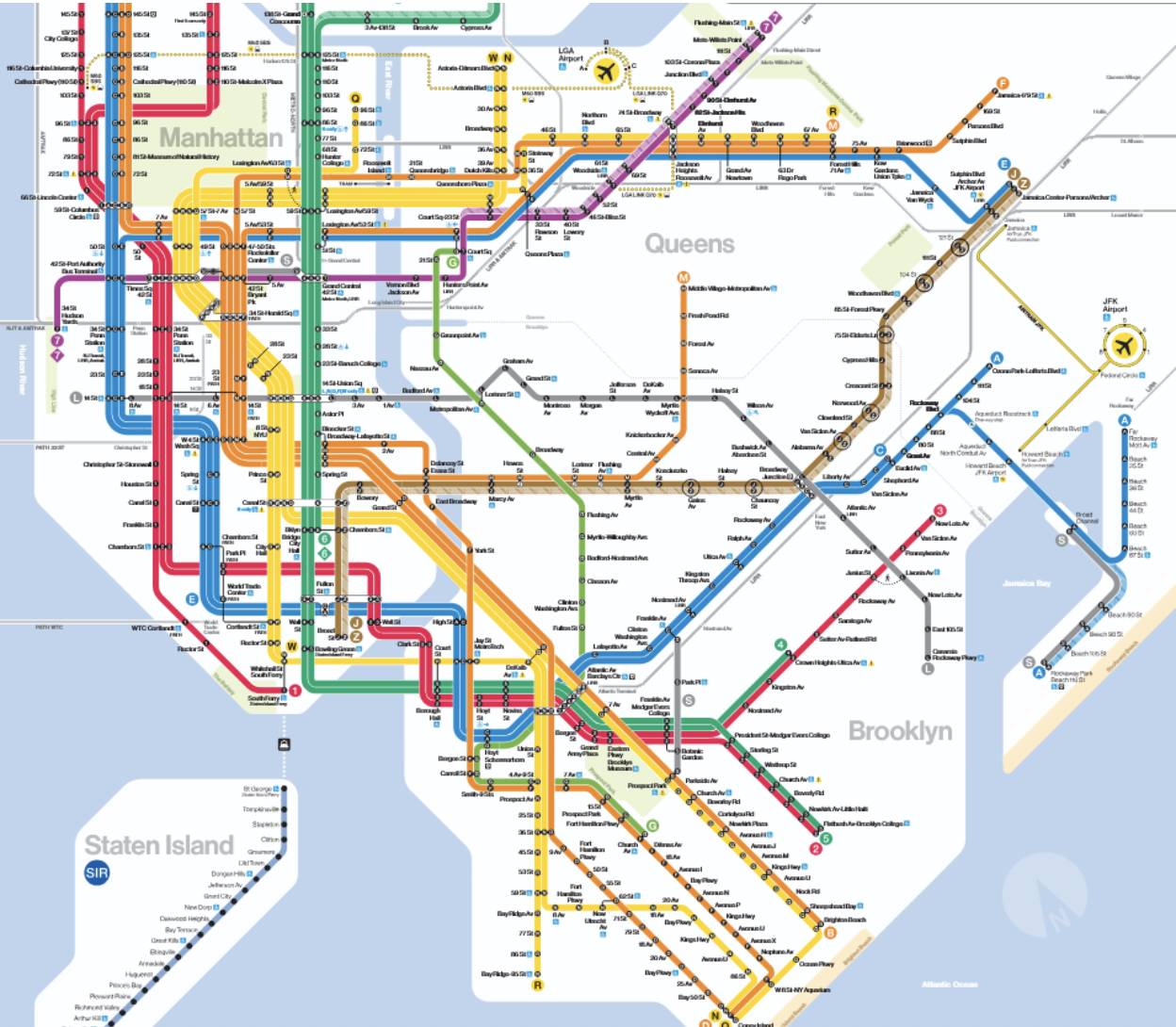
Picture of Part of NYC Subway Map. Photo via MTA
***
At one point the U.S transit network was the envy of the world sprawling from the sea to shining sea. Starting with horse drawn streetcars eventually using steam and electrification. This marked the beginning of the expansion for urban mass transit in the U.S. At the time the system was mostly private outside of a few inner cities. Mass transit was further expanded when the transcontinental railroad was built providing easy access between the East and West coasts. A country larger than most others with a transit network that worked so the question is what killed it and how can transit be brought into a golden age.
First it is important to define mass transit which is “the transportation of large numbers of people by means of buses, subway trains, etc especially within urban areas” but can also be over larger areas. Public transportation is when said transit is owned specifically by a public entity such as the government, or semi private such as the MTA. Mass Transit can include Heavy rail (subways), light rail (trams, previously known as streetcars), buses (and trolleybusses), and commuter rail (usually over long distances such as those covered by Amtrak). These are the most common but it is important to include monorails, ferries, airlines, and vehicles for hire. But for the purpose of this article we will focus on those mentioned previously.
Previously, the primary mode of transportation was walking or by horse which made such mass transit options appealing as there were limited ways to traverse large distances but this started to be undone with the advent of the car being one of the biggest factors but there were also others. Being privately owned led to many areas serviced to be cut due to poor finances and lack of government assistance with an estimated third of transit companies going bankrupt by the First World War and further cut due to the Great Depression. Outside of New York City in the modern day there are few areas that have significant transit usage such as the District of Colombia, Los Angeles, and Chicago. But New York City sees up to three times the usage of D.C., Los Angeles, and Chicago combined.
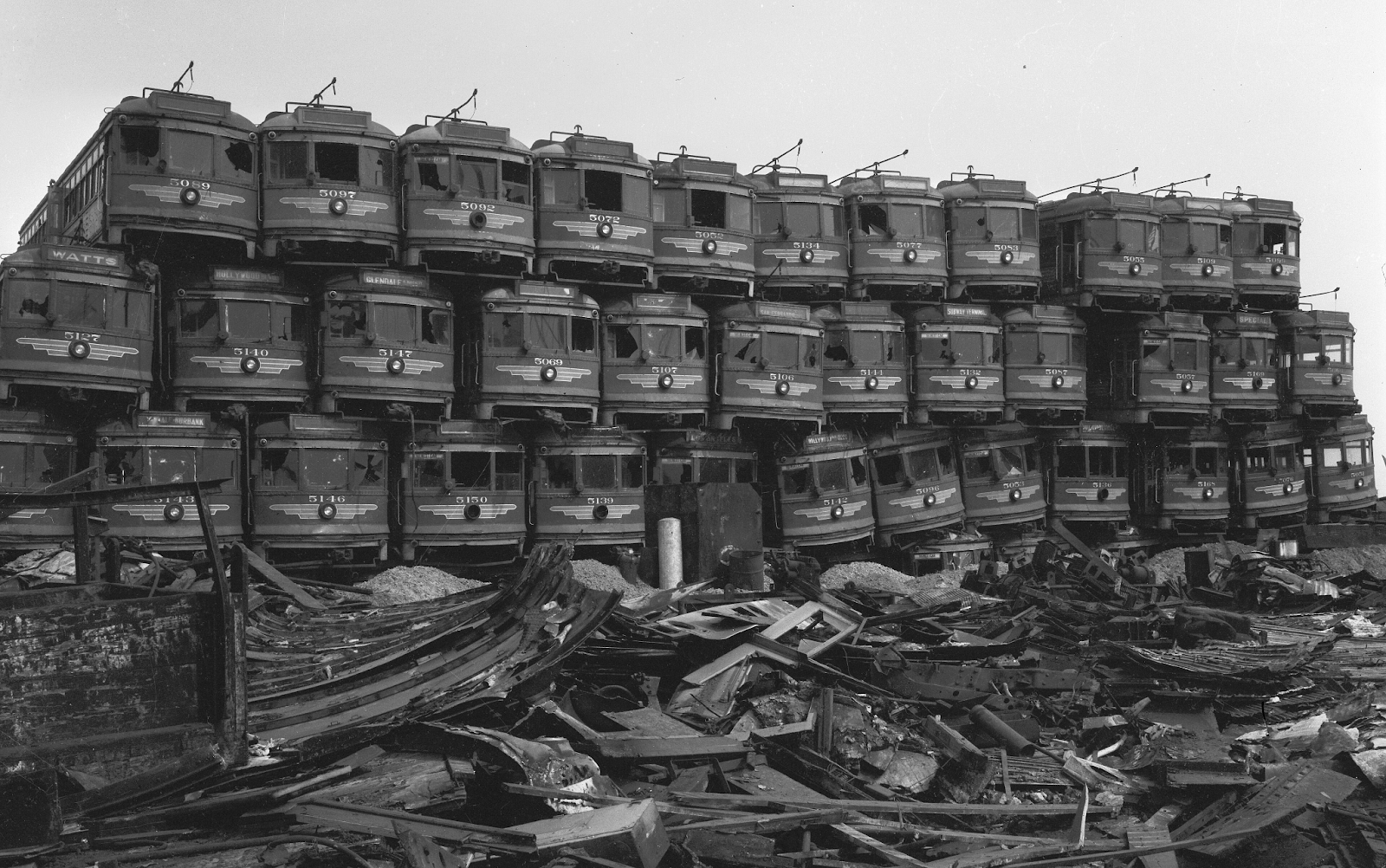
Stacked Streetcars at a Junkyard. Photo via Los Angeles Times
***
Then came the Cold War. Cars were branded as a way of individual freedom and owning a car became a sign that someone was an “American” with transit. Which at this point was severely hurt from the depression and few cities starting to offer public transit led to cars becoming a preferred mode of transit. With such public transit being seen as more “communist”
Especially with government policy during the Great Depression and Cold War. The Public Works Administration (PWA) worked on many projects to the public benefit while most were buildings, a significant portion were roads and bridges. Robert Moses was also a prominent figure and influence on road construction during this time outlined in Robert Caro’s The Power Broker where Moses took significant amounts of public funding from public transit to fund expanded road construction as well as lobbying federal government officials to do the same. While this led to many prominent roadways in New York City such as the Triborough Bridge, Bronx-Whitestone Bridge, and many Parkways it also its worth looking at the expense which is a mass transit system that suffers to this day. Moses also built many parkways hostile to public transportation such as buses and trains excluding train tracks from many bridges although the ideas were proposed and limiting the height of vehicles on parkways though low bridge clearance.
Further compounded with the Highway Act of 1956 which greatly expanded motorways allowing the country to be traversed by car. Which caused a decrease in mass transit ridership both in and out of cities as many people at this point owned cars.
There was a brief resurgence in interest for mass transit during the Great Society Era and slightly after which salvaged some transit systems and the federalization of passenger transit for rail which was deeply unprofitable for companies although such efforts were seen as “too little, too late.” With rail transit being mostly associated with freight transit instead of passengers and the only major interstate public transit being Amtrak which runs a deficit and has been underfunded over many years.
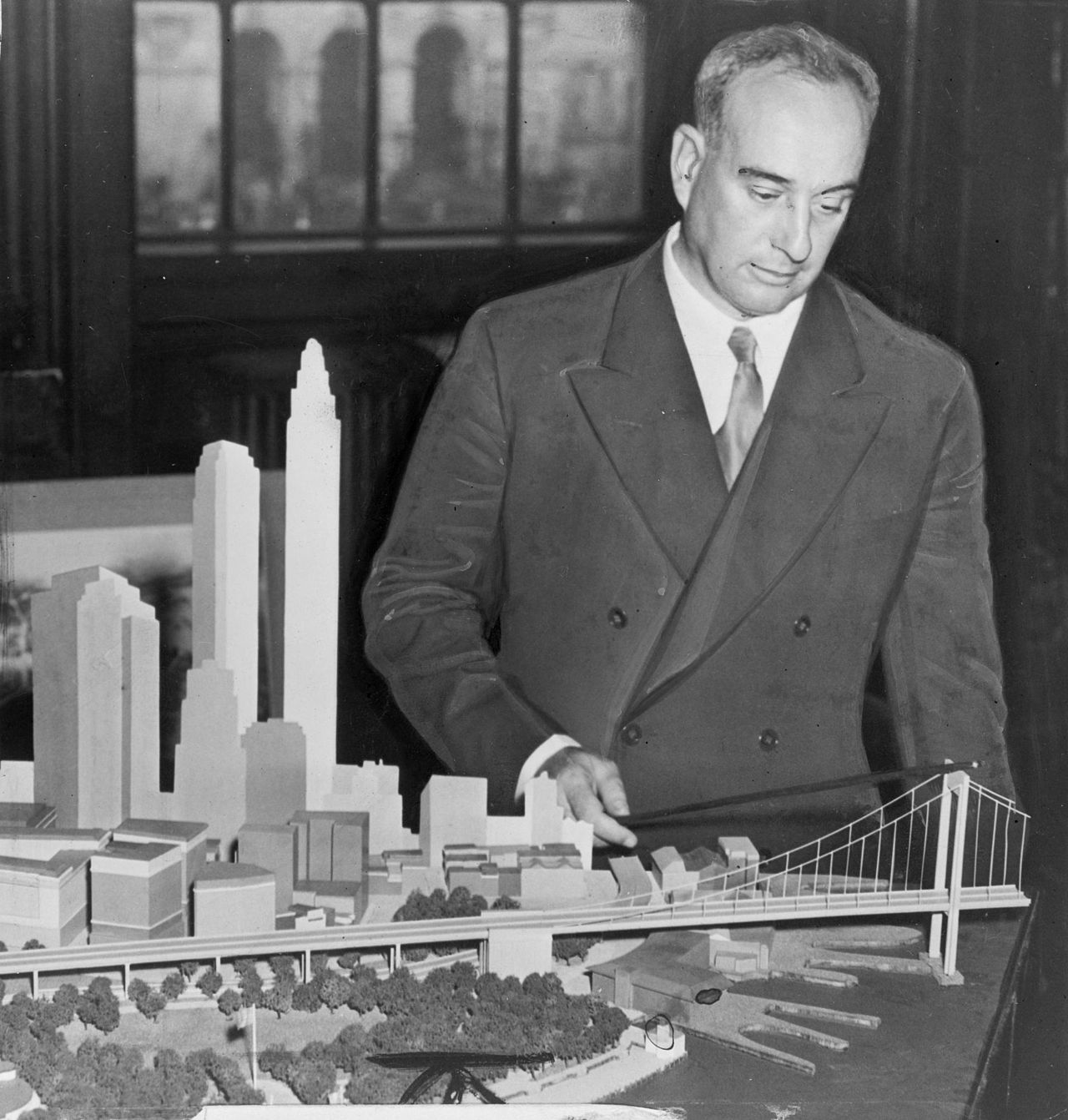
Robert Moses and a proposed model of Battery Bridge. Photo via C.M. Stieglitz
***
This has led to a continuing trend of preference of roads of rails with a rate of roughly 1 mile of rails for every 100 miles of road. With few cities putting funding into public transit. Over this time mass transit and public transit are often used interchangeably even though airlines are mass transit and only publicly owned in certain countries such as Qatar Airways. Within the U.S. airlines are privately owned. While there is still a primary reliance on cars as the primary mode of transportation.
So what is the current state of public mass transit in the U.S?
The American Society for Civil Engineers (ASCE) publishes a yearly report grading American Infrastructure giving it a grade of C in 2025 with transit given a rating of D. The report found the public transit system across the entire country was estimated to have a 152 billion dollar budget gap leading to delayed maintenance on the existing transit network.
Although many areas have been having talks to expand public transit, many such plans are plagued with delays, cost overruns, bureaucratic elements, and inefficient transit being built. But it is also worth noting the benefits of mass transit such as being able to carry many people at a fraction of a fuel consumption, being more environmentally friendly, safer per passenger-mile than driving (such as in 2023 there were about 300 transit related deaths vs 40k highway fatalities), and accessible to people from all walks of life. Without any major change in policy or funding for public mass transit the system is likely to deteriorate further and is unlikely to be sustainable long-term which can hurt both the environment and wallets.
It is estimated every 1 dollar in transit leads to 5 dollars in economic development. So what issues have to be addressed to see that development?
The ASCE and others have reported that the one biggest issue is lack of funding for normal operations and maintenance. About a fourth of funding is from fares with taxes and subsidiaries account for forty percent of funding so without substantial investment any change is unlikely. Also transit models have to be built in conjunction with other modes of transport such as bikes and other transit systems tailored to the local community to better serve localized needs. Other major problems is lack of service to areas both due to budget constraints limiting frequency and lack of funding leads to increased fares deterring riders from using the transit system. Other proposed solutions are to increase housing density to increase the amount of people served in a given area. Only time will tell if the U.S. will enter a new transit age or if American mass transit is a thing of the past.
***
This article was edited by Sydney Sternagel.
 Saad Sandhu
  Campbell Brown
  Christian Dziura