
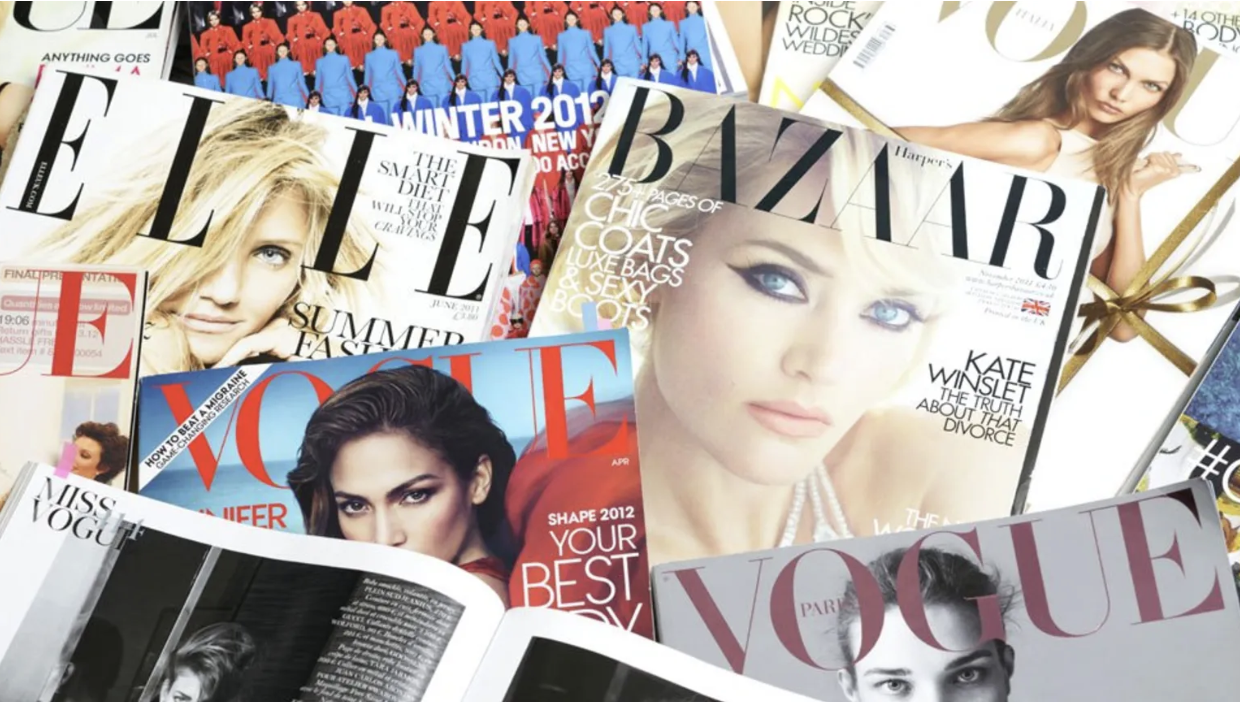
Image via Getty Images
***
If you’re young and chronically online, you’ve probably seen an influx of innovative magazines, or “zines,” flooding your feed. From New York City’s First Lady, Rama Duwaji, on the cover for The Cut, where photographer Szilveszter Makò’s surrealist styling gives her a unique edge, to actress Ayo Edibiri’s editorial feature for PAPER magazine, visual media is making a comeback. Once thought of as a dead industry, the revival of digital and physical magazines amongst Gen Z audiences points to a greater, more thoughtful shift, reflective of where culture is at the moment.
The magazine industry’s heyday was previously thought of as a phenomenon of the past. Though the earliest issues can be dated back to the 17th century, the industry experienced a golden age from the 1930s to the 1970s. From the infamous LIFE magazine, which documented politics and culture through the first instances of professional photojournalism, to the early days of the more easygoing Rolling Stone, magazines were a dominant force.
Beyond entertainment, they served a greater purpose in terms of their relationship with politics. For many Americans, magazines were some of the most easily accessible forms of media, and they didn’t just present the news but also offered unique cultural takes on current events from the perspectives of writers, photographers, and stylists. In contrast with more stringent news outlets, which held a greater responsibility of communicating with the general public, magazines could operate under different niches, paving the way for more subtle political commentary through the lens of musicians or artists.
As the early 2000s approached so did the onslaught of the internet. With the digital age came a threat to physical and print media, and the magazine industry suffered as a result. Beyond the easily accessible media access that the internet provided, declines in print revenue and underdeveloped mergers brought about a stagnancy to the magazine industry. In relation to politics, the 2008 financial crisis only accelerated the downfall of print media. Ad–spending within the industry dropped by nearly 13%, taking vital revenue for many publications. When the 2010s blog culture entered the scene, magazines accompanied this shift and embraced how technology was rapidly shifting the journalism industry.
At the end of the 2010s, magazines were thought of as a dying form of media. Platforms such as The Cut have reported nearly 8 million unique site visitors per month, a nearly 40% spike since 2016. Larger, international publications, such as Dazed, make about 110 million monthly impressions and receive 2 million monthly visitors to their website. The digital metrics and social media buzz surrounding these Gen Z catered platforms point to a larger cultural shift about what younger audiences seek amidst the current political climate.
Throughout the current onslaught of AI-generated content and consistent threats to public media, art, and culture from the Trump administration, younger audiences have begun shifting towards these independent publications. There is a level of trust within their consumption of this media, more specifically a knowledge that a human being was behind the creative process – something becoming increasingly uncertain in this new age of digital media. In a recent New York Times survey of about 1,500 randomly selected Gen Z-ers, nearly a third reported that the current era of AI-generated content makes them feel angry. Additionally, respondents aged 14-29 who reported feeling hopeful about AI dropped down to only 18% from 27%.
Despite its increased prevalence in media, young consumers have expressed their resentment for the current state of AI and the broader disownment of humanities occurring within the current culture. With the Trump administration pulling museum funding and discrediting the value of human-centric art, it’s only natural for a humanist, independent counter culture to make itself known. While the resurgence of human-driven media certainly points to where our culture seeks to go, whether or not it can go in this direction amidst AI’s relentless push for public integration will depend on the resistance and commitment of Gen Z creatives.
***
This article was edited by Sofia Downes.
 Glenmarie Rios Rodriguez
  Ayden Suber
  Isabella Villalobos