
Photo via Cornell Law School
***
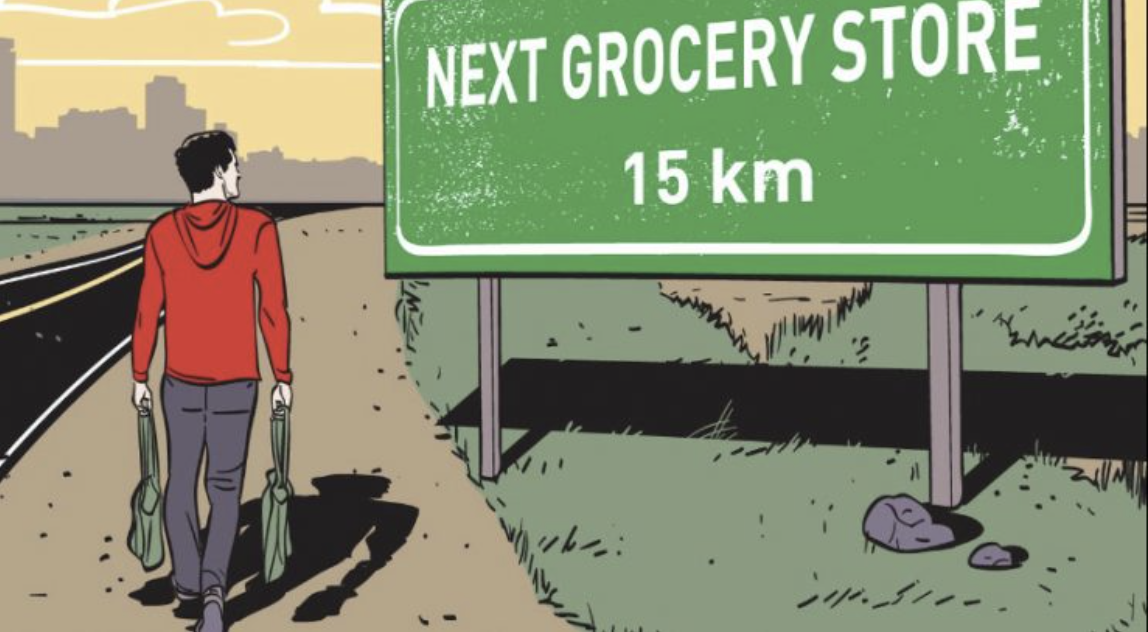
A food desert is a geographical area that does not have reliable access to fresh and affordable food. Food deserts stem from racial and economic inequality. Food justice advocates believe that “Food Apartheid” is a more accurate term, as the lack of reasonably priced food stems from racist zoning codes. While healthy food options tend to be limited and expensive in food deserts, fast food chains dominate these areas, as they are more affordable and closer in proximity. The fast food industry knowingly perpetuates the existence of food deserts by deliberately placing stores in areas without affordable, nutritious food. While food stamps can be used to buy fresh produce, it is difficult to utilize them for fresh produce when the grocery stores are far away. People become dependent on fast food when they have no other affordable options. With gas prices rising, traveling long distances to get food is very difficult. In contrast, many higher-income communities have banned fast food in their local towns by refusing to let them rent out stores, leaving space for healthier food options to dominate these higher-income communities. Fast food tends to be more calorically dense but offers fewer nutrients than whole foods. Fast food is not only higher in calories but also higher in sodium, sugar, saturated fats, and processed preservatives. Many people believe that obesity is a disease of poverty and has been linked to undernutrition in early childhood because children are eating food but are not getting enough nutrients.
The United States’ obesity rate was 37.0% in 2025, slightly lower than its record high of 39.9% in 2022. Obesity can lead to an increased risk of type 2 diabetes, high blood pressure, heart disease, and strokes, to name a few. These diseases and conditions can become life-threatening and costly. More than 37 million people in the United States have diabetes. It is the most expensive chronic condition in the country. The average person with diabetes spends around $3,300 to $4,600 a year on out-of-pocket costs. That estimation includes health insurance, so for uninsured Americans that number is substantially higher. The number of Americans under the age of 65 without health insurance amounted to 26.4 million in 2024, according to the CDC. A considerable number of Americans do not have health insurance, making diseases like diabetes even more expensive and dangerous. Consequently, the obesity crisis has garnered widespread attention, even among politicians. In 2010, First Lady Michelle Obama launched the “Let’s Move” campaign, aiming to end childhood obesity. Politicians have become increasingly aware and concerned about the obesity epidemic. Robert F. Kennedy coined the term “Make America Healthy Again,” or MAHA.
Spending on GLP-1s has increased 500% from 2018 to 2023. GLP-1s are a group of medications that manage blood sugar levels and can cause weight loss. People who have never suffered from obesity use GLP-1s for cosmetic reasons to lose weight, promoting unattainable and unhealthy lifestyles. They have grown in popularity in recent years, with celebrities such as Megan Trainor and Oprah Winfrey admitting that they use them. However, celebrities are not the only people using GLP-1s. Many people who struggle with obesity also take GLP-1s. Serena Williams is the face of the GLP-1 brand Ro. In a recent poll, 1 in 8 adults use GLP-1s in the United States.
GLP-1s are a temporary solution to the consequences of a much larger, systemic problem. The lack of access to healthy, reasonably priced food in the United States has directly led to the increased obesity rate. The true solution to the obesity crisis is providing all Americans with healthy, accessible food. One proposed solution is farmers’ markets. Farmers’ markets provide fresh produce to the communities while also providing guidance on how to prepare the produce to individuals. Farmers’ markets can also accept SNAP benefits, allowing the fresh produce to be economically obtainable. It is difficult to utilize food stamps for fresh produce when the grocery stores are far away. Farmers’ markets are mobile and can bring fresh produce to multiple communities, alleviating the distance that community members have to travel to get fresh produce. People become dependent on fast food when they have no other affordable options. With gas prices rising, traveling long distances to get food is very difficult. Farmers’ markets are a solution to food deserts. GLP-1s are not the solution for the obesity crisis; they are a band-aid over the bullet hole that is food deserts.
***
This article was edited by Annika Trippel and Sophie Reilly.
 Esme Carson
  Anne Eslick-Persyn
  Stan Refermat