
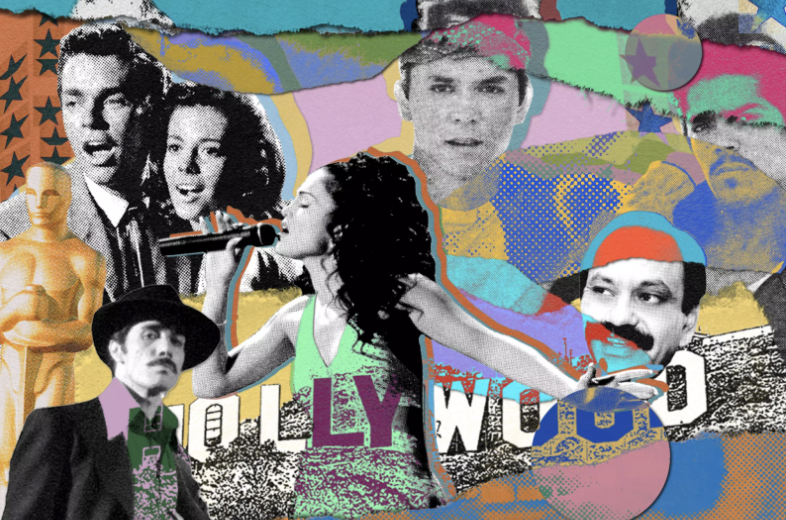
Image via the Los Angeles Times
***
Following the release of Disney’s Encanto, “We Don’t Talk About Bruno” became one of the most popular songs of 2021, reaching No. 1 on Billboard’s Hot 100. The visibility this song brought to the film made Encanto an overnight global sensation. Its vibrant colors, extremely catchy songs, and Colombian culture touched the hearts of so many people worldwide. For many Latino families, it was a rare moment when Hollywood actually got it right. It was rare to see a proper representation of the values of Latin communities on the big screen, not as side characters, criminals, comedic relief, or false stereotypes that Latinos live under regularly. Instead, it portrayed a complex and loving family at the center of the story.
While Encanto was a great addition to the media, it still falls under the exception. So while “we don’t talk about Bruno,” we should definitely talk about the strange paradox in American media that Latino communities have been part of.
Hispanics and Latinos make up 68 million out of the 348 million people who live in the United States. That means that, out of every 5 people, 1 is Latino. For decades, however, Latinos have remained dramatically underrepresented in all forms of media, whether that be films, shows, or news. A U.S. Government Accountability Office report, based on a study of 1,000 films from 2007 to 2019, found that only 5% of all speaking characters in film or television were Hispanic. Behind the scenes, Hispanic representation was higher in operating cameras and equipment, but only 4% of directors and writers were Hispanic. This is where more representation should occur in the first place. When ideas come from the same demographics, all other demographics will be underrepresented, as we have seen repeatedly in the media. When 19% of the country’s population sees only a sliver of themselves reflected on screen, it sends a quiet yet powerful message about belonging in American storytelling.
The lack of representation is a serious problem, but what’s even worse is that when representation does occur, it often falls into patterns shaped by history and society. The problem isn’t just about how infrequently Latinos appear but how they make these appearances.
This isn’t new either. The Library of Congress explained that in the late 1800s and early 1990s, motion pictures depicted Mexican men as criminals and overly sexualized Mexican women. These depictions weren’t random; they have been shaped by political tensions, debates surrounding immigration, and colonial attitudes. In 2026, this has changed only slightly. We see the “spicy Latina” all over the media, which impacts Latin women and girls all over the country. Rebecca Hernandez shared her thoughts with Nubian, the student paper at North Carolina State University, where she explained that, growing up as a Latina, she never found any representation of Latinas that actually aligned with her. Hernandez described the idea of an oversexualized Latina who’s “passionate and hot tempered…that serves as nothing else but arm candy for the (white) man she’s with.” People are obsessed with the idea of exoticness, thick accents, and tight clothes. An example of this is Modern Family’s character, Gloria, portrayed by Sofia Vergara. Gloria is extremely loud and emotional, wearing revealing clothing that accentuates her curves. This stereotype is very present in the show. The stereotypes don’t fall flat there either; the gang member, undocumented immigrant, and assuming all Latinos are Mexicans are all tropes that storylines consistently revolve around, which flatten such a diverse community into one almost inescapable false narrative.
Film and television are one thing, but the misrepresentation extends far beyond that. In the newsroom, there are scarcely any Latino journalists, which consequently leads to less Latino perspective in coverage. During the COVID-19 pandemic, over 80% of articles about COVID and Hispanic communities were written by non-Hispanic authors. Accounts about Hispanic communities are told from the outside looking in, which shapes how the media is received and framed. The media shapes how people perceive others’ behavior and how others act and take up space. When Latinos are portrayed as criminals and outsiders, public opinion shifts towards this suspicion, which is degrading and important to note in such a hectic political environment surrounding immigration.
There isn’t a lack of talent; instead, it’s a lack of opportunity that stems from these conventions.
Encanto is a beautiful milestone toward progress, but it shouldn’t be the only one. Now that the world is exposed to the richness of Hispanic culture, whether that be through Encanto or Bad Bunny, it’s time for a turning point. Representation isn’t just checking a box; instead, it’s recognizing the diverse culture we live in. It’s only fair to demand more voices and accurate stories about us.
***
This article was edited by Isabel Adkins and Georgie Javier.
 Luke Helmholz
  Gavin O'Sullivan
  Madelyn Marcisz