
Photo via Carnegie Council
***
To say that the idea of tradition is politically charged is an understatement. Politics and politicians are frequently confronted by the demands of catering to American tradition and the necessity of breaking through it in order to envision a better future. The wish to return to or revive traditionalism is indicative of political nostalgia. Maintaining common political and social precedent is a tool for utilizing our country’s rich past, but a reliance upon the concept of tradition allows mental relaxation on a much more sinister and corrosive political history.
To have political nostalgia involves feelings of nostalgia for a nation, political body, or more generally, believing oneself to belong to an identity that has been lost or degraded. Nostalgia is defined by Merriam-Webster as, “a wistful or sentimental yearning for a return to or the return of some real or romanticized past period or some irrecoverable past condition or setting.” It is commonly understood as a negative thing to give into nostalgia too much in one’s own personal life, and the effects of collective political nostalgia are much more drastic.
Political nostalgia appeals to a belief that the larger nationalistic entity of America has fallen from greatness, and that a reversion to the past would be a return to that greatness. Our nation is deeply afflicted with this. One of the most prominent issues surrounding political nostalgia is its appeal to nativism and xenophobia. Joris Larsen, a psychology professor, prescribes the issue as such: “Confronted by the arrival of migrants, people experience a lack of continuity in their ingroup identity and a lack of connectedness. Populism appeals to this, by romanticizing the ethnic homogeneity of past society.” The most troubling thing about this nostalgia or longing is that it is often not grounded in reality, but yet yields real political harm. Defending archaic tradition with a figmentary image of a perfect past leads to harmful political practices.
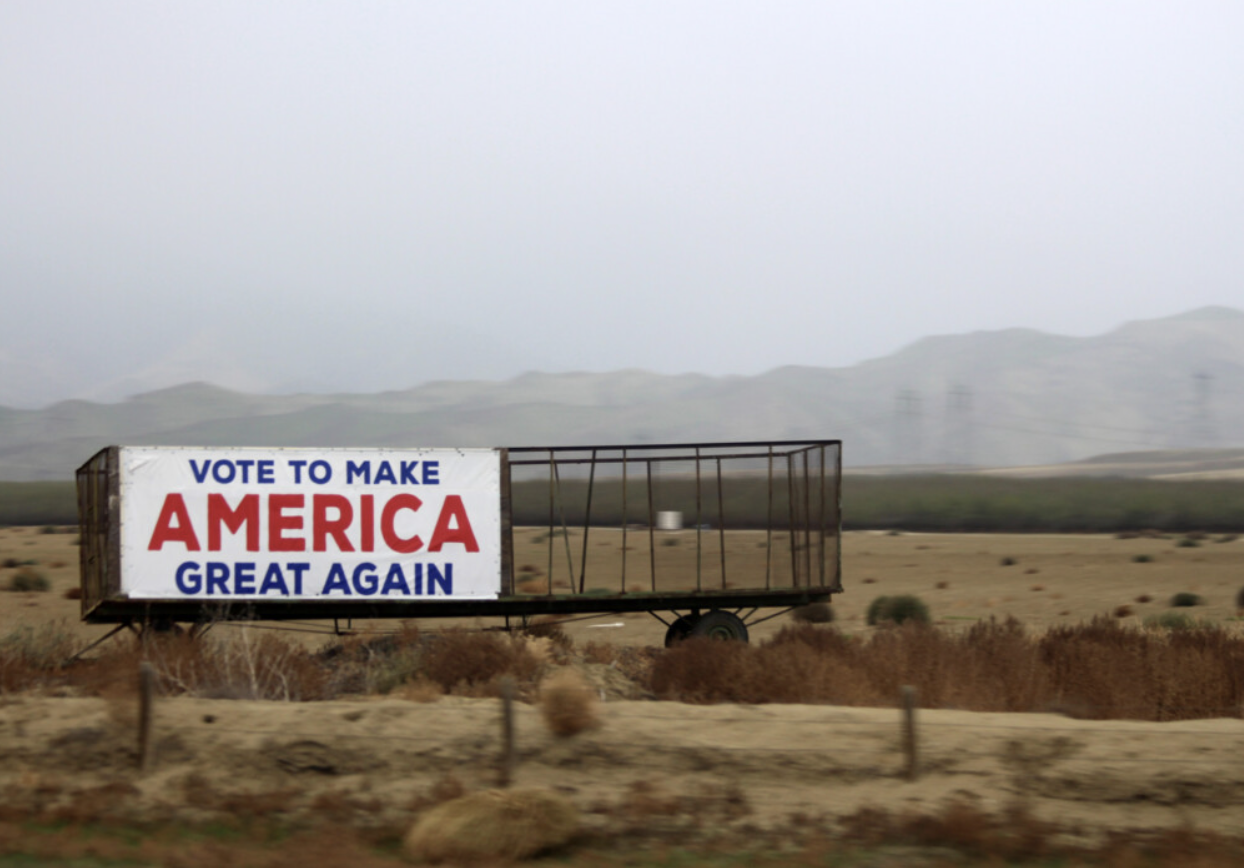
Powerful political convictions, when not explicitly grounded in truth or lived experience, can lead to the creation of attitudes that harmfully influence voting practices and legislation. Although the most recent example of this was President Donald Trump’s “Make America Great Again” campaign messaging, many other Republican presidents, notably Presidents Reagan and Nixon, have relied on similar feelings. It is often drawn from pre-existing discontentedness with economic or political circumstances, as well as existing prejudices.
Political nostalgia is a weapon of rhetoric which is as dangerous as it is effective. If a politician vying for office wishes to appeal to a group of working class white Americans who feel marginalized, one would want first to ascribe these problems to a historically villainized group, often immigrants, and pin the problems of the white working class on them. Capitalizing on this panic, the politician would promise to restore a purity that can only be found by further marginalizing the opposing group.
It is easy to desire simpler times, especially while enduring personal hardship. Politicians who are skilled at exploiting this will perpetuate harmful ideologies in order to market themselves as the solution. Thus the slogan, “Make America Great Again,” signaling that America has since lost this greatness, and that Donald J. Trump is the only individual with the ability to return the country to it.
So with this being said, how is the Democratic party likewise falling into the trap of Political Nostalgia? Trump’s election caused many Democrats to become nostalgic for Barack Obama’s presidency. Since he left office, many feel that the current Democratic party has had somewhat of a fall from grace. Nostalgia often encourages members of an in-group to view each other more favorably, and harbor more hostility for people not a part of their group. It, then, follows that an increased sense of nostalgia emanating from both parties also leads to a rise in political polarization.
If Conservatism was formed as a reaction to the Liberal vision of reform, and modern Democrats are characterized simply by supporting anything that rejects conservatism, neither political party can declare a wealth of values or specific policies that can accomplish them.
A political system conducted on the basis of two reactionary political parties does not reflect a system that benefits its population. Appeals to political nostalgia from both sides increase this conflict by conditioning members within those parties to view each other more favorably, and the “other” as inferior. This contributes to deep seated issues of political polarization and bigotry. It is evidently important as a participant in the American political system, to be keenly aware of when a politician, interest group, or political party defines their politics on the basis of a figment of political nostalgia.
***
This article was edited by Adam Sharqawe.
 Luke Helmholz
  Ayden Suber
  Isabella Villalobos