
Photo via PBS News
***
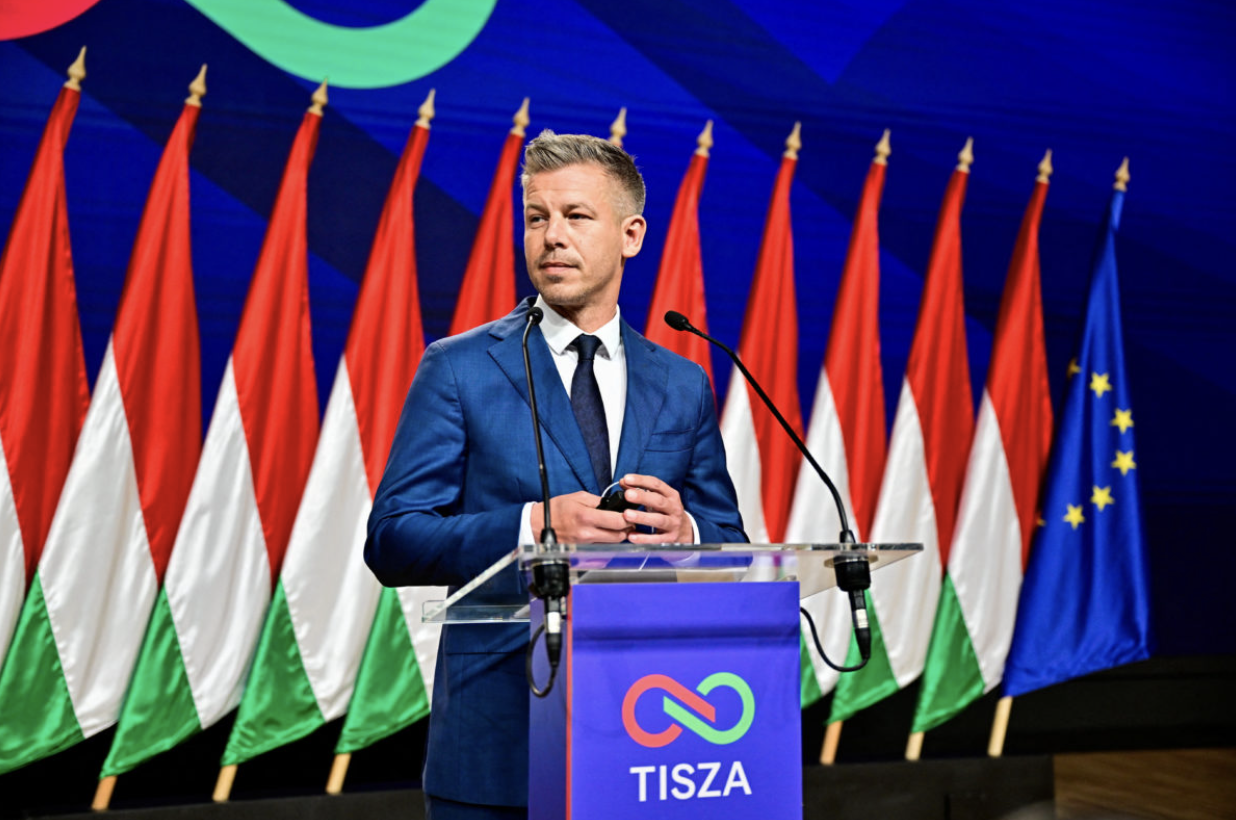
On Sunday, April 12th, 2026, Hungary held a parliamentary election that would determine their prime minister. The election had record high numbers of voter turnout, and was defined by incredibly high stakes for Hungary, domestically and internationally. The contrast in platforms between the two highest polling parties in Hungary contributed to this record turnout. The election resulted in challenger Péter Magyar’s Tisza Party winning a supermajority of the seats, defeating current Prime Minister, Viktor Orbán of the Fidesz Party.
Orbán has served as prime minister since 2010, and has had a profound influence on the country during his time in office. He has turned Hungary into a “hybrid regime,” with aspects of both democracy and authoritarianism. Orbán has placed control of approximately 80 percent of Hungarian media outlets with Fidesz officials and ideologically aligned groups, increased government control over school and university curricula, changed election laws to favor Fidesz, and has given the party control of the country’s judiciary.
Internationally, Orbán has consistently been one of the leaders most cooperative with Russian President Vladimir Putin in the European Union (E.U.), and has been a roadblock on E.U. support for Ukraine, recently blocking a 90 billion Euro loan from the E.U. for Ukraine and sanctions against Russia.
However, it was Hungary’s economic challenges and the corruption of Orbán’s government that may have played a pivotal role in voters’ decisions at the polls. These actions include giving control of hundreds of companies to Fidesz’s political allies, the transfer of citizens’ tax dollars to institutions and organizations friendly to the Orbán government, and the misuse of E.U. funds. The corruption under Fidesz has contributed to an underperforming economy compared to other E.U. member states. The lack of judicial independence has negatively affected economic growth and investment, and Hungary has also dealt with heightened inflation and a significant budget deficit.
Magyar ran a campaign focused on the issues of corruption and the economy, promising to improve economic growth, increase both public and private investment in the economy, restore the independence of institutions, and restore over 17 billion Euros-worth of funding to Hungary that the E.U. had frozen due to actions of the Orbán government leading to corruption and increasing government control of institutions. Due to Tisza obtaining a supermajority in parliament, they also have the ability to amend the Hungarian constitution and potentially remove anti-democratic changes made by Orbán’s government.
On foreign policy, Magyar has supported a closer relationship with the E.U., a far less friendly relationship with Russia than Orbán’s government had, and stronger opposition to Russia’s invasion of Ukraine, but has opposed Ukraine’s admission into the E.U. within the next decade and has been less supportive of long-term Russian sanctions than other E.U. countries.
Throughout United States President Donald Trump’s two terms in office, he has often been skeptical of American involvement in European security. However, this skepticism of intervention has not extended to parties that the administration views as their ideological allies, such as Orbán’s government. Trump has repeatedly endorsed Orbán, and prior to the election, U.S. Vice President J.D. Vance travelled to Budapest, Hungary to give a speech in support of Orbán’s campaign.
Vance has often been incredibly critical of the governments of America’s European allies; however, his speech in Budapest was far different, equating to a glowing endorsement of Orbán’s time in office. During the speech, Vance accused the E.U. of interfering with Hungary’s election, an ironic statement given his trip to Hungary and speech in support of Orbán less than a week before the election.
Following the election, on Friday, April 17th, talks began in Budapest between representatives from the European Commission and Magyar’s team to work to unfreeze the funds frozen by the E.U., as well as discussing the E.U.’s aid to Ukraine that Orbán previously vetoed.
Magyar’s government will have many challenges to face, including addressing economic issues, restoring independent societal institutions, and reestablishing Hungary’s foreign policy toward the E.U., Ukraine, Russia, and the rest of the world. However, the election demonstrates an optimistic message: citizens who have had leaders who tilt the rules to favor their personal interest and enrich their political allies still can have the ability to improve their country and leadership.
***
This article was edited by Ella Cohen.
 Abby Coxe
  Campbell Brown
  Holmes Wormald