
Image via Santa Barbara Independent
***
The Rise of Gru, one of the most monumental movies of all time, is widely known for the scene in which little Gru declares his career aspiration to become a super villain. While his grin and mischievous ambition at a young age make the scene hilarious, there’s more to it than meets the eye.
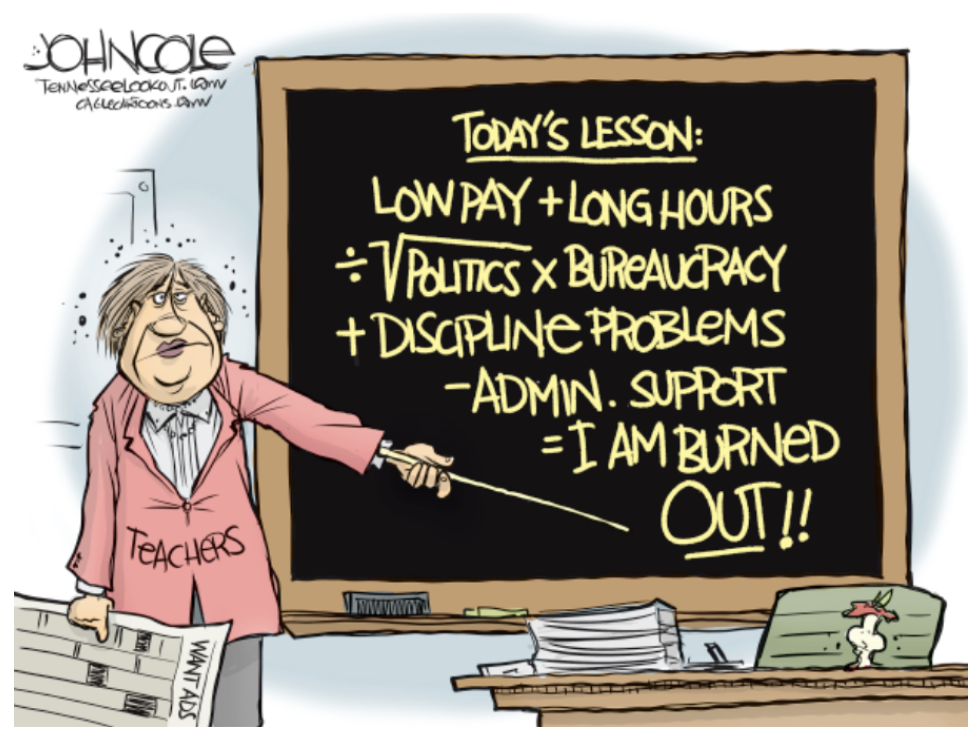
30 seconds earlier in that same scene, the teacher asks Ridley, a nerdy-looking little boy, what he wants to be. To which he eagerly responds with “teacher” and is met with a dooming and dismissive reply of “No, you do not.” She’s not the only teacher who shares these same thoughts, either. Almost all teachers usually poke fun at their job at least once during class. This brief exchange reveals something much deeper than a silly joke. It reflects a growing reality among teachers and society: teaching has become an undervalued chore.
So, why do teachers feel this way?
Teaching is one of the most underpaid professions. In 2025, “87% of teachers expressed concerns over low pay, and 40% worked extra jobs. Nearly 30% of full-time K-12 support professionals earn under $25,000.” Clearly, teachers aren’t to blame for complaining when their role takes on so much responsibility, but they aren’t properly compensated. In New York, the average starting salary for a teacher is $50,077 meanwhile the minimum living wage is $71,455. When the stereotype of teachers not earning enough to support a living is the reality, people who dream of becoming teachers don’t even familiarize themselves with the profession because that’s a lifestyle they’re not willing to afford.
Which segues into the teacher shortage. Low wages are one thing, but increasing tensions in schools due to tighter curricula and government controls have led people to stay away from education altogether. In the 2023-2024 school year, 406,964 teaching positions were either vacant or had teachers who were unqualified for a given class.
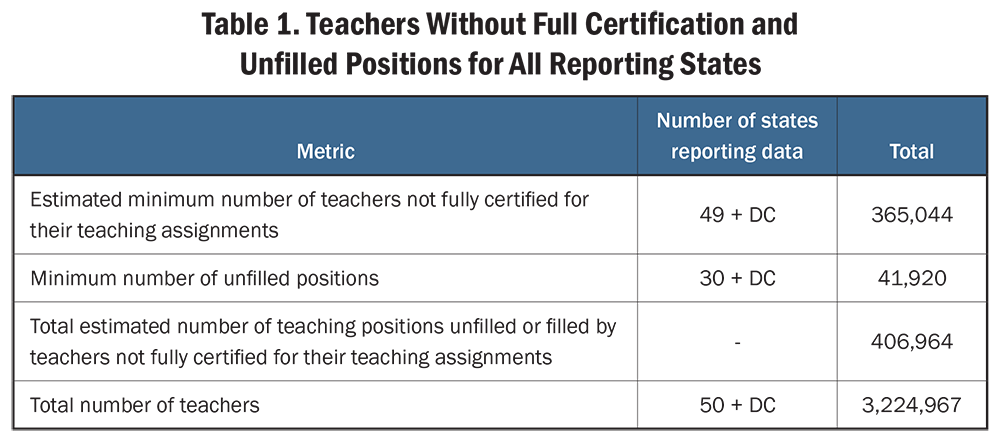
Image via Learning Policy Institute
***
When instructors are forced to teach three other classes outside their course specialty, they have to create entirely new lesson plans and curricula, while being paid the same amount for the extra effort. Not to mention, this has a significant effect on students and their school life. Fewer teachers mean less support and focus, and larger class sizes, which negatively impact students. The variety of roles they have to take causes extreme burnout. Eventually, it all piles up, and more teachers quit their jobs, and fewer want to get into/stay in the profession. Take Ruth Santer, for example, a teacher from Sacramento, California, who was so burnt out from working that she fell asleep at the wheel and struck another car. Following this tragic event, she decided to quit her job due to the mental toll it was taking on her life.
Although low wages and extra work have led some teachers to step away, recent concerns include a lack of autonomy and the increased politicization of education. Earlier this year, at Synergy Quantum Academy, a school in Los Angeles, Ricardo Lopez was terminated from his teaching position for opening a gate so students could walk out safely and protest against Immigration and Customs Enforcement (ICE). Similarly, book bans restricting any books relating to race, gender, or sexuality prompted great disapproval and put teachers in tight spots. In Oklahoma, Summer Boismier refused to stop teaching these books and loudly protested, encouraging students to keep reading and providing resources to continue doing so. She felt the need to resign, but was met with the superintendent revoking her teaching license; she can never teach in Oklahoma again. These are two out of hundreds of cases where teachers aren’t only underpaid and overworked, but also criticized and punished for protecting and ensuring that their students think critically. These teachers aren’t being overly liberal or controlling; they’re just doing their job by preparing their students for the world.
Society is at a big risk. There will be great consequences if we continue to silence educators.
So yes, while Gru’s teacher might have made a small, harmless comment. It goes much further than that. Teachers are the building blocks of society. The greatest doctors, lawyers, and engineers would not have reached their influential careers without their teachers. Whether that be their kindergarten teacher who taught them how to multiply, or their master’s teacher who helped them write a thesis, the one thing that has stayed constant in everyone’s lives is educators. There should be no reason why they’re looked down upon and disregarded as professionals. Teachers should not have to fear getting fired for expressing their thoughts and standing up for their students. When someone risks their life every day, the least society can do is value their impact. Let’s do our job as students to rethink education as a whole and start prioritizing what really matters for the future.
***
This article was edited by Isabel Adkins.
 Glenmarie Rios Rodriguez
  Sarah Olivia Sullivan
  Luke Helmholz