
Image via CNN
***
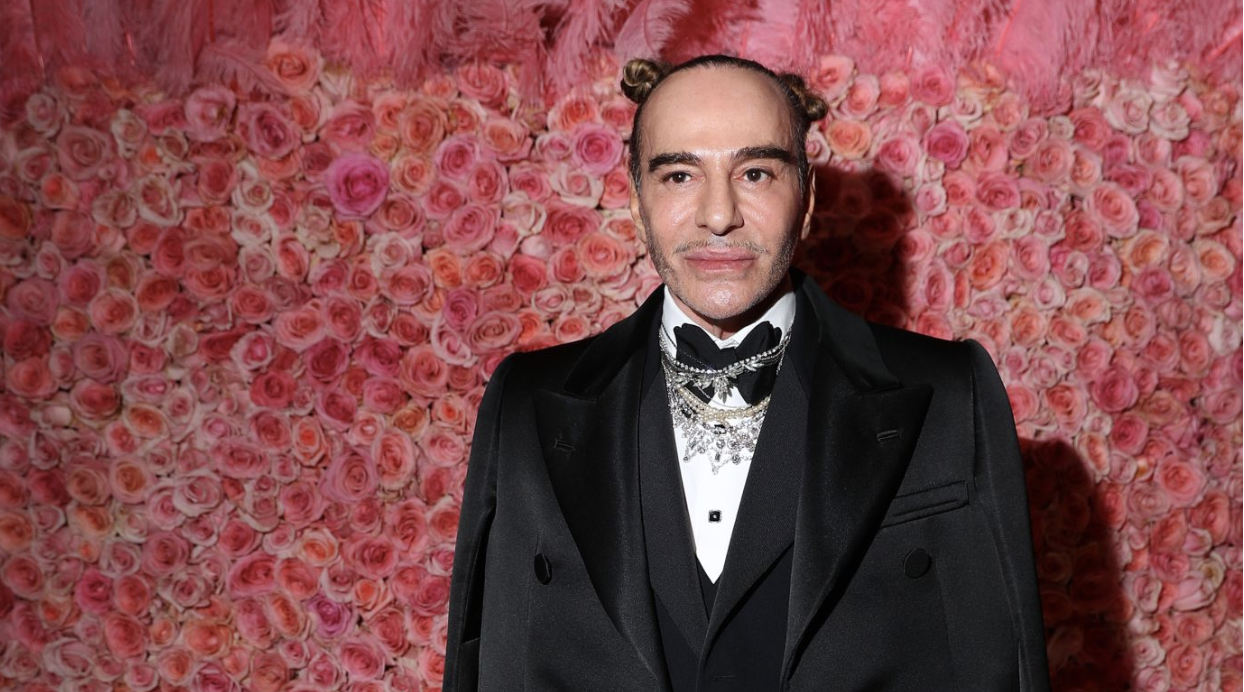
The 2026 Met Gala theme has faced many controversies upon its reveal. John Galliano’s designs were to be exhibited as the main theme of this year’s gala. A tribute only bestowed upon a few other designers, such as Rei Kawakubo.
Galliano made his debut as creative director of Christian Dior in 1996, but was eventually fired due to offensive remarks he spewed at people in his local Parisian Bar. In 2011, a viral video showed Galliano exclaiming hateful opinions such as “I love Hitler”, and ‘Your ancestors and forefathers before you would have been “gassed.” These statements resulted in him facing an anti-Semitism trial in France, in which he was found guilty and convicted of a hate crime.
After careful deliberation, the MET Institute has decided to revoke this honor in the name of morality and ethics. However, the question remaining is why this decision, and why now?
In a decision that takes months of deliberation, rounds of committee meetings, and endless discussion, how is it that such an intolerable decision was able to make its way through the cracks? In the very statements coming from members of the MET Institute itself, they emphasize the ardor that was used in meticulously planning this event. Andrew Bolton, Curator in Charge of The Met’s Costume Institute, claims, “I believe deeply in the responsibility of museums to examine difficult histories with rigor, candor, and care. I also recognize the pain and concern this exhibition has caused. After extensive discussion, I support the decision not to proceed. I remain deeply grateful to my colleagues and to the advisors, lenders, collaborators, and community leaders who contributed their knowledge, trust, and perspectives to the project.”’
So, it becomes an issue of accountability politics. Who atoned for what statement? How did they make amends? What led them down the path of making good?
As the Fashion Industry cycles through trends, The MET quickly cycled through Galliano’s controversies for the sake of showcasing the beauty of his work. It should not be a fight between aesthetics and morality when making a decision that will be historicized. While the checks and balances of this institution worked in favor of doing the right thing, it failed to do so from the start.
The retroactive decision to revoke the privilege of being honored is questionable. While it may not have been intentional, those with the power to choose the theme neglected to see how contentious their decision would be once in public purview. Rather than using critical awareness of the social and political implications that automatically come with the selection of Galliano, his skill and fashion-forward reputation were instead placed upon the pedestal of reverence.
One would assume that such a risky decision would not have been made in the first place, with the evidence piled up against Galliano—both legally and socially. Only upon hearing the noise of discontent was the honor finally revoked a month following the announcement.
While it has been broadly stated that Galliano has been working to right his wrongs, and his wrongs were made under the influence of multiple substances, his redemption was immediately equated with renewal. Seemingly, his wrongs were both forgiven and forgotten, especially as fashion already welcomed him back into work with Maison Margiela in 2014. Is it better to be an icon before being a paragon? It seems so, at least within this industry, so focused on the art of the guise.
Yes, Galliano educated himself on the sources of his hate. He met with a Rabbi, he became sober, and he visited the places he once publicly defamed. In a nutshell, he repented and became all the better for it. Genuine apologies were also accepted from the communities he outright disparaged, that being primarily the Jewish and Asian communities. In this sense, it seemed that a green light towards this dedication would be inevitable, but discontent for Galliano remained.
The MET only began to check its decision once others in the community began to call them out. For example, the Anti-Defamation League’s Johnathan Greenblatt, David Ingber, and Julie Menin all had criticisms on the matter. The general consensus was that this move was the most socially unaware decision to make. The MET overstepped and showed that only pressure can truly check those who believe the executive role is enough to absolve themselves of responsibility. Using reactivity in place of principality does not bode well for an institution that prides itself on its involvement with the culture of the world.
***
This article was edited by Naba Syed and Whitney Woodrow.
 Caroline Smith
  Giovanni Esposito
  Emma Trauner-Coady