
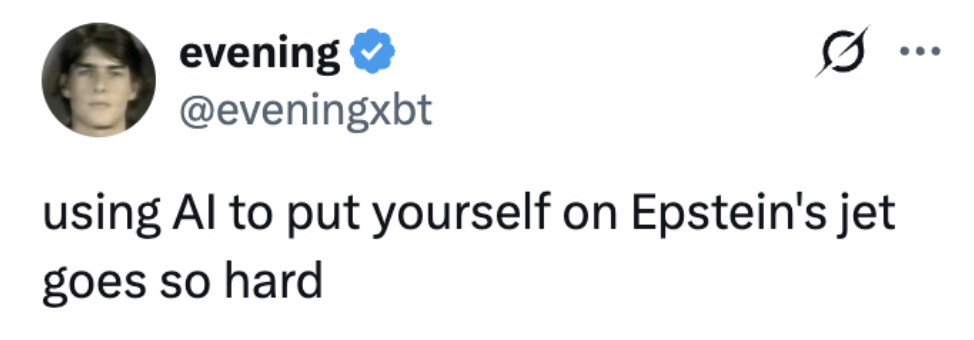
Image via X
***
How many of you have heard the phrase, “It’s a Diddy party?” For anyone who’s been around a group of high school boys, the phrase probably comes to mind immediately. Sean “Diddy” Combs was involved in a major criminal case, with accounts and witnesses coming forward with horrific stories about him. Throughout the ordeal, however, reactions were mixed. Some were horrified, others were unsure, and many, many more responded with laughter. A staggering number of people found the Diddy situation funny. In the midst of all the memes and jokes, the actual issue itself got muffled. Could memes be a problem?
For those unaware, memes are usually digital images, videos, or pieces of text that people copy, remix, and share widely. Often comedic, memes have become a major part of pop culture, especially among younger people. Most of the time, they’re harmless. But what happens when memes begin touching on serious real-world issues?
Memes are short and simple, which is part of what makes them so effective. In a world of ten-second TikToks and YouTube Shorts, they catch your attention almost immediately, leaving little room for context or explanation. A certain phrase, image, or format can be reused over and over again, turning memes into their own form of communication. People use them to express emotions, opinions, and reactions to the world around them.
The problem begins when serious issues become oversaturated with memes. Because memes are short, funny, and easily digestible, they can separate an issue from its actual context. The issue becomes less important than the joke.
We can see this with serious political and humanitarian issues. For example, phrases involving Israeli Prime Minister Benjamin Netanyahu and the war in Palestine have become memes. People repeat phrases like, “Benjamin Netanyahu! Nuke this! Nuke that!” Some argue that these jokes were meant to point out the absurdity or destructiveness of the situation. But once the phrase is repeated enough, its original meaning begins to disappear. A reference to a real and devastating situation becomes another internet joke, which eventually becomes oversaturated, unfunny, and forgotten.
This isn’t a new phenomenon. Comedy has often been used to cope with difficult experiences. Stand-up comedians, for example, often turn their own trauma into jokes, transforming something painful into something that can bring people joy. In a way, they are reclaiming their own experiences. When used in the right way, comedy can become a tool for healing.
Here’s where memes diverge, however. Memes are simple, easily copied, and designed to spread. Rarely are they personal, and never do they retain a personal connection to the meme itself each time it’s shared. Memes are about making a universal joke, a punchline anyone can understand and copy, lacking the intimate connection comedy holds for standup comedians, for example. They rarely have the space to actually explore the issue they reference. Instead, the traumatic event itself becomes the joke.
Jeffrey Epstein is a good example. Epstein’s Island and everything associated with him have become internet punchlines. Epstein’s island, the place that acted as a sex trafficking hub targeting children and vulnerable individuals, has become more of a boogeyman-esque hyperbole of a place. There is nothing funny about what Epstein did or the people he victimized. Yet for many young people, Epstein is more recognizable as a meme than as a real person who committed horrific crimes. The crime gets buried underneath the joke. It can’t help but feel like the sentiment behind the memes gets completely lost, more often than not.
But why? Why do we memeify everything, even when it’s objectively horrible?
Maybe it’s because horrible things are difficult to digest. When something is so disturbing that we don’t know how to process it, turning it into a joke gives us distance. Instead of sitting with discomfort, sadness, anger, or disgust, we can laugh and move on.
But discomfort is necessary. Sometimes we need to be horrified by the news. We need to feel appalled, angry, and disgusted by certain events because those emotions remind us that what happened was wrong. If everything becomes a joke, eventually nothing feels serious anymore.
So how do we move away from this? How do we draw the line between using humor as a tool for growth and a tool for the possible erasure of issues? Humor, when used in the right way, can draw attention to social taboos and topics otherwise not discussed or debated, for the sake of sensitivity. It gives us the ability to talk about hard topics that need to be discussed to create social change, poking at issues and asking necessary questions. English comedian Sarah Millican discusses her sexuality, her body, and her experiences being a woman in her sets. Topics like sex and menstruation are common subjects, and her crude, dry delivery of these otherwise taboo topics allows for the discomfort around these discussions to dissipate bit by bit, encouraging other women to be more straightforward about their experiences and their issues.
Comedy has been, and still is, an effective tool for pushing change. At the same time, however, its other forms, such as memes, can be harmful in producing meaningful discussions as well. The first step is recognizing when a meme begins replacing the issue it references. While there’s no one way to draw these lines, it’s important we stay informed through reliable sources and understand issues at their core, rather than relying entirely on X posts, TikToks, or memes that can be stripped of context or simply be inaccurate.
We can still laugh. We can still enjoy memes. But we also need to know when to stop laughing and actually look at what we’re laughing about. Keep your eyes clear, stay informed, and remember that sometimes, it is necessary to feel something.
***
This article was edited by Andrea Dominguez and Catherine Dalton.
 Giovanni Esposito
  Emma Trauner-Coady
  Claudia Senke