
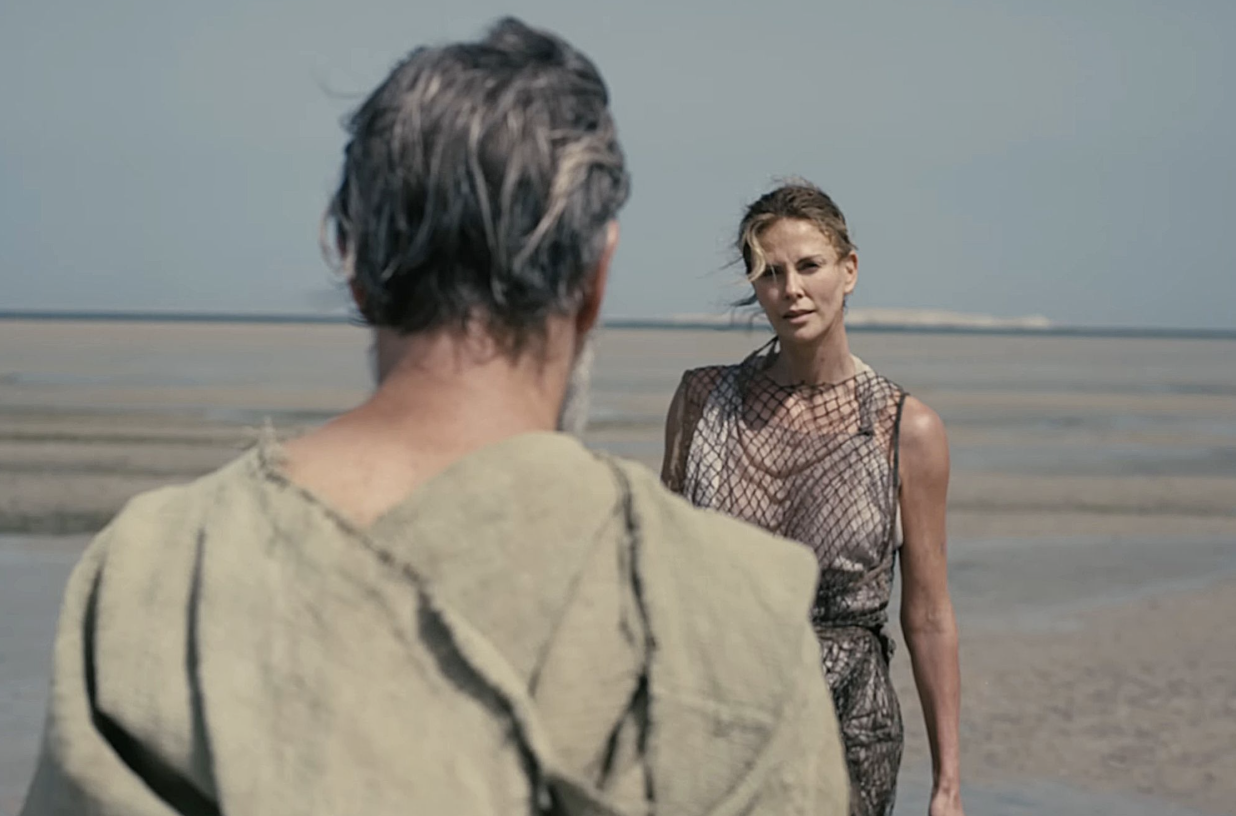
Image via Universal Pictures
***
Christopher Nolan’s The Odyssey was released in theaters in July 2026 and was immediately met with overwhelming praise. It’s currently ranked No. 2 among the fastest films to reach 1 million watched on Letterboxd and has earned a 94% approval rating on Rotten Tomatoes. However, not everyone was a fan. Namely, Emily Wilson, a professor of classical studies at the University of Pennsylvania and a translator of Homer’s The Odyssey.
Wilson’s translation of the epic poem is renowned for its fidelity to the original “fleet-footed” prose Homer used, and the New York Times named it one of its 100 notable books of 2018. One reader of this translation is Christopher Nolan, who cited Wilson’s work when discussing his methods for adapting the ancient poem into a feature film.
Following the film’s release, Wilson published her critique of the adaptation. Wilson called out Nolan, saying that the film “features his usual combination of grandiosity and superficiality.” Exposing how the film uses visual captivity to make up for the lack of emotional depth.
Among Wilson’s more pressing critiques is the portrayal of female characters in Nolan’s adaptation. Speaking on Nolan’s portrayal of Penelope, the queen of Ithaca and wife of Odysseus, Wilson said, “…the script gives [Penelope] nothing to do except yearn for Matt Damon, for reasons unknown. The couple has no chemistry and nothing in common. Throughout his wanderings, the uxorious Odysseus clings to a little doll figure, intended to represent his wife…the real woman is barely more interesting.” This idea extended beyond Penelope, as Wilson explains how the female characters in Nolan’s adaptation were reduced to nothing more than a “brief tableaux of female victims.”
This process of reducing female characters in film adaptations is not new. For example, this process has been exemplified in many adaptations of Mary Shelly’s Frankenstein, in which female characters lose their original narrative arcs, are recentered on romantic pursuit, or are cut entirely. But why does this happen? One possible explanation is the male gaze. The male gaze is a film theory created by British feminist film theorist Laura Mulvey. It is described as a film depiction based on a heteronormative, male-centric perspective. In other words, films that conform to the assumed reality of straight men. Relating this to Penelope in The Odyssey, reducing the nuanced character from the source text to a wife, unrelenting in her faithfulness, better suits America’s heteronormative, patriarchal society today. Or rather, it is more comfortable for straight men to consume digital media when it is presented for their gaze.
These issues ultimately led Wilson to claim that she “would be ashamed to have written any part of this script…” But how did the public react to Wilson’s opinion of the film? Following the publication of Wilson’s critique, public opinion was widely divided. Much of the backlash Wilson faced stemmed from the tone she adopted in her review. X was flooded with posts calling Wilson out for her hateful choice of words when speaking of someone who is considered a major cultural presence.
This response highlights a broader issue: the reaction to women’s anger regarding their work. This cycle of misogyny is well documented; according to a study by the National Library of Medicine, women who express anger in their work are often sanctioned when a man would not be. This system is displayed in the public reaction to Wilson’s critique. Wilson’s expression of disappointment that her work was cited in the creation of Nolan’s adaptation, yet felt absent from the final product, was met with opposition. This opposition matters because one of Wilson’s major concerns was the reduced representation of female characters.
Taken together, Nolan’s adaptation of The Odyssey, Wilson’s opinion of that adaptation, and the public backlash demonstrate a broader systemic issue: the misrepresentation of women’s work and the sanctions they face for voicing their disapproval.
***
This article was edited by Elaina Gibson and Cameron Ma.
 Christian Dziura
  Javeer Khan
  Amelia Felice