
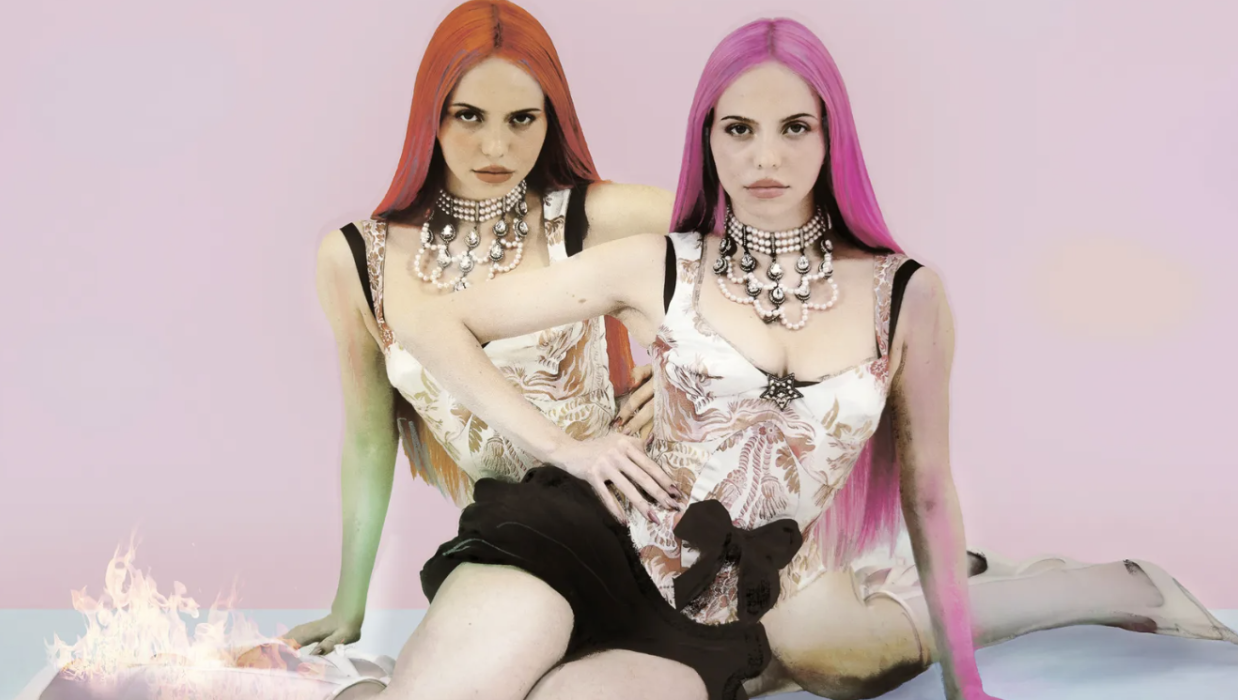
Photo via: Teen Vogue
***
At eight years old, most American kids would beg their parents to stay up and mindlessly absorb iconic Disney Channel reruns. In Bratislava, Adéla Jergová was the master spy of nightly sting operations: watching Hannah Montana and YouTube until her eyes bled, teaching herself English, and obsessively studying pop stardom.
Jergová’s early infatuation with American pop culture and the recording industry pivoted into a longstanding lesson. In order to emulate her idols, Jergová westernized and left her Slovakian culture back home, then embraced her immigrant identity to mold herself around pop culture.
The coercion to assimilate into Western or American culture, as Jergová felt as a child, to “make it big,” is very familiar. Political scientist Joseph Nye coined this concept in international politics as soft power. Whether it stems from iconic films like The Godfather or McDonald’s advertisements, American pop culture is transformative for non-Americans; it shapes entire perceptions and values of the United States based on what the country pushes out to them. Soft Power is not coercive, such as propaganda or American politicians spewing hate through forums, but the ability to influence is equally powerful. A silent cultural hegemon, the worldwide youth are conditioned to internalize Western culture to attain American success.
Attempting to assimilate into American culture creates profound internal struggles, as Jergová recounted in a Vogue interview about her debut EP, The Provocateur (2025). She openly appreciated being “an immigrant in America,” while feeling her Slovakian culture belittled her and triggered her need to learn perfect English. Her Paper magazine interview for her debut album, Prima (2026), conveyed this early process of “conversion” and of perfecting her English: ingesting American media and philosophies from pop stars.
Erasing her Slovak culture and perfecting an American accent were institutionalized necessities for adopting Western culture. To avoid the constraining box of an “exotic” novelty, Jergová knew that internalizing her Eastern European vibe was the default pathway towards American pop girl stardom.
Her original dream began while navigating the landscapes of a post-communist Slovakia. Jergová was a classical ballet dancer until the age of 14, leaving behind her family to train in England and Austria. The opportunity to compete in Netflix’s global audition program, The Debut: Dream Academy, came to Jergová in 2022. At 18, the artist moved to Los Angeles by herself. Despite her elimination in the first fan-voted round, Jergová launched her solo career and channeled her Slovak origins into creative fuel.
Jergová specifically incorporated these cultural motifs into her global hit “Ain’t in LA.” An immigrant anthem, the third single off Prima emphasizes that the baddest girls are NOT necessarily from LA, but they come from every small town out there. The inspiration stems from pictures of Jergová’s mother in front of Western pop culture posters, smuggled into then-communist Czechoslovakia by the artist’s grandfather. This music emphasizes the perpetual idea: dreams of fame and stardom can manifest and materialize from anywhere across the globe.
She truly is the future of pop music. Jergová refuses to remain a byproduct of Hollywood’s corporate mechanisms, incorporating her pop culture knowledge while incorporating her own cultural twist. Jergova notes honing references from Eastern European films and aesthetically famous “Slavic Doll” models of the 2000s on her moodboard. Even so, singer-songwriter Ariana Grande has been Jergová’s “parasocial north star” since the release of Grande’s album Dangerous Woman.
Returning to Slovakia from Los Angeles after Dream Academy, Jergová wrote a pop manifesto, detailing her dreams of fame while looking at her childhood posters of Lady Gaga, Madonna, and Britney Spears.
And why deny it? Jergová states in her lyrics from the single “KGB,” “I’m like a spy, I studied this shit.”
While analyzing and incorporating the concepts of American soft power among the pop industry, Jergová’s fame proves that this theory may not be as strong as it seems. The singer studied Western media and pop girls, transforming from a child obsessed with foreign culture into a rising artist who dominates the charts with her debut album. These mechanisms stemmed from her own terms, rather than the determination of a music label. Western hegemony may continue to toy with the reins of global fame. However, anyone can be raised in a small town, decode the systematic code for fame, seize their story, and become a pop icon. Don’t think so? Look at Adéla.
***
This article was edited by Olivia Gleason and Mariella Richards.
 Christian Dziura
  Javeer Khan
  Amelia Felice