
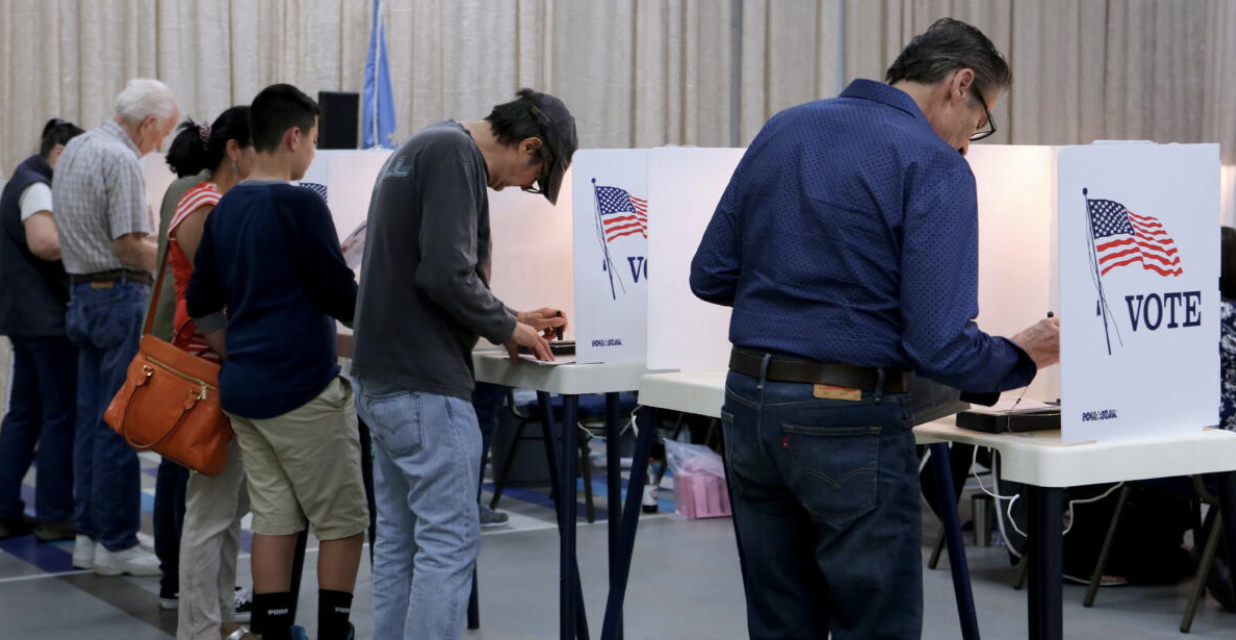
Photo via: LA Times
***
In a time of rising political polarization, there seems to be one thing that many Americans can agree on: elected officials do not care what they think. In a 2024 Pew Research Center article, more than 80% of Americans surveyed in July 2023 said they do not think most elected officials care about what “people like them” think. This figure is considerably higher compared to the early 2000s, when a significantly smaller percentage of Americans felt this way. This dissatisfaction appears to stem from a perceived lack of political influence, with seven in ten Americans believing ordinary people have too little influence over congressional decisions.
When it comes to what Americans believe motivates today’s elected officials, 63% say it is their desire to make a lot of money, rather than addressing issues they care about or serving the public. Despite the United States’ intense political divisions, this discontent is not directed toward any one party in particular. A more recent Pew Research Center survey found that around 25% of Americans felt that neither the Republican nor Democratic Party represented their interests well. This apparent lack of trust directed toward elected officials, along with lackluster party representation, pushes Americans further away from engaging in democracy.
Being able to vote does not bridge the gap in representation between citizens and politicians. Feelings of being sidelined, alienated, and neglected may prevent citizens from actively participating in elections. These concerns are particularly relevant to working-class Americans who tend to feel less confident in their ability to influence politics. A 2024 article published in PNAS cites a 23% voter-turnout gap in the 2020 election between Americans without a four-year college degree and those with one. Working-class citizens also face practical obstacles to reach the ballot box, such as difficulty getting time off work and limited access to polling locations due to their reliance on public transportation. Encouraging participation, therefore, requires not only making voting more accessible but also giving citizens a strong enough reason to believe their participation matters.
The United States’ electoral system illustrates how constituent preferences can go unrepresented at a national level. For most elections, the U.S. uses a single-member district, winner-take-all (or first-past-the-post) system. Under this plurality voting system, the candidate who receives the most votes wins, with no majority necessary. For the House of Representatives, this means the candidate with the most votes wins the district’s only seat. If a candidate received 40% of the vote, beating two other candidates who received 35% and 25%, respectively, the candidate with the majority will be the only one to receive a seat. This majoritarian system incentivizes voters to support majority candidates with realistic chances of winning, rather than a smaller party that might better reflect their political views. Many voters do not want to “waste their vote,” leading them to vote strategically rather than expressing their true preferences.
The Netherlands, by contrast, takes a different approach to political representation. Its 150-member House of Representatives is elected through proportional representation, a system that allocates seats according to the national percentage of votes each party receives during elections. For example, a party that receives 10% of the national vote would gain 15 seats in the Dutch House of Representatives. Even if a party did not finish first or win a majority, it can still enter parliament based on its share of the national vote. Proportional representation is often regarded as the solution to America’s representation problem. Under this system, the nuances of whether a Republican were voting in a blue state or a Democrat were voting in a red state wouldn’t matter: a vote for either minority party could still count towards winning seats.
But, in places where proportional representation is the standard, do voters actually feel represented? According to Statistics Netherlands, in 2025, only 21% of people aged 15 and older had a high degree or fair degree of trust in their politicians. Similarly, only 25% trusted the House of Representatives. These are the lowest percentages the survey has reported since it began in 2012. Another survey by the Organisation for Economic Co-operation and Development (OECD) found that only 37% of Dutch individuals feel they have a political voice. Although these results do not directly correlate with proportional representation causing dissatisfaction, they suggest that the system alone may not be enough to address citizens’ concerns about feeling heard or represented.
The Dutch example indicates that, although there may be a closer correlation between votes and seats, proportional representation alone will not resolve the issue of political dissatisfaction. Still, voters should not have to accept feeling unheard as an inevitable part of democracy. Citizens should be able to expect that their concerns receive acknowledgment and that they have opportunities to hold their representatives accountable. Thus, while electoral reform may increase general representation throughout the United States, the amount of trust citizens have in their elected officials depends on the actions they take to advocate for their constituents’ concerns in office.
***
This article was edited by Christopher Bongiorno Jr. and Georgie Javier.
 Nadia Garriga
 Anne Eslick-Persyn
 Aidan Rodrigues