
Image via CNN
***
Americans are living amidst a constant outpouring of terrible news. The modern world has more access to information than ever before. Between our founding Constitutional document validating the legality of detention camps and recent tech digests such as “how Silicon Valley Stole the Future,” headlines in newspapers and webpages regularly feature apocalyptic titles of almost Biblical proportions. We live in a time of angels and devils, of perceived unequivocal right and wrong. The left and the right are each sentencing the other to sin and elevating themselves to sainthood. Sources of authority are constantly echoing the single refrain that the political condition of the world is the worst it’s ever been. In this state of perpetual exhaustion, how can young Americans fight defeatist narratives?
The answer to the above question is certainly not in isolation. Modern political parties are defined as one side of an enormous ideological gulf, and their members are supposedly never to catch sight of the other side. This world of political polarization calls to mind a quote from Emily Brontë’s novel, Wuthering Heights, where Heathcliff forlornly shouts, “Do not leave me in this abyss where I can not find you.” Ideological isolation in a Democratic system that necessitates people across belief systems to work together is unproductive. This chaos raises the question: can cooperation find a way to thrive in these hostile conditions? I believe that it is possible for us to be witnesses to the remaking of a world where we can find each other. James Baldwin says that faith, when amalgamated with action, is essential to building a better political reality: “Otherwise, [he says] of course, you can despair. Walk down the street of any city, any afternoon, and look around you. What you’ve got to remember is that what you’re looking at is also you.” In other words, the disaster unfolding around us does not preclude the individual’s active role in continuing it. It is essential to understand one’s responsibility, earned by being born into a divided world. It is a responsibility to choose, actively, with the devotion of a worshipper, not to attach oneself to the cycle. Despair is a passive emotion. Therefore, alternatives to despair must be found. Faith, an age-old tradition which has fallen out of vogue with the modern world, is one such alternative.
The faith this article discusses is not of an explicitly theistic nature. The type of faith that Baldwin advocates for is Political Faith. To have Political Faith is to invest in a future that has not yet materialized by devoting to it committed political action. Political Faith, when practiced responsibly, does not portray, as Ta-Hehishi Coates says, “the comforting narrative of divine law toward fairy tales that imply some irrepressible justice.” Instead, it should entail a comprehensive understanding of the history that has led our country into its current state of destruction. The systems of repressive thought that are so prevalent now have always existed; racism and xenophobia were born alongside the American Dream. What comes crashing down around us is not the end of America, but the end of the illusion that America is, and will endurably be, a fair and just place. Baldwin offers strong words regarding this point. He attests that, “to accept one’s past – one’s history – is not the same thing as drowning in it; it is learning how to use it.” He goes on to say, in his acclaimed work of non-fiction, that a figmentary past is of no use to those who exist within the current systems, which include all citizens of modern America.
Religious language is often used to antagonize those on the left end of the political spectrum. However, the truth is that regardless of political party, the value of faith runs deep in the values of Democracy, something that a vast majority of American citizens, regardless of faith tradition or political party, strive to preserve and protect. Faith in the future requires us to question the extent to which our current systems serve us, and be awake to the fact that fixing them may be beyond the scope of any of our lifetimes. While this fact is harrowing, it is this coinciding knowledge of reality and having a vision for a better future that constitutes faith. Faith is needed to hold these conflicting ideas simultaneously. It is what is missing entirely from those common political messages of despair.
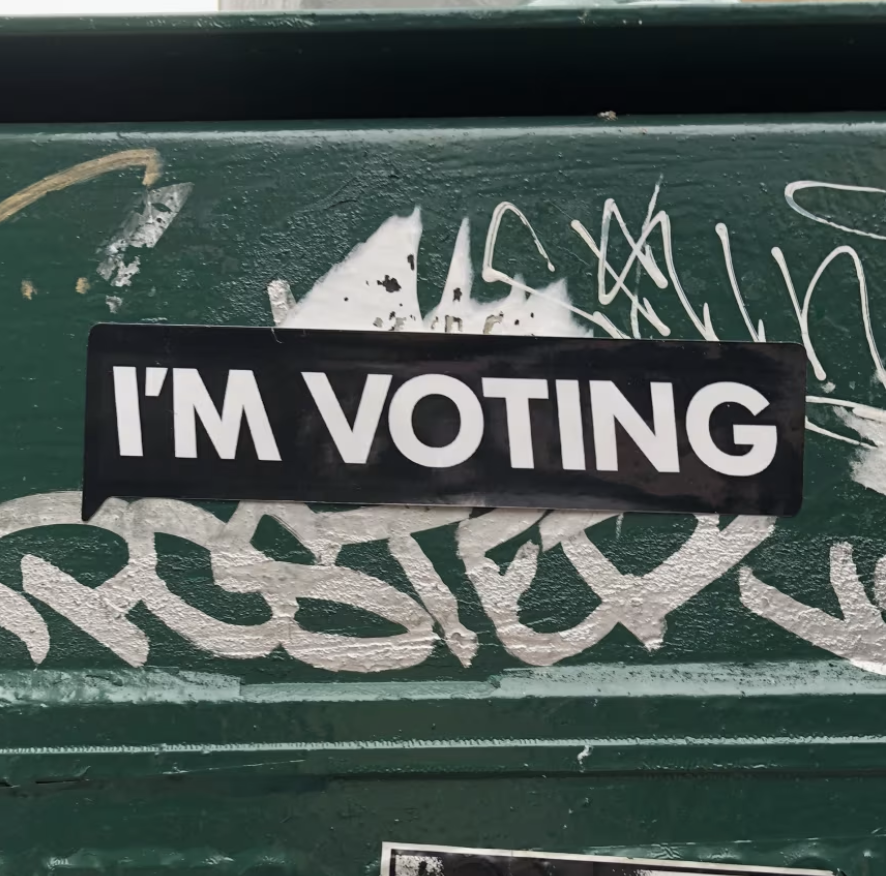
David E. Price, a former U.S. representative, draws on the religious roots of American Democracy. He argues that faith does not have to condemn non-believers of a certain religion in the political sphere. “Faith” is not constrained to one political or religious orientation. Rather, the qualities that faith requires, such as passion and conviction, are core tenements for a functioning democracy. We can nurture our political systems by engaging in the processes that make them unique. With midterm elections around the corner, I will refer back to the most essential act that people who believe in the future of this country can take, which is using their right to cast a ballot this November. It is natural for things to feel hopeless, but it is absolutely essential to maintain faith and to turn this faith into action. We may not see the fruits of this faith in our lifetimes, but we can be a witness to the work that makes the complicated, weary legacy of American Democracy better than we found it.
***
This article was edited by Ferdinand Rivera Ortega and Julianna Wottawa.
 Nadia Garriga
 Lauren Fattorusso
 Aidan Rodrigues