
Photo via: NYTimes
***
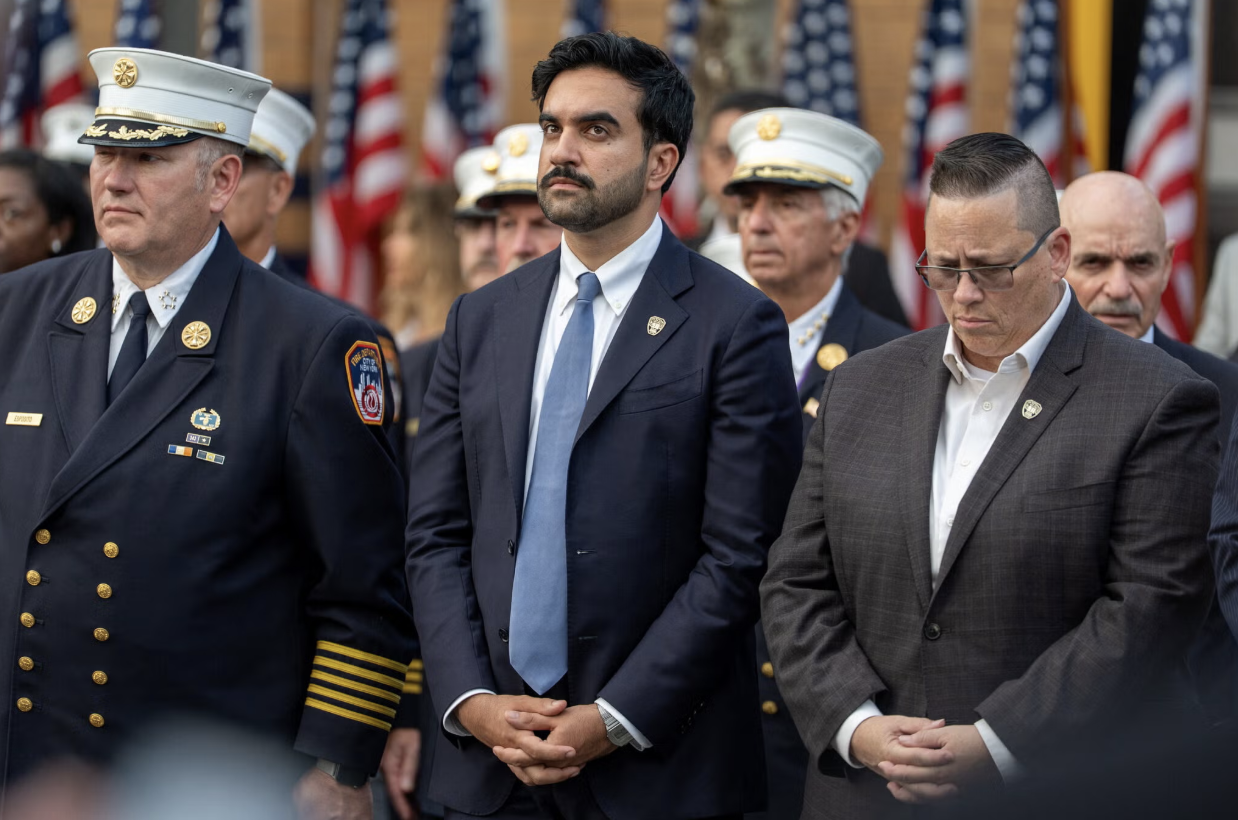
Friday, Sept. 11, 2026, marked the 25th anniversary of the attacks on 9/11, with the annual New York City memorial holding a particularly grave weight for those who lost loved ones. However, there was particular concern about Mayor Zohran Mamdani’s attendance at the memorial, with many families signing a petition calling for his absence. The discourse surrounding these concerns elicits a difficult question: how can a memorial like this, meant to honor and respect fallen victims, avoid political controversy and disagreement?
The petition, drafted in July 2026 on Change.org, was created by Giovanni Galante, whose 29-year-old wife, Grace, was killed during the events of 9/11. Among others expressing concerns about Mamdani’s attendance, Galante does not believe that Mamdani’s public positions or associations align with the memorial’s values. Specifically, these concerns center on his connections to Brooklyn Imam Siraj Wahhaj, New York City’s chief counsel Ramzi Kassem, and Mamdani’s own father. For families still grieving the loss of loved ones, Mamdani’s outward support for these figures made his attendance a deeply personal matter.
The former New York City Mayor Rudy Giuliani seemed to take a more intense approach in denouncing Mamdani’s attendance. Giuliani stated that Mamdani is a “clear supporter” of Muslims having “every desire to take us over.” Prejudiced statements like these shift the discussion away from concerns about Mamdani’s administration and toward divisive questions concerning his religious identity. Focusing on whether a Muslim mayor belongs at a memorial that is meant to bring the city together further distracts from the true purpose of the ceremony.
Leading up to the memorial, Mamdani issued a statement in response to public backlash and criticism, including comments from Giuliani. He confirmed that he would be attending the 9/11 Memorial, emphasizing his commitment to the families that lost loved ones and the first responders who put their lives at risk. While his response may not fully address the petitioners’ concerns, it underscores the principle that attending a citywide memorial should transcend political alignment.
In light of this controversy, many others have expressed similar sentiments. City Council Speaker Julie Menin rejected the calls for Mamdani’s exclusion, calling them “completely inappropriate.” Menin has served on the 9/11 Memorial’s board and foundation since its creation, and previously chaired Manhattan Community Board 1 for years during the post-9/11 recovery period. She emphasized the intentional separation between politicization and remembering those who lost their lives.
Elizabeth Miller, the project director of September 11th Families for Peaceful Tomorrows, also supported Mamdani’s inclusion. Miller, whose father was killed in the attacks, believed Mamdani had a right to attend and honor those who lost their lives. Miller and the organization also strongly advocate for the closing of the United States military detention camp at Guantànamo Bay, and have been since 2016. This opposition to Guantànamo Bay’s prison and its unlawful, indefinite detention practices challenges how the 9/11 attacks are used to justify harmful actions against others. In its statement in response to calls for Mamdani’s absence, the organization further disapproved of the usage of the attacks to justify prejudice, condemning the anti-American and Islamophobic sentiment within efforts to exclude Mamdani.
Ultimately, these different reactions underscore a harsh divide among the victims’ families; while many viewed Mamdani’s presence as disrespectful, others firmly defended his participation. The concerns of the victims’ families unquestionably deserve acknowledgment, but this conversation over attendance risks overshadowing the remembrance of the victims and detracting from the solemnity of their memorialization. Political officials should attend events like these to listen, pay their respects, and show support. As Menin said, the focus should rest neither on who is attending, a visitor’s religious identity, nor their political affiliation, but solely on honoring the victims of the Sept. 11 attacks.
***
This article was edited by Christopher Bongiorno Jr. and Georgie Javier.
 Christian Dziura
  Javeer Khan
  Amelia Felice