
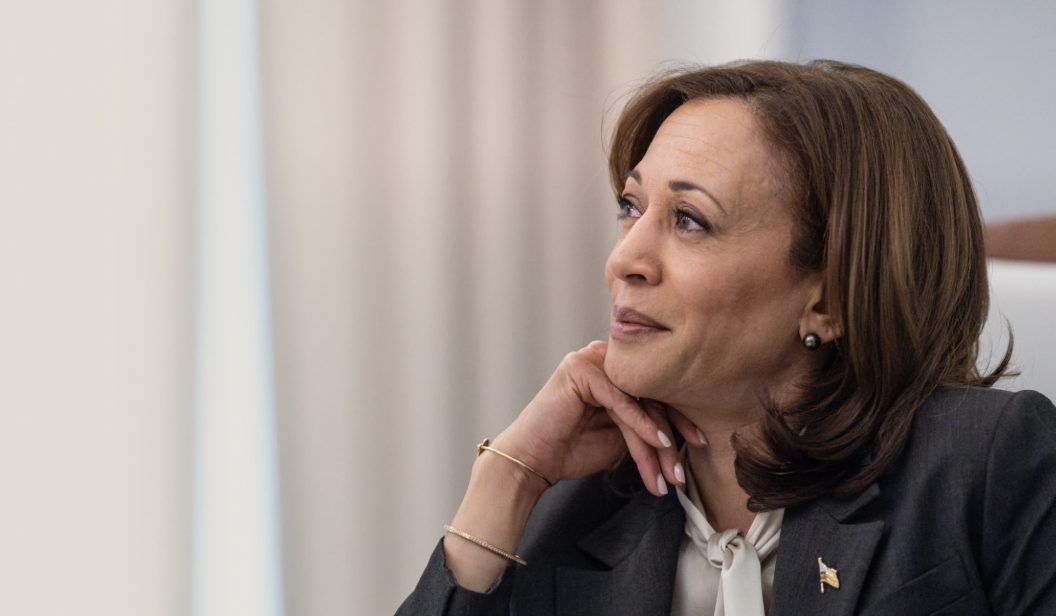
Image via The Office of Kamala D. Harris
***
As she exited the stage at an event on Friday, April 10, Kamala Harris stated that she is “thinking about” running for president again in 2028. When Reverend Al Sharpton at the National Action Network convention asked Harris she stated, “Listen, I might, I might. I’m thinking about it,” in regards to a future bid. If she runs for president again, the question will not just be whether Democrats are ready for a second Harris campaign. It will be whether she has learned the central lesson of her last one. In American politics, persuasion has limits.
Kamala Harris did not lose the 2024 presidential election solely due to a lack of time, money, or messaging. Harris’s campaign demonstrated that even a well-funded, carefully organized campaign can only move voters so far. Harris ran an intense and expensive campaign. She utilized modern media tactics effectively and benefited from strong institutional backing. Yet the results exposed a central truth about elections: campaigns can bolster messages, but they cannot force voters to accept them.
Seemingly, Harris’s strongest performance came where alignment already existed. Among young voters, her campaign demonstrated an understanding of how current political communication functions. Rather than relying on traditional outreach, such as doorknocking, she met voters where they were at. She communicated most efforts through social media, such as Tiktok or Instagram. In an environment, where trust, repetition, and emotion matter more than one might assume, her campaign reduced the distance between politics and daily life. The result was increased engagement and a noticeable shift in how young voters interacted with political content. However, this wasn’t a unique approach, and it certainly won’t be in the 2028 primary for the Democratic candidate.
A similar dynamic played out among progressive Democrats. Harris successfully framed the election as a moral decision centered on the “future of American democracy,” transforming voting from a policy issue into a value-driven act. This worked because she did not attempt to change voters’ beliefs, merely attempted to unify herself with progressives and moderates.
These successes, however, shed light on the other shortcomings of her campaign . Harris struggled to persuade male voters and issue-based voters focused on the economy and immigration. Voters who rely on retrospective evaluations of economic performance, for example, were unlikely to be swayed by optimistic, forward-looking arguments.Thus Harris’ pitfalls reveal something far more analytically useful, that the simplest explanation for many voters was that the current party in power was responsible for their economic frustration; no amount of messaging could fully overcome that baseline perception.
Immigration presented a parallel problem. By placing Harris at the center of a politically volatile issue early in the administration, the White House tied her public image to a policy area with high salience in which she became a symbol. When voters begin to associate a candidate as being the symbol of a problem they may believe they’re facing, they collapse the distinction between a system and an individual. This type of perception is resistant to campaign messaging.
Harris’s success with young voters and progressive Democrats shows that targeted, well-aligned messaging can shift engagement and turnout. However, the lesson is that persuasion is conditional. It depends on credibility, but it is highly dependent on alignment with what voters already think and feel. Without that alignment, even the most disciplined campaign will struggle.
Her previous campaign will likely be remembered less for its tactical decisions than for what it reveals about modern political influence. Leaders and institutions can increase the volume of an idea, but they cannot guarantee its message is heard and accepted. A second Harris campaign would not start from scratch. It would launch with an in-depth understanding of persuasion within the American political system. The challenge is whether that understanding can become a strategy that does more than amplify a message. Rather this new strategy must seek out the narrow yet crucial space where voters will not just hear campaign policies but listen and believe in them.
***
This article was edited by Emma Zadrima and Margot Sleeman.
 Luke Helmholz
  Gavin O'Sullivan
  Madelyn Marcisz