
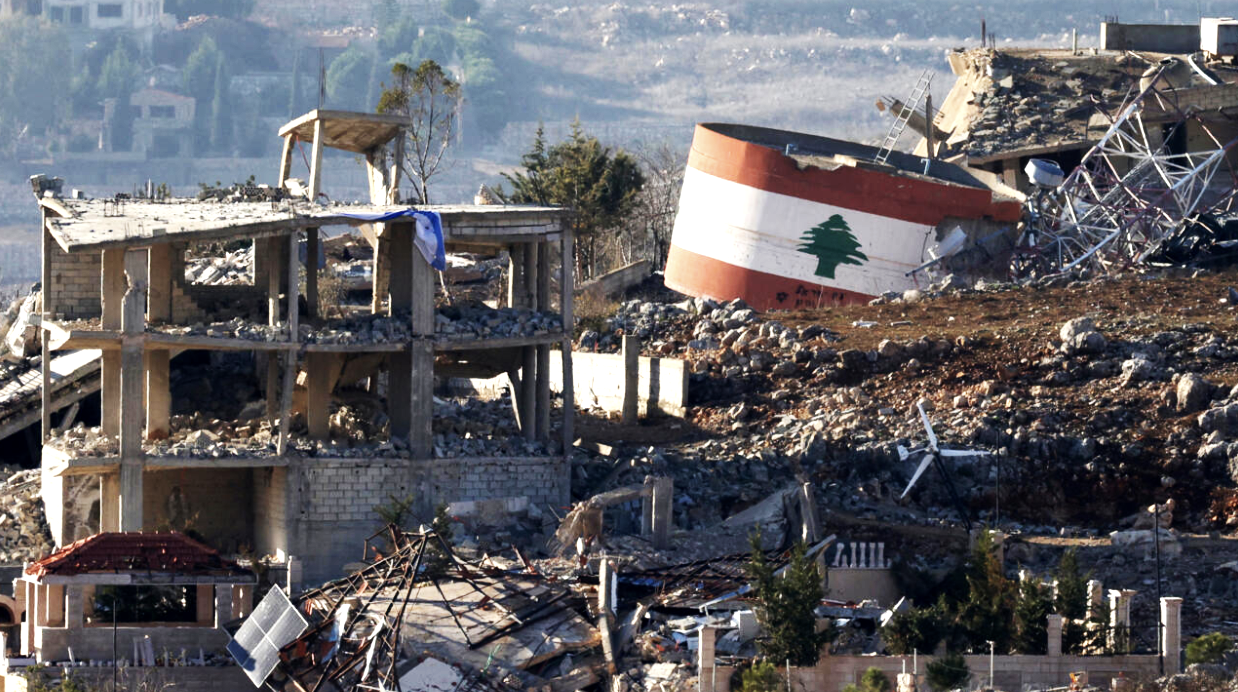
Photo via France24
***
On April 7, 2026, United States President Donald Trump announced a two-week ceasefire with Iran, halting US-Israel strikes that had inundated the nation since February 28. However, mere hours after the ceasefire was announced, Israel began a massive bombardment campaign on Beirut, the capital of Lebanon. Later, on April 16, a US-brokered ceasefire was announced between Lebanon and Israel, only to be broken later that day.
The rapid collapse of both agreements points to systemic issues underlying peacemaking procedures within the current conflict. The central problem is not diplomacy itself, but the absence of any meaningful enforcement architecture capable of holding all parties accountable to the terms of the agreement. A ceasefire is only strategically significant when violations carry greater costs than compliance. For the actors in the current conflict, the opposite seems to be true. The April 7 announcement was almost immediately met with an Israeli assertion that it did not apply to its campaign against Hezbollah in Lebanon, leading to one of the deadliest attacks of the war. The April 16 announcement suffered similarly. These ceasefire announcements have been primarily political moves, not institutional changes. Without neutral monitors, demilitarized enforcement zones, inspection schemes, or mutual consequences for violation, no ceasefire will take any substantive effect. In this capacity, recent truce announcements have been merely declarations of intent, subject to change at the slightest change in tactical positioning.
This war is not fought by actors who share a common understanding of the battlefield; even amongst allies, Israel and the US possess different war aims, as do Hezbollah, Iran, and Ansar Allah. While Tehran and Washington negotiated over the condition of the Strait of Hormuz, Israel reserved freedom of action within the Levant. The April 7 agreement was portrayed as a breakthrough, but its significance was questioned immediately. While Pakistani officials (peace negotiations have, so far, primarily taken place in Islamabad) indicated that the treaty included Lebanon, Vice President JD Vance asserted that it was not. Ambiguity of this nature incites opportunist decision-making.
Accountability is the core aspect missing from negotiations so far. Durable ceasefire arrangements include third-party verification, troop separation, and monitoring mechanisms that create real consequences for cheating and prevent information gaps that could instigate renewed aggressions. Research shows that ceasefires are more effective when they include demilitarized zones, on-site accountability, and arbitrator surveillance. Barring these systems, parties will likely defect from treaties whenever military advantage appears within reach. The April agreements were, therefore, conceptually flawed. They asked hostile actors to trust each other without providing any tangible safeguards or standardized conditions for a pause in hostility.
The problem will not be solved through more declarations. As long as both parties understand that a ceasefire is reversible whenever it appears strategically advantageous, no one can reasonably plan to de-escalate the conflict. These negotiations have rather been used as opportunities for parties to reposition and test their adversaries. Acting as a proxy, though not a directly controlled aspect, of Iran, Ansar Allah, and Hezbollah can pick and choose which parts of agreements they will respect; a similar dynamic appears between the US and Israel. The past month has seen a predictable cycle: a treaty is announced, faint praise is observed, and conflict inevitably resumes.
One possible way to reduce the performativity of these proceedings is to narrow the scope of ceasefire treaties. Broad declarations are far too easily misconstrued or exploited due to interpretative differences. Future arrangements must publicly and explicitly define which specific fronts, proxies, and aspects of conflict are covered by treaties, working to limit ambiguity. In such a fragmented conflict, the cooling down of one front is quickly met with the heating up of another. Furthermore, implementing meaningful third-party verification shifts the consequences of treaty-breaking from a public image matter to an international trust issue, which is of far more significance. Diplomatic objectives must be more procedural than transformational; small steps reduce boots-on-the-ground conflict and prevent needless deaths.
None of these implementations guarantees peace, but something must change. Taking smaller, intentional steps towards de-escalation may be more meaningful than making grand proposals and promises.
***
This article was edited by Sidney Levitt and Mila Cabanlit.
 Abby Coxe
  Campbell Brown
  Holmes Wormald