
Image via The Economist
***
Politics, pop culture, and media are facets of our society that have always been intertwined. With media allowing and shaping public opinion on leaders and political movements, music and movies have often been filled with political symbolism, making issues more accessible and understandable to viewers and often serving as social commentary. This relationship with pop culture has, in turn, been reflected in social settings and communities, as pop culture establishes what is cool and trending and which aesthetics and characteristics are associated with these traits. However, this relationship has been evolving and has undergone a noticeable shift in the last ten years, reflecting a red shift in the world. The idea of what used to be considered “cool” and “trendy” has shifted drastically and is now, for the first time, converging dangerously with conservatism, becoming part of the aesthetic of what is considered culturally “cool”. This trend can be seen on social media, with the rise of micro-influencers and “cool girls,” as well as in shifts in popular music genres, fashion trends, and body types.
More specifically, this new aesthetic increasingly centers cultural traits and beauty standards historically associated with whiteness. This is particularly significant given the history of American beauty standards, which have often treated Eurocentric features as the mainstream ideal while excluding Black women from dominant definitions of beauty.
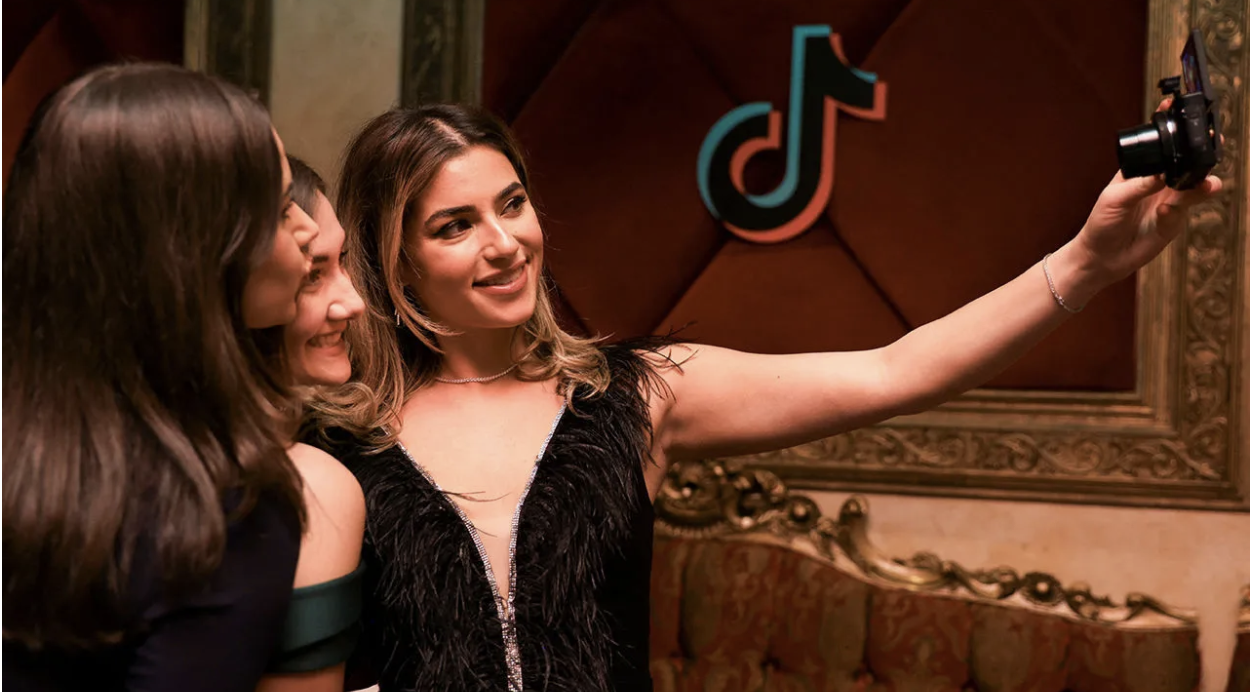
There are multiple aspects of pop culture and social media that coincide with the rise of conservative ideals, but the focus of this article will be the “cool girl” and how the characteristics and aesthetics traditionally associated with being cool have shifted over the last ten years. More generally, this “cool girl” categorization isn’t as typical as other style archetypes, such as the alternative or “clean girl” aesthetic. This new subgenre arises from the immense number of micro-influencers who have been popping up over the past two years. These people typically have fewer than 100,000 followers on social media platforms and focus on the niche or underground nature of the aesthetic, i.e., being an underground model and a DJ all at once. Generally, all the facets of this aesthetic clearly display the red shift and rise of conservatism present in current popular culture. More specifically, this aesthetic is reflected in music, fashion, and body-type standards. First and foremost, the people who embody this aesthetic, now deemed “cool,” represent a complete shift in the types of people who used to embody this idea of coolness. Ten years ago, the people dictating what was cool in pop culture were actors/actresses, musicians, athletes, and others with a specific talent that allowed them to obtain social status. However, much of pop culture is now dictated by influencers posting on social media. This is a key part of this regressive trend. In particular, there is a contrast between what this new aesthetic promotes and what it embodies regarding what it deems “coolness” compared to ten years ago.
In terms of music, this shift is also very apparent. In 2016, rap and hip-hop were the genres that dominated the music industry, allowing for Black culture and political messages to be communicated. For example, Kendrick Lamar’s To Pimp a Butterfly was released in 2015 and was filled with profound political symbolism depicting Black social realities in America; the album was nominated for a Grammy that year. Kanye West’s The Life of Pablo was released the following year, in 2016, and explored the intersection of Black identity, anti-capitalism, and celebrity culture. Both these albums were very popular at the time and hold immense value in rap and pop culture today. Now, this is not the case; over the last ten years, rap and hip hop have been streamed less than other genres, even as others have risen. Now, DJing and house/EDM music have been on the rise in popularity and are integral to the rising “cool girl” aesthetic. The DJing industry is mostly comprised of white straight men, despite having roots in Black culture.
Body image ideals and fashion are where the shift toward more traditional and restrictive social values becomes most apparent. Regarding trending body types, we have seen a clear shift in what was once associated with coolness and what is considered cool today. Just ten years ago, features associated with Black women were trending. Being thick and curvy was idealized, and Black hairstyles and AAVE were being appropriated by celebrities such as the Kardashians and Ariana Grande. Now, this has taken a complete 180. The ideal of being thin has risen sharply, and this is evident in the increased use of GLP-1s such as Ozempic and peptides for aesthetic rather than health purposes. It’s not just about being thin anymore; it’s about the destructive habits that accompany achieving and maintaining that thinness. The rise of figures like Liv Schmidt clearly embodies this shift; there is now an exclusivity to thinness. She uses her platform to promote unhealthy eating habits, often teetering on the line of eating disorders, and has also created group chats on her platform that are invite-only, imitating the idea of an exclusive club for girls who look a certain way and obtain her standard of thinness. Being abnormally thin has become desirable and carries the connotation of being cool, which is directly associated with whiteness.
A more direct example of this collision can be seen with the rise of “Clavicular”, a streamer and “looksmaxer” who uses his platform to casually promote ideas that are rooted in or directly affiliated with racism and misogyny. With this, his content also feeds into the new idea of “coolness,” as he promotes a certain body type and facial features that signal that people who do not look a certain way are inherently less valuable and do not fit this up-and-coming aesthetic.
Fashion trends and self-expression also reflect this shift. Everything seems more brand-focused and rooted in consumer overconsumption. This is seen with the rise of brands like Edikted and Subdued. Their marketing strategies rely on high-volume user-generated content (UGC), micro-influencer tier targeting, and a performance-based affiliate model. These brands are on the rise, promoted by micro-influencers, which allows certain styles to become more mainstream and accessible to consumers, thereby promoting this new aesthetic.
While these are specific examples of the shift, the idea can also be analyzed more generally. Over the last 80 years, younger generations have been at the forefront of counterculture, including the hippie movement, protests against the Vietnam War, and the feminist and racial justice movements of the 2010s. During this period, being rebellious and “cool” was often associated with challenging traditional social norms, which made progressive politics closely connected to youth culture. The 2016 “I’m With Her” movement, #MeToo, and the 2017 Women’s March all reflected this connection.
Today, however, the relationship between counterculture and politics is becoming more complicated. Social media has shifted cultural influence away from traditional celebrities and toward influencers who can shape trends around fashion, music, beauty, and lifestyle more intimately. Through these spaces, ideas about race, gender, body image, and social status can become political without being explicitly presented as such. The rise of exclusivity, thinness, hypermasculinity, and other regressive ideals within certain online communities demonstrates how conservatism can become embedded within aesthetics and popular culture.
Ultimately, this shift is not necessarily proof that an entire generation has become conservative. Rather, it shows that the cultural meaning of being “cool” and rebellious is changing. If progressivism once had a strong connection to youth counterculture, it now faces the challenge of remaining culturally relevant as new forms of rebellion and new definitions of “cool” continue to emerge.
***
This article was edited by Karol Quinde and Nicholas Meetze.
 Giovanni Esposito
  Emma Trauner-Coady
  Claudia Senke