
Image via Reason Magazine
***
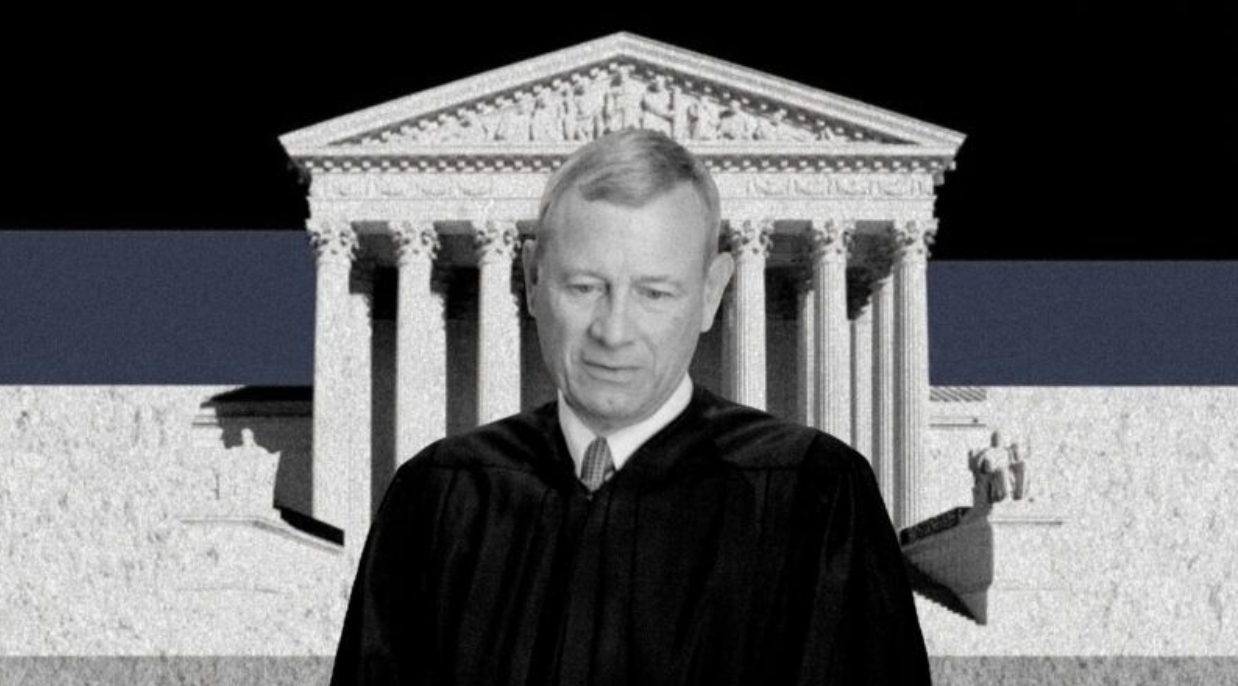
The United States Supreme Court is the only federal court explicitly mentioned and created in the U.S. Constitution. In Article III, Section I of the Constitution, the Supreme Court is established as the highest court in the United States. The Founding Fathers created the Supreme Court to be an impartial interpreter of the law. In the 78th Federalist Paper, Alexander Hamilton stated that the courts “were meant to be an intermediate body between the people and their legislature.” Yet, the Roberts court has fallen short of that. A poll by NBC News found that only 22% of registered voters nationally had “a great deal” or “quite a bit” of confidence in the Supreme Court; 38% of voters surveyed claimed to have “very little” or “no” confidence in the Supreme Court. The number of Americans who have no confidence in the Supreme Court is almost double that of those who have confidence in the court. The clear reason for this lack of confidence is the influx of partisanship and scandals that have followed the Roberts Court.
The appointment and confirmation of Justice Brett Kavanaugh angered many Americans and undeniably decreased Americans’ confidence in the Supreme Court. During Justice Kavanaugh’s confirmation hearing, he was publicly accused by three women of sexual assault and misconduct. Dr. Christine Blasey Ford testified before the U.S. Senate, claiming that Justice Kavanaugh assaulted her at a party in Maryland when she was just fifteen years old. Justice Kavanaugh was narrowly confirmed to the Supreme Court in a 50-48 vote. Following his confirmation, protests ensued, with protesters “pounding” on the doors of the Supreme Court. This created a seismic change in the Supreme Court and Americans’ view of the court. Justice Kavanaugh was viewed as an emotional, risky addition to the Supreme Court by many Americans.
Justice Kavanaugh’s nomination was not the only risky nomination in recent years. Justice Amy Coney Barrett was nominated to the court less than 40 days before the 2020 election and was confirmed a week out from Election Day. Former President Barack Obama tried to fill a vacancy on the Supreme Court after Justice Scalia’s death, but was blocked by the Senate. The Senate majority leader at the time, Mitch McConnell, claimed that the American people should decide, as the 2016 election was nine months away. Presidents, regardless of party affiliation, attempt to nominate judges close to Election Day in hopes of swaying the court in their favor politically. These actions can create a very obvious partisanship of the court, making justices’ votes and opinions seem predetermined. The independence of the judicial branch comes into question when the executive cherry-picks nominees based on political affiliation.
In December of 2024, a Democratic majority-staff report released the Senate Judiciary Committee investigative report, which reported on the ethics of the Supreme Court over a span of twenty months. The findings of the report did not paint the Supreme Court as a fully independent and impartial court. Justices Clarence Thomas and Samuel Alito did not disclose the gifts they were given by partisan billionaires, violating federal law. The Supreme Court is acting less and less like an independent judiciary and more like a partisan body. Accepting gifts from partisan billionaires exemplifies the continually blurred lines between partisan politics and the impartial judiciary. Justices are not supposed to be political figures, but their alignment with parties and donors tells a different story.
Americans’ lack of confidence in the highest court was not an overnight occurrence. In September 2025, Pew Research Center found that Supreme Court approval ratings went down from 70% in 2020 to 48% within a 5-year span. The Supreme Court and its justices have continuously let Americans down by engaging in highly partisan political behavior, as well as nominating and confirming ethically questionable justices. Until the Court sees justices who are truly committed to the upholding of the law, impartially and without influence from donors and politicians, the legitimacy of the “highest court in the land” will continue to come into question.
***
This article was edited by Jack Gonzalez and Ella Cohen.
 Christian Dziura
  Javeer Khan
  Amelia Felice