
Photo via Jorja Mulvihill
***
The political climate in the United States is undeniably tumultuous with President Trump pushing the limits of American presidency and eliminating opposition, whether by signing an executive order in an attempt to end birthright citizenship or by excessively firing government officials. Abroad, the situation is not any less stressful, given the United States’ war with Iran, the ongoing Israel-Palestine conflict, and a host of other global issues, ranging from poverty to the climate crisis.
It feels like there is no escaping the political turmoil that permeates our world, but people certainly try. Not reading the news is only a realistic option to disconnect from politics in this way for people who are privileged enough to be insulated from the consequences.
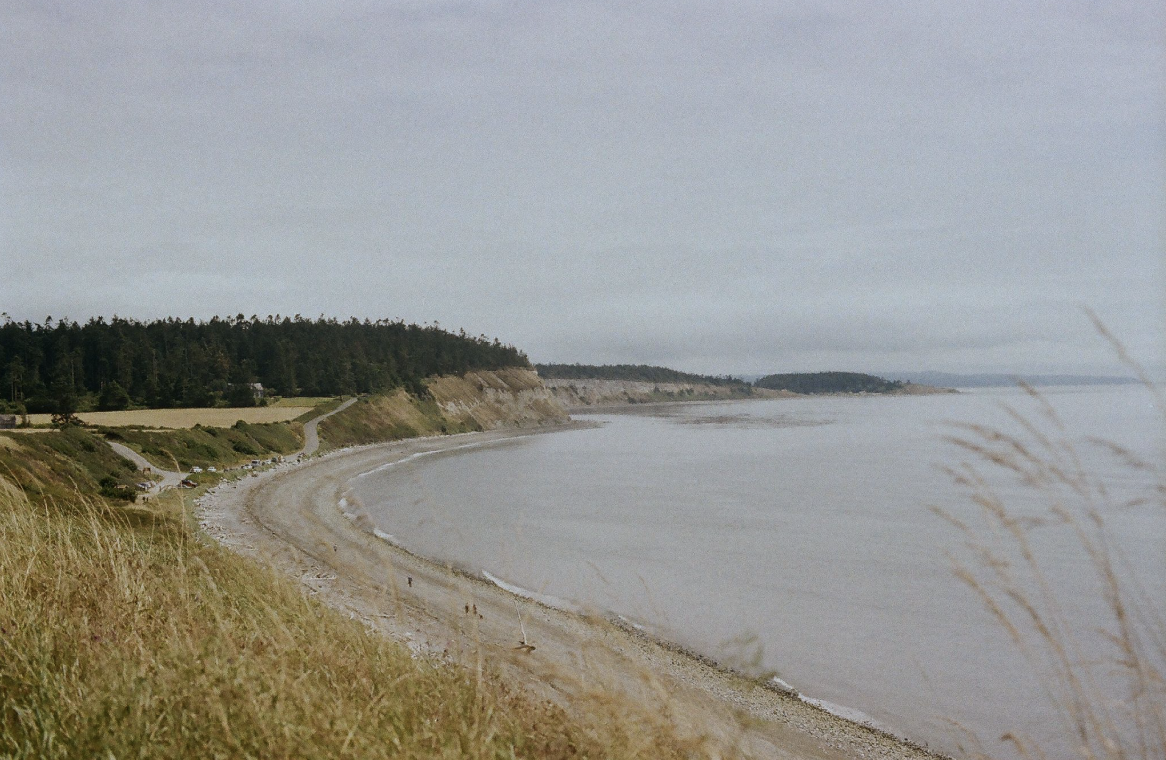
People can turn to nature as a way to escape the anxiety that results from political strife. Hiking and backpacking are seen by many as a safe haven from the chaos and a way to put things into perspective. One Washington Post columnist claims that hiking the Appalachian Trail ‘fixed his brain’ and explains that nature can save us from a “world gone mad.” A New York Times columnist prescribes taking a hike as the solution for those grappling with our political realities. He expresses the universality of outdoor activities, stating that “any of us can enjoy camping spots.”
Nature certainly seems to be a healing experience for many, allowing people to quiet their minds and temporarily exist without troublesome headlines bombarding their thoughts. Some of Gen Z have looked to the outdoors as a way to improve their mental health, especially following the Covid-19 pandemic. Even the rise of ‘Gorpcore,’ a fashion trend where people are wearing technical outdoor clothing in metropolitan areas, might suggest an increased desire to connect with nature. People are looking to nature in order to disconnect, but nature is not always a place “any of us can enjoy.”
The so-called “nature gap” describes the disproportionate engagement of white people in outdoor activities compared to people of color, likely because the history of American outdoors is overwhelmingly white. John Muir is seen as the founding father of national parks, but held the racist belief that indigenous people “seemed to have no right place in the landscape.” This means that national parks were established on an exclusionary U.S. nationalist identity based in white masculinity.
Even up until the 1964 Civil Rights Act, Black Americans were banned from national parks. Having only recently gained access to these spaces, there is hesitation about going into remote places where they are seen as out of place. This fear is justified, considering the killing of Ahmed Arbery, a black man who went for a run through the Georgia suburbs when three white men chased and shot him.
The history of white people claiming outdoor spaces as their own and violently excluding people of color has caused spending leisure time in nature to be seen as “white people shit” online and within communities of color. This characterization only perpetuates the notion that people of color are out of place in the wilderness, but is a reflection of repeated exclusion.
Current measures taken by President Trump regarding national parks preserve their discriminatory history. For example, he revoked the “Promoting Diversity and Inclusion in Our National Parks, National Forests, and Other Public Lands and Waters” Presidential Memorandum, which explicitly states that American lands “belong to all Americans—rich and poor, urban and rural, young and old, from all backgrounds, genders, cultures, religious viewpoints, and walks of life.” Boasting about America’s “national treasures” while denying that these spaces are for all Americans upholds the white and male national identity that national parks have traditionally established.
The American outdoors is one of many opportunities for a healthy and fulfilling life that people of color have limited access to. Research shows that time in nature can reduce stress hormone levels, improve affective conditions, reduce anxiety, boost cognitive function, and improve general mental health. Aside from the mental and emotional benefits, it can improve immune function, decrease cardiovascular disease incidence, and potentially prevent type 2 diabetes. In this way, exclusion from nature is not only dangerous mentally, but physically, and becomes yet another contributing factor to the racial disparities in health care.
In an increasingly volatile political climate, it is important for people to have outlets, especially for those who are not immune to political outcomes. Nature can be one such outlet, but the narrative must be shifted to include not just white men. The general health benefits of nature should be accessible to everyone without fear or the feeling of being out of place.
***
This article was edited by Abigail D’Angelo.
 Luke Helmholz
  Gavin O'Sullivan
  Madelyn Marcisz