
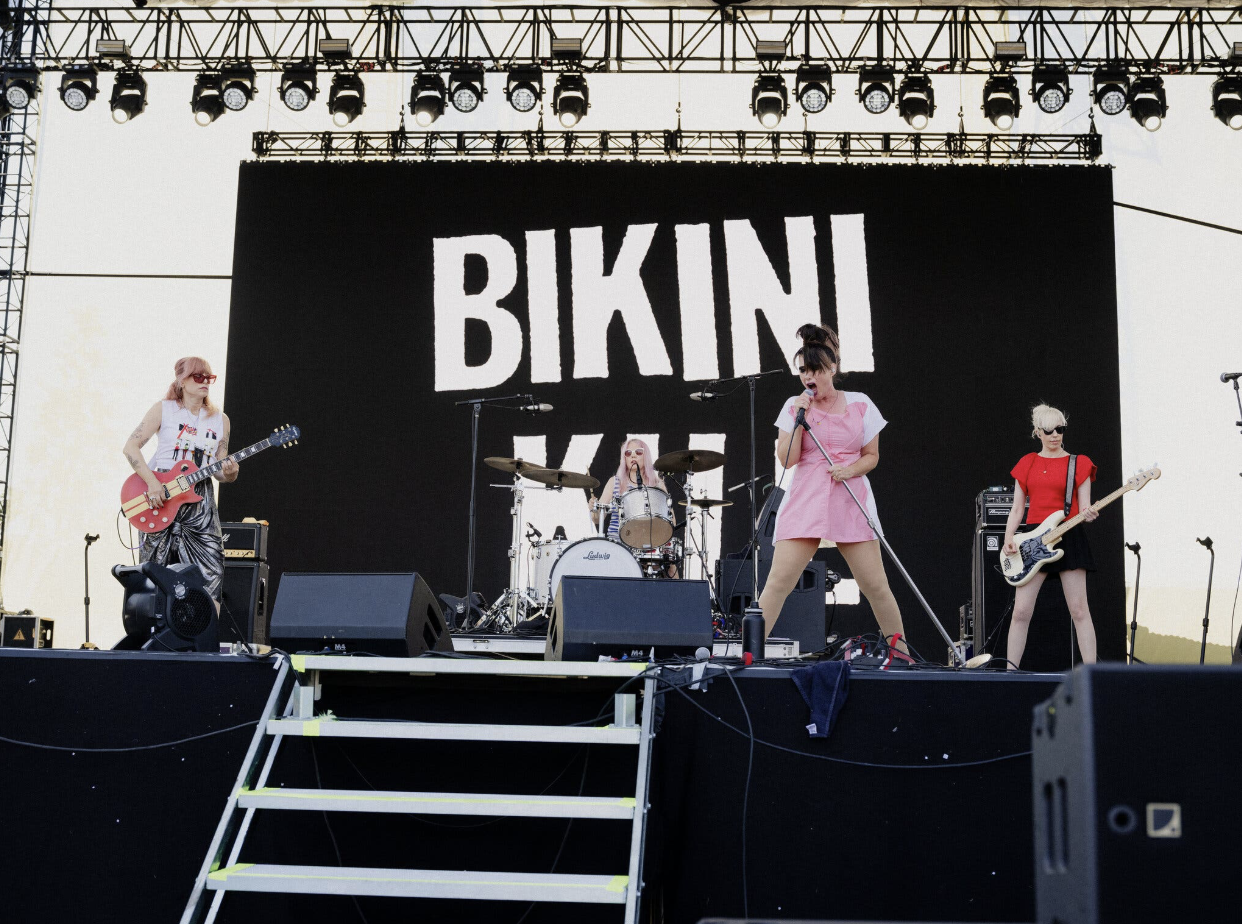
Photo via New York Times
***
On June 12th, GRAMMY-winning music artist Olivia Rodrigo released her third studio album titled, you seem pretty sad for a girl so in love. It quickly broke Spotify’s record for the most-streamed album in a single day in 2026 by a female artist, less than 24 hours after its release.
Amidst the buzz surrounding her new album, the acclaimed popstar announced her first annual inaugural music festival, Daisy Chain Fields. This festival, taking place in Irvine, California, was announced to feature an all-woman lineup, with a promise that 100 percent of its net proceeds will go to 10 organizations dedicated to “advancing and advocating for women and girls”. These organizations included Planned Parenthood, the Black Mamas Matter Alliance (BMMA, Inc.), and the Johns Hopkins Center for Indigenous Health, among many others.
As for artists, the festival’s lineup consisted of staple feminist artists such as Bikini Kill, The Breeders, and Stevie Nicks, paired with today’s burgeoning young stars: Chappell Roan, Doechii, and Mitski. Along with old and new feminist icons were newcomers on the music scene, such as Eli, Devon Again, and Quiet Light – all of whom performed for free to support the cause of reproductive rights and government protest.
Before Bikini Kill played their first song to the 45,000-person crowd, lead singer and pioneer of the feminist punk riot grrrl movement, Kathleen Hanna said, “A lot of you feel like this government f****** hates us,” followed by “they don’t give a s*** about anybody’s healthcare. They don’t care if we die in parking lots of curable diseases. They don’t care if our rights are taken away.” This political outcry was not exclusive to Bikini Kill’s performance. Emerging rock band Die Spitz concluded their set with the statement, “Free Palestine, f*** ICE, thank you, Olivia!” Similarly, rising rapper Doechii ended her set with the endearing sentiment, “We (artists) do this for the girls, we do this for the gays, and we do this for trans women.”
These artists’ enthusiasm for Rodrigo’s cause and willingness to perform for free enabled the singer to donate $10 million to its partner charities, which was then doubled by American philanthropist Melinda French Gates, bringing Rodrigo’s donation total to $20 million, something unheard of in the world of music festivals.
Beyond the music, the festival also featured several interactive art installations by feminist artists such as The Guerrilla Girls, Yoko Ono, and Jenny Holzer. These artworks asked attendees to write down their complaints, dreams, and confront ideas surrounding power, violence, trauma, and hope.
Despite the festival’s emphasis on kinship and women’s solidarity, both Daisy Chains festival and Rodrigo received immense protest from pro-life fans, who felt the artist was pushing too much of a political agenda with this festival, rather than focusing on the themes of heartbreak and universal ‘girlhood’ in her music that initially grew her fanbase.
This criticism, however, was completely expected by the artist. When asked by Rolling Stone why she created Daisy Chains, Rodgrio says, “whenever I play a show, and I look out into the audience and see young girls and women connecting with each other… I’ve always been so acutely aware of the power of that.” She additionally mentioned that she has always been “passionate about women’s rights and reproductive health care”.
During a time of political polarization dividing our nation, it is paramount for those with a platform, such as Olivia Rodrigo, to not only speak out against government corruption but also to utilize their vast financial resources and put their money where their mouth is, so to speak. At just 23 years old, Rodrigo had more courage than her older, more famous colleagues by explicitly calling out a deprivation of women’s rights and solidarity within our nation, a topic of rising division among America’s politicians throughout the past year.
***
This article was edited by Sean Cramer and Ella Keddy.
 Christian Dziura
  Javeer Khan
  Amelia Felice