
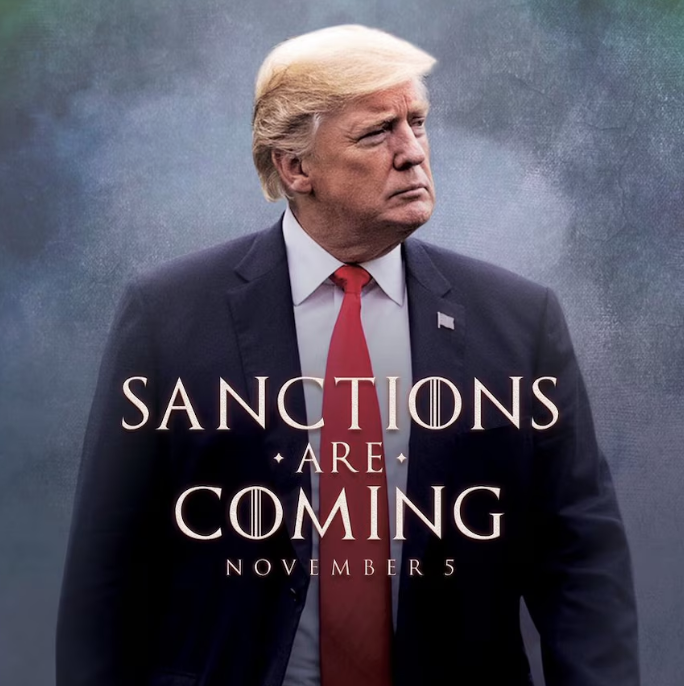
Image via ABC News
***
What do you think about when you think of the word “government”?
The United States government Americans know today wasn’t built overnight. Figures like Attorney General Charles Bonaparte, who established a small force of federal investigators that would eventually become the FBI, could hardly have imagined the role the government plays in everyday life. Nearly four decades later, the National Security Act of 1947 established the CIA as a civilian intelligence agency responsible for collecting and analyzing foreign intelligence.
These institutions and countless others expanded the federal government’s role in the lives of everyday Americans, often without recognition. But their authority depends on more than laws, budgets, and bureaucratic structures. It depends on something less tangible yet of utmost significance: public trust.
Yet today, public trust is remarkably fragile. One study shows that just 17% of Americans in September 2025 shared that they trust the government to do what is right most or all the time, compared with 73% when the same question was first asked in 1958. In light of this dramatic decline, it is worth posing one question: what exactly changed in the relationship between Americans and the institutions that were established to serve them?
For many Americans, the word “government” may evoke an institution of order and structure. Yet that relationship has undergone significant changes, altering the dynamic between citizens and the institutions that were meant to serve them. In the modern-day political landscape, the relationship between everyday Americans and the two political parties has become increasingly more complicated.
Each election cycle, many Americans head to the polls and face the choice of picking a color: red or blue. Despite this, an increasingly large share of Americans identify as political independents. In 2025, a record-high 45% of U.S. adults identified as independents, compared with 27% who identified as either Democrats or Republicans, according to Gallup.
The significance of this shift extends far beyond just political identification. The relationship between political voice and institutional trust has become difficult to overlook. The Organization for Economic Cooperation and Development’s Survey on Drivers of Trust in Public Institutions found a 47-percentage-point gap in trust between people who felt the political system gave people like them a voice and those who did not. This raises a broader question: if citizens feel disconnected from the political system, how can the government convince them that their interests are being heard?
A question often overlooked, yet an increasingly prominent component of government communication, is the role of social media.
Social media has transformed how public institutions communicate with citizens. Rather than relying exclusively on traditional news organizations, press conferences, or government websites, institutions can now speak directly to the public through platforms that millions of Americans use habitually. The OECD has identified public communication as an essential tenet of institutional trust, noting that communication can strengthen trust when it exemplifies responsiveness, openness, and relevance to citizens. Simultaneously, the organization warns that communication perceived as politically biased, inaccurate, or irrelevant can undermine perceptions of government trustworthiness.
The White House provides a contemporary example of this changing communication environment. Recent White House messaging surrounding the war with Iran has incorporated highly visual and meme-oriented content, including material that PBS describes as video game clips, cartoon characters, and movie scenes in its messaging. PBS reported that some of these posts received tens of millions of views.
From one point of view, this represents a significant change in how Americans interact with government messaging. A message that might have once appeared at a press briefing or on a government website can now appear alongside the same entertainment and personal content on their social media feed. But does greater visibility necessarily translate into greater connection?
The question becomes more complicated when considered alongside the broader decline in institutional trust. If citizens already feel that the political system does not adequately represent their interests, highly personalized or entertainment-oriented communication raises another important question: can making government more familiar also make it feel more responsive?
When Americans do not trust the institutions communicating with them, the existing distance between citizens and government can become more difficult to bridge. The question, then, is not simply whether the government is communicating with U.S. citizens, but whether Americans feel connected to the institutions that their tax dollars help fund. The purpose of the line of communication varies: information about the decisions made on their behalf, an effort to make the government more relatable, political messaging, or a combination of all three?
***
This article was edited by Anthony Medina.
 Besalb Dema
  Lauren Gracia
  Glenmarie Rios Rodriguez