
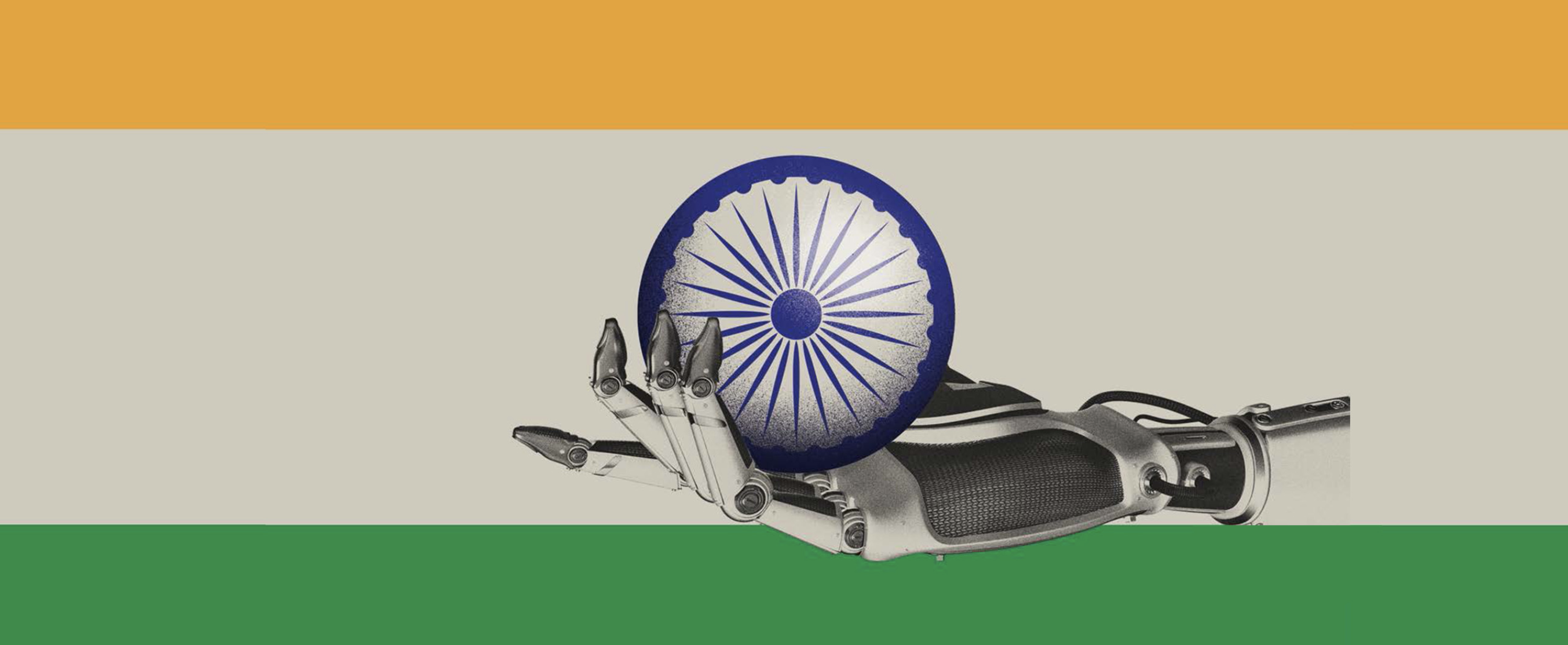
Image via the International Monetary Fund
***
Political campaigns are contingent on more than what meets the eye. When we see an ad or a sign on a lawn, we recognize the methods of persuasion pressed upon us toward a particular candidate or party. While this is true, there are also ways we are being psychologically manipulated. A successful campaign draws voters into a specific brand, image, or message. Sure, politics is all about perception, but what happens when someone is unaware that their perspective is the product of being deceived by political figures, supporters, or anyone with access to the internet? The emergence and transformativeness of artificial intelligence in this “digital age” calls for an analysis of how exactly it can be utilized within eminent fields.
India’s Multiparty democracy can be used as a paradigm, as the upcoming elections for 2024 have prompted those running for office to gear up with campaign strategies designed to reach the electorate. The date for the forthcoming elections is speculated to take place between April and May, and will be one of the biggest to go down in recorded history. The electorate, consisting of 600 million people, will be voting in multiple phases for various governmental positions. The Lok Sabha (“House of the People,” comprised of 545 seats) includes the general election results. There will also be elections for the Rajya Sabha (limited to 250 seats), or the Council of the States. During this election cycle, the major party consists of the incumbent Prime Minister, Narendra Modi, and his party, the Bharatiya Janata Party (BJP).

Narendra Modi, Incumbent Prime Minister of India. Source.
The BJP has been identified as one of the major parties that have either fallen victim to or utilized AI in falsifying videos containing prominent figures. Another party accused of this is the Indian National Congress (INC). In November of last year, the Congress Party shared a deepfake video showcasing K.T. Rama Rao, an influential leader from the Bharat Rashtra Samithi Party (BRS), urging voters to support the Congress party. You may think this is not so influential; that it is just propaganda. But while this is true, the Congress Party leader told Al Jazeera that “a normal voter would not be able to distinguish; voting had started [when the video was posted], and there was no time for [the opposition campaign] to control the damage.” This alters the intention of the video quite a bit, begging the question: when does the line get drawn between propaganda and straight manipulation? In this case, the timing was too convenient, therefore causing a too little, too late effect.

Deepfake of K.T. Rama Rao. Source.
It is hard to discern the ethics of using AI to gain a political advantage. In the past six months alone, there have been multiple generated videos of M. Karunanidhi, who is known for being the leader of the Dravida Munnetra Kazhagam (DMK) Party, as well as a prominent writer, actor, and even former Chief Minister of Tamil Nadu. The generated video is trying to evoke emotions of loyalty to this figure who died in 2018 due to multiple organ failures. In the video, he can be seen wearing a yellow shawl and black sunglasses in his usual iconic wardrobe while congratulating fellow politician T.R. Baalu on his new book. It is quite a coincidence that T.R. Baalu is also a part of the DMK party. It becomes clear that this video solely used pathos to appeal to the electorate to swing their votes in favor of the DMK.

Deepfake of M. Karunanidhi. Source.
Even though it is predicted that Modi will once again claim victory this year, these videos are troubling as it becomes more evident that they pose a clear threat to democracy. The use of AI-generated videos has even become a relative epidemic in India, with WhatsApp being the leading platform on which the videos are being dispersed. The technology company that owns WhatsApp, Meta, has expressed their desire to “protect elections online” by implementing a program aimed towards simultaneously detecting, preventing, and reporting misinformation. AI is not just threatening India, but democracies everywhere, and if the pattern continues, an analysis by George Washington University confirms that this would affect election results in more than 50 countries.
The misuse of AI is not the only possibility that lies in the future. Every country has a grand scope of potential for AI’s capabilities. Authors Nandan Nilekani and Tanuj Bhojwani, for the International Monetary Fund publication, label AI as transformative enough to reframe the country’s future trajectory both economically and socially. Although the future is unknown, we can be confident that deepfakes are becoming more prominent, skewing the ethics of political campaigns. Everybody knows unfair politics occurs in any governmental system, but this opens a new category of distrust in political figures, in which we, the public, are the prime targets of these campaigns’ manipulation and persuasion. The question is, will we attempt to mitigate AI actively, or is that a hindrance to progression?
***
This article was edited by Bowen Yao.
 Cooper Toland
  Lara Ejzak
  Jonathan Kho