
Image via the National Museum of American History
***
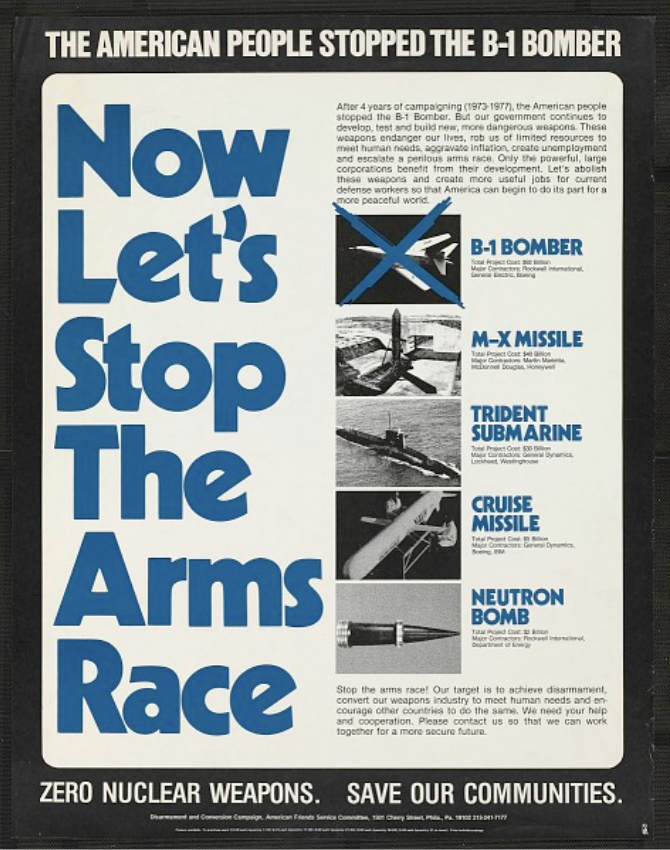
For as long as many can remember, the world has felt a burden off its shoulders knowing the two nuclear powerhouses, Russia and the United States of America, had limits on their nuclear arsenals. Today, those limits are gone. According to Vipin Narang and Pranay Vaddi, two of America’s leading nuclear strategists, “Nuclear weapons are back with a vengeance.” But most people are learning about it through the media or Hollywood portrayals, not experts or the strategists themselves. Doubts about the U.S. nuclear umbrella are reshaping global security. Allies are reconsidering their nuclear strategies, while media coverage amplifies public perception of risk, creating political pressure for new weapons and alliances.
By definition, a “nuclear umbrella” is the guarantee by a nuclear-weapon state to protect its non-nuclear-weapon-equipped allies. Most commonly, this term is used in regard to the United States and its duty to protect Australia, Japan, South Korea, the North Atlantic Treaty Organization, and the Compact of Free Association. These alliances were initially formed in response to the Cold War and the Soviet Union’s expansionist threat. The tensions were high, but the alliances were expected and grounded in well-defined opposition to Soviet influence. This balance was reinforced by treaty agreements, such as New START, which enhances U.S. national security by placing verifiable limits on all Russian deployed intercontinental-range nuclear weapons. Today, the dynamics have shifted. Allies depend on U.S. guarantees because they cannot realistically build their own nuclear deterrents quickly or cheaply. President Trump’s vague, contradictory statements such as comments, questioning whether the U.S. would defend Taiwan, have increased concerns about the credibility of the nuclear umbrella. This increases pressure on allies to raise defense spending. Recently, both French President Emmanuel Macron, and Swedish Prime Minister Ulf Kristersson, have restarted discussions surrounding a European nuclear deterrent. However, Polish Prime Minister Donald Tusk went further by hinting that Poland might consider developing its own nuclear weapons, though such a move would be costly and potentially dangerous.
Against this environment of changing alliances and rising anxieties among U.S. partners, the media’s function in forming public and political perceptions of nuclear risk becomes especially significant. The media act as a lens that amplifies nuclear risk, especially after crises, like the Ukraine war, for example. An important incident is the extensive media coverage following North Korea’s missile tests in 2017, which sparked global anxiety and calls for increased defense funding among U.S. allies. The repeated focus on nuclear threats heightens viewers’ feelings of uncertainty and urgency, even as actual probabilities remain low. Said focus emphasizes instability and escalation risk, mostly lacking technical details. U.S. media are more likely to frame nuclear issues, while European media frames nuclear risk as directly tied to territorial survival and alliance reliability. So, while the US media more often treats nuclear issues as part of broader defense or international debates, this creates a perception gap: an existential threat vs. a strategic policy issue. Connecting to the expiration of New START and President Trump’s statements, European media highlight vulnerability, and the US reports emphasize negotiation or modernization. This media framing increases public pressure on leaders to reconsider strategies, and perception of risk drives policy debate as much as material capacity.
As these perceptions and public unease grow, the conversation shifts from strategic judgments among governments to the everyday concerns of citizens, including broader consequences for global nuclear security. The main concern is a potential domino effect. Turkey warned that if Iran develops nuclear weapons, Turkey and possibly other regional states will have no choice but to join the nuclear race, even if against their will. Russia responded by warning nuclear powers to act responsibly to avoid triggering another arms race, since the expiration of New START between the US and Russia has increased fears of unregulated nuclear buildup. China also warned that the treaty’s expiration threatens global stability and the nuclear order. Without arms control limits, major powers expanding their arsenals may encourage more countries to seek and develop nuclear weapons, especially countries in a geographical danger zone.
Looking ahead, if these trends continue, we could see a regional arms race in the Middle East, triggering destabilization and heightened international tensions. Global powers might convene to negotiate treaties establishing new guidelines for nuclear arsenal limitations, seeking to stop further escalation of tensions. Either scenario requires aggressive international community action to either curb the momentum towards expansion or advance diplomatic resolutions.
Ultimately, the weakening of the U.S. nuclear umbrella and the collapse of New START mark a turning point in global security. As allies begin to question American reliability and media coverage amplifies fears of nuclear conflict, perception is beginning to affect policy just as much as military reality. Leaders across Europe and beyond are now openly discussing deterrents that were once considered unthinkable, while the absence of clear limits encourages major powers to expand their arsenals. Together, these shifts risk triggering a domino effect of nuclear proliferation, making the world not safer, but more unstable. Without a revitalized commitment to credible alliances, educated public debate, and arms control, the return of nuclear competition may define the next era of international politics.
***
This article was edited by Elise Grin and Noni Obiora – Okonkwo.
 Abby Coxe
  Campbell Brown
  Holmes Wormald