
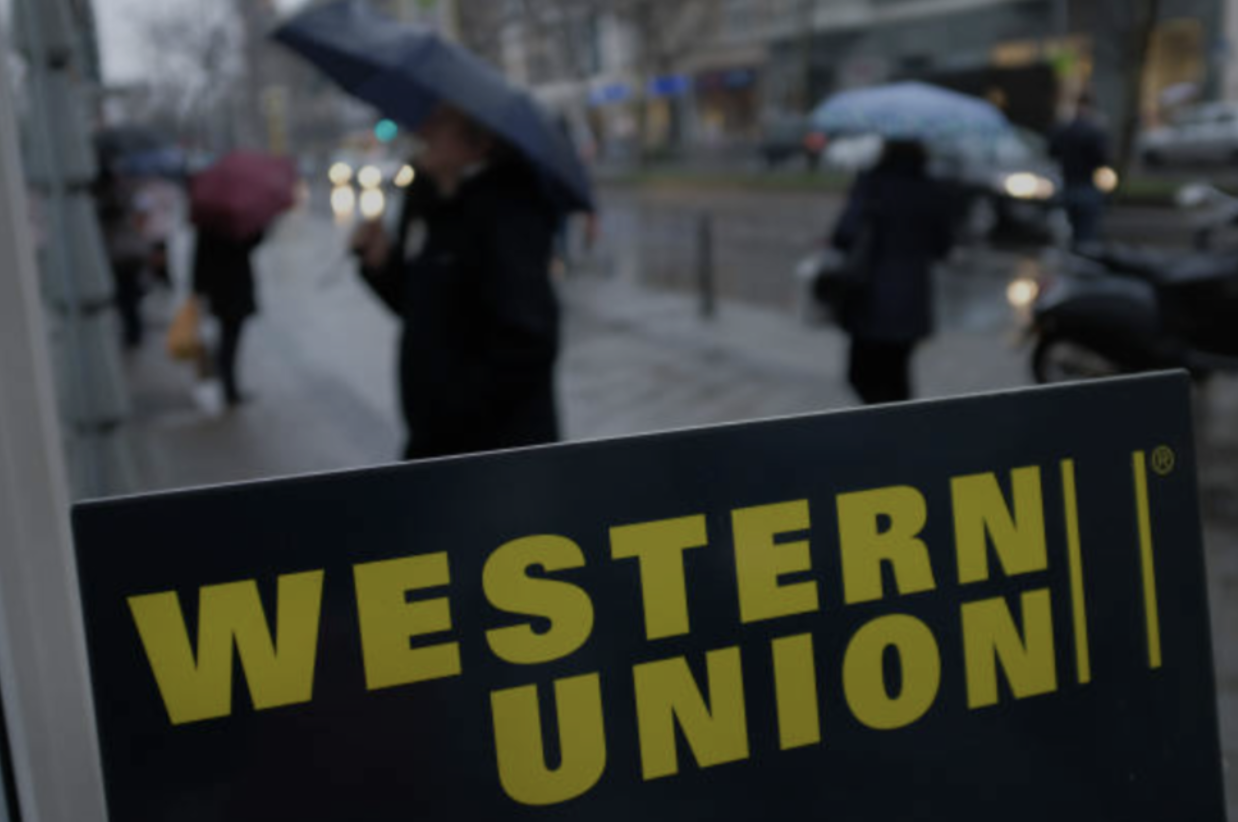
Photo via Sean Gallup
***
A tailor’s wife named Bridget White opened Account No. 1 on September 30, 1850, at a new savings bank on Chambers Street in Lower Manhattan. White had come over to New York nine years earlier on the Fairfield from Liverpool, and her father and one of her brothers were still in Ireland. The customers who followed her that day were similar to her: laborers, porters, clerks, and domestic servants. (Account No. 9 was Bishop John Hughes’s.)
The bank was the Emigrant Industrial Savings Bank, founded by the Irish Emigrant Society, a group established in 1841 to shield newcomers arriving from Ireland. According to the New York Public Library, which now holds its records, the bank offered immigrants a safe place to keep their money and the means of sending it to impoverished kin. That second service was hugely important after the Great Famine, when Irish New Yorkers trying to send money home faced fraud and mail theft; the Emigrant did it at low cost and kept its own office in Dublin. Between 1850 and 1880, this one bank remitted over $30 million to Ireland.
More than 175 years later, New York’s immigrants are still sending money home, and many of them still don’t have a bank to route it through. What has changed, though, is Washington’s attitude towards them. Since January 1, anyone sending money abroad and paying with cash, a money order, or a cashier’s check has been subject to a new 1 percent federal tax, courtesy of President Trump’s One Big Beautiful Bill Act. Transfers paid from a bank account or with a U.S.-issued debit or credit card are exempt.
This tax on remittances was marketed as a strike against illegal immigration and cartel money. In practice, it is a tax on being unbanked, and it hits hardest the very type of New Yorker the Emigrant Society was created to protect. Congress should vote to abolish it, and until then, New York should do what it did in 1850: make it easier for its poorest immigrants to send money home safely.
The legislation that made it through is nothing like what was initially proposed. As Helen Demster, Charley Ward, and Sam Huckstep of the Center for Global Development laid out, the House first sought a 5 percent tax on noncitizens, which also applied to bank transfers. After pushback from the Mexican government and others, the rate dropped to 3.5 percent, and the Senate ultimately settled on 1 percent per sender, including citizens, while exempting bank and card transfers, reportedly under pressure from the banking industry. Despite all of the ploys, the tax is estimated to raise only about $10 billion over a decade, approximately one-quarter of one percent of the over $4 trillion in tax cuts in the same bill. This inefficiency renders the tax basically ineffective.
It is billed as a tax on immigrants, but its structure says otherwise. Because the exemption depends entirely on how a transfer is paid for, a person with a checking account can easily avoid it by pressing a couple of buttons on a phone, while migrant workers who rely on cash-based services, as U.S. News reported this summer, are expected to take the biggest hit. A worker in the Bronx who sends $400 each month to Honduras in cash now owes $48 a year in tax, while a coworker who sends the same amount from his checking account owes nothing. We don’t have to guess, then, who will pay this tax. We only have to look at the unbanked.
What we find is not encouraging. The FDIC reported that 4.2 percent of American households had no bank account in 2023; two-thirds of them used only cash, and the most common reason they gave was that they could not meet minimum balance requirements, followed by distrust of banks. New York is more extreme: the city’s Department of Consumer and Worker Protection estimates that 7 percent of households (about 238,900) were unbanked in 2023, a figure that rises to 13.5 percent in the Bronx. Among immigrants themselves, the gaps are even wider. BBVA Research estimates that 84% of Mexican migrants in the United States hold bank accounts, compared to 65% of Honduran, 72% of Guatemalan, and 74% of Salvadoran migrants.
Even worse, the tax undermines one of the more subdued achievements of American policy since September 11. In 2002, a survey showed that 29 percent of Latin American immigrants sent money home informally, by handing cash to travelers or putting it in the mail. Today, fewer than 3 percent of remittances leaving the country go that way, as Julia Yansura and Zorka Milin of the FACT Coalition, an anti-corruption group, highlighted last year. That change is significant because licensed money transfer companies must know their customers and report suspicious transactions to the government. As the Treasury Department has itself admitted, anti-money laundering tools “work best when funds exist within the regulated financial system.” A tax on cash handed over to a licensed company doesn’t advance what the Treasury is after; it makes the regulated option more expensive and leaves the unregulated ones untouched.
Incredible as it sounds, the concept is catching on. Oklahoma has charged its own fee on money transfers since 2009, and in May, Tennessee Governor Bill Lee signed a law that will impose a $10 fee on international transfers sent through money transmitters (plus 2 percent on amounts over $500) beginning in 2027, with banks exempt. Around the same time, Texas Representative Chip Roy proposed legislation to raise the federal rate from 1%to 25%.
Those who support the tax will contend that it does have legitimate uses. Representative Kevin Hern of Oklahoma, who sponsored federal remittance fee legislation in 2022, has called it “a financial weapon we can use to target illicit activity” flowing to drug cartels. Senator Eric Schmitt of Missouri, who had put forward a 15 percent version, gave two reasons: “One is a deterrent for illegal immigration, and one is a fairness argument.” For his part, Representative Roy has complained about “the drain of American dollars leaving the economy through remittances.” Some may also note that a 1% tax is merely a gentle prod to the banking system. None of these arguments makes sense. The transfers the tax targets already pass through licensed companies subject to federal anti-money laundering rules, so investigators get nothing new, and anyone seriously laundering money only has to send transfers from a bank account. The REMIT Act, a Democratic bill introduced last year, includes findings warning that criminal money-laundering networks stand to benefit as legal remittances become harder to send. The fairness argument is also quite thin. As Zaria Roller and Tara Watson of the Brookings Institution note, remittances already face income taxes and transfer fees, and undocumented immigrants alone contribute almost $60 billion a year in federal taxes. What Representative Roy calls a drain is, in simple words, working people spending their own taxed wages on their own families.
In regard to the theory of a gentle push, it is good to ask, “Where is the help?” The law came with no low-cost accounts, no outreach, and nothing for the families the FDIC says stay unbanked because of minimum balances and distrust. A penalty with no way out hardly counts as a nudge.
What, then, should be done? First, Congress should repeal the tax. Short of that, it should pass the REMIT Act, introduced by Representative Sam Liccardo of California and cosponsored by New York Representatives Ritchie Torres and Adriano Espaillat, which would bar federal excise taxes on money transmitters unless the Treasury certifies that they will not increase the risk of money laundering or unduly burden those businesses.
Second, New York should do what it did in 1850. The city already offers NYC SafeStart accounts, starter savings accounts with no overdraft or monthly fees for balances of at least $25, at partner banks and credit unions that, in many cases, accept IDNYC as identification; its Financial Empowerment Centers offer free help opening them. Mayor Zohran Mamdani’s administration should take these programs directly into the neighborhoods where cash remittances are most common, beginning in the Bronx.
Finally, and this may matter most, voters should make the remittance tax an issue in this year’s midterm elections. Every House candidate in New York’s immigrant neighborhoods ought to be asked plainly whether they would repeal it, keep it, or raise it. In 1850, a group of Irish New Yorkers saw a city full of poor immigrants trying to send money home and built them a safe way to do so. More than 175 years later, Washington has looked at the same problem and decided to tax whoever is still stuck outside the bank. New York has answered this question before, and it answered it well. Come November 3, New Yorkers should make sure Congress hears that answer again.
***
This article was edited by Anita Boniface and Sophie Reilly.
 Luke Helmholz
  Sidney Levitt
  Ayden Suber