
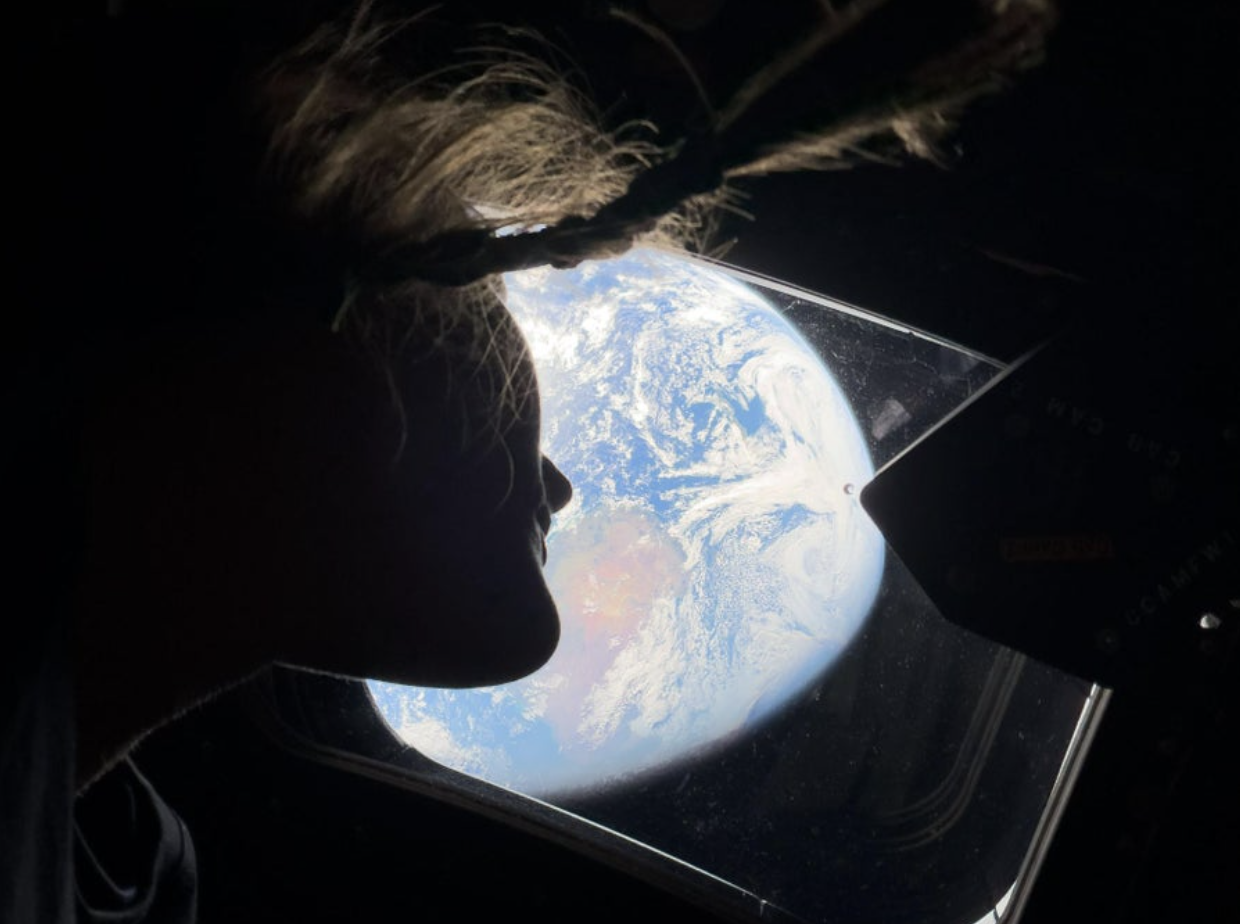
“Spaceship Earth” (April 2, 2026)—NASA astronaut and Artemis II mission specialist Christina Koch peers out of one of the Orion spacecraft’s main cabin windows, looking back at Earth, as the crew travels towards the Moon. Photo via NASA
***
Every so often, humanity’s achievements make the rest of our arguments feel small.
On April 1st, 2026, the Artemis II mission successfully launched, marking the first crewed test flight of NASA’s Orion spacecraft and newly developed Space Launch System rocket. The primary goal was to rigorously test Orion’s life support and other critical systems in a deep-space environment, proving the capabilities needed for future missions that will land astronauts on the lunar surface. The spacecraft performed a lunar flyby around the moon, recording a historic 252,756 miles from Earth, “surpassing the record for human spaceflight’s farthest distance previously set by the Apollo 13 mission in 1970.” Photos, research, and data were prioritized as stepping stones for the future of space exploration. On April 10th, 2026, Artemis II splashed down off the coast of San Diego, concluding the ten-day mission and returning the crew safely back to Earth.
Piloting the rocket were Americans Reid Wiseman, Victor Glover, Christina Koch, and Canadian Jeremy Hansen. Each carried decorated careers into the shuttle, but what they carried for the rest of the world was something harder to quantify. According to Kennedy Space Center, “the crew’s return around the moon not only marks humans’ return to the vicinity of the Moon in more than 50 years, but also brings the first woman, person of color, and Canadian to its orbit.”
Perhaps this is one of space exploration’s quiet gifts. The vastness of the universe has a way of making our divisions feel exactly as small as they are. Glover seemed to understand this instinctively. In his televised conference aboard the spacecraft, he said, “In all of this emptiness—this is a whole bunch of nothing, this thing we call the universe—you have this oasis, this beautiful place that we get to exist together.”
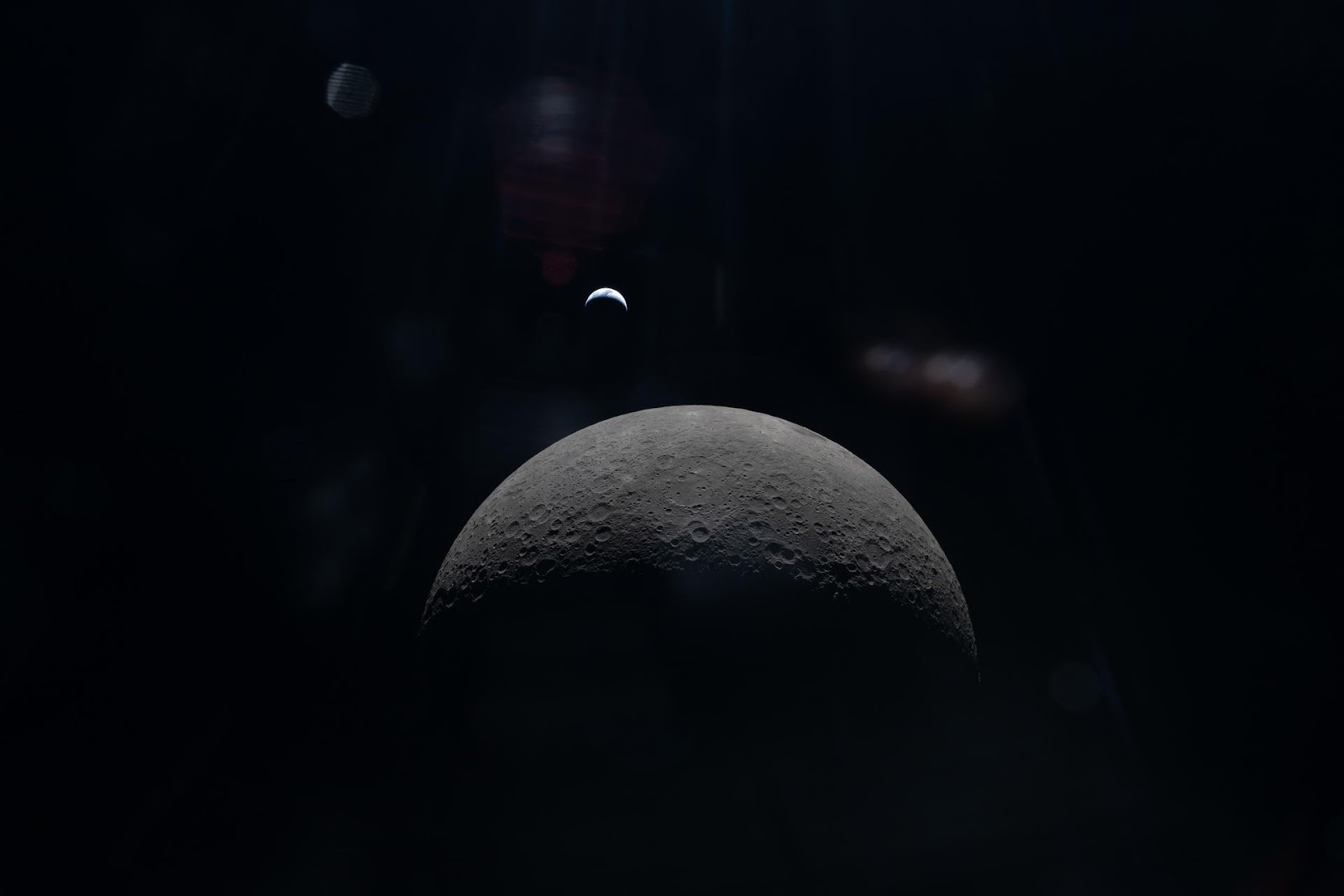
“Crescent Earth Over Lunar Horizon” (April 6, 2026)—The Artemis II crew captures a faint view of a crescent Earth above the horizon on the Moon’s far side. Photo via NASA
***
Earth exists in a silent vacuum of deadly darkness. Seeing our planet small and isolated really puts into perspective how self-perpetuated our political boundaries truly are. Koch said herself, “You don’t see borders, you don’t see religious lines, you don’t see political boundaries. All you see is Earth, and you see that we are way more alike than we are different.” These powerful messages, paired with the crew’s breathtaking photos, are quite humbling. Scholars call this The Overview Effect, “seeing our home against the blackness of space is a profound experience that leads to a greater appreciation for Earth and its apparent fragility, and a deep connection to humanity as a whole.” Reflecting on his publication, The Overview Effect, Frank White, a renowned space philosopher, writes, “After almost 40 years of trying to understand the Overview Effect, I’ve come to realize it can be summarized in three simple words: Truth, Love, and Identity.”
Truth is that, from space, the divisions we draw on maps simply do not exist. Love, in that every astronaut who has seen Earth from space has returned with immense appreciation. And identity, the realization that each of us is not so separate from the billions of others we share this planet with, but inseparable from them.
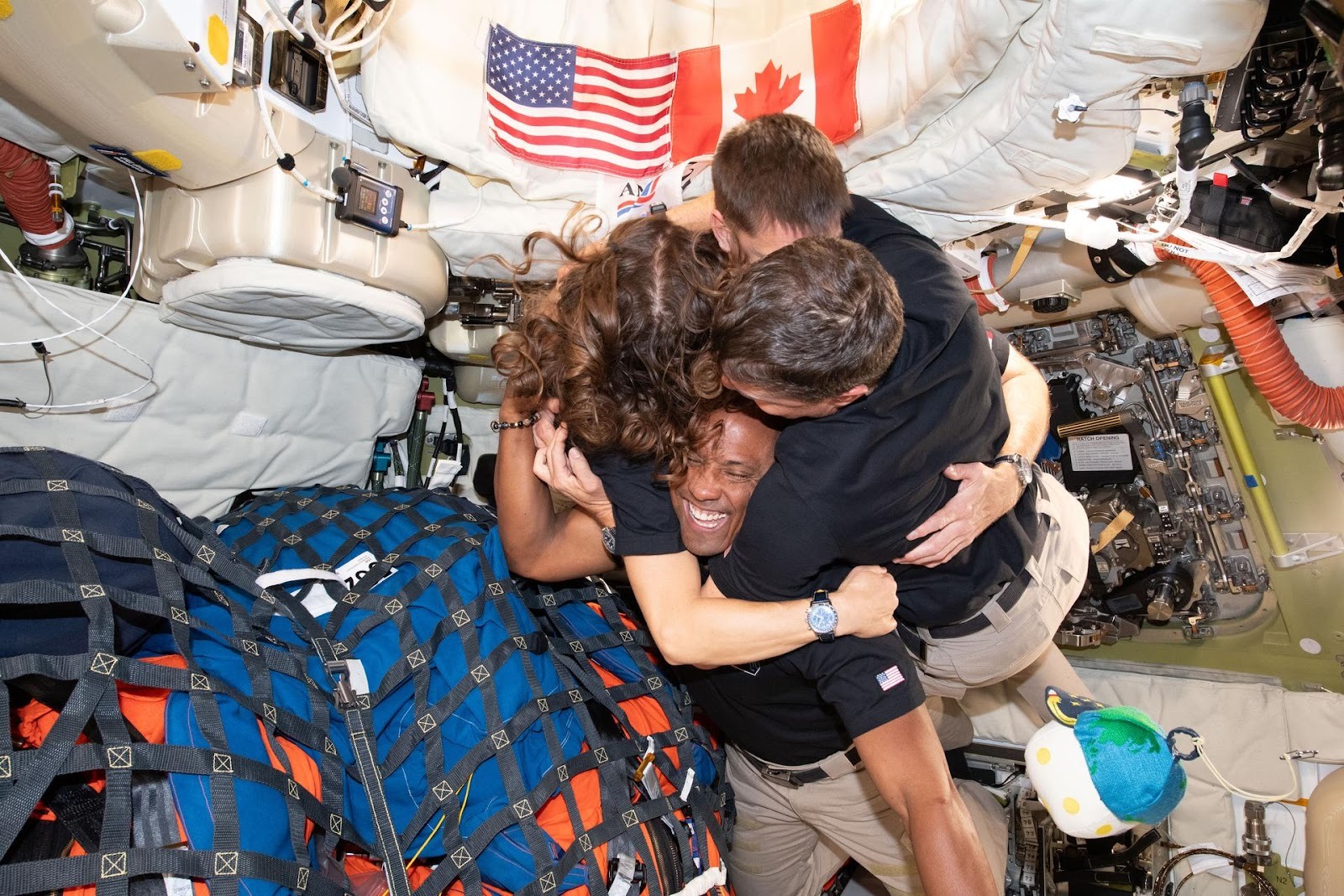
“Moon Joy” (April 7, 2026)—The Artemis II crew—(clockwise from left) Mission Specialist Christina Koch, Mission Specialist Jeremy Hansen, Commander Reid Wiseman, and Pilot Victor Glover—take time out for a group hug inside the Orion spacecraft on their way home. Photo via NASA
***
The Overview Effect is one that most of us will never experience ourselves. However, you don’t need to leave the atmosphere to see it. If the world took a brief moment of introspection, we could feel a very similar impact.
***
This article was edited by Colin Mitchell.
 Sarah Olivia Sullivan
  Luke Helmholz
  Sidney Levitt