
Photo via India Today
***
In our modern-day society, where digital influence and money hold power, cultural industries have begun to resemble political systems in which reputation functions as both currency and control. There have been many instances in the past where this idea has been demonstrated time and time again. The most recent, however, is evident in the highly publicized conflict between Blake Lively and Justin Baldoni. Though this may appear as yet another celebrity conflict at first, the controversy exposes a deeper structural tension within Hollywood itself. Film production, often described as a creative collaboration, operates more accurately as a political institution marked by authority, informal hierarchies, and reputational enforcement. When conflict emerges, there is no clear single arbiter. Instead, legitimacy is contested in the public sphere, where media narratives function as instruments of control. In this new era of the digital age, we are witnessing a transformation of Hollywood increasingly operating as a political arena, where symbolic capital substitutes for formal governance and credibility is negotiated in real time before a mass audience.
Hollywood offers a striking illustration of this transformation. Though often disguised as a simple site of entertainment production, in reality, the film industry operates through layered hierarchies of influence in which celebrity status, financial backing, and the public’s perspective function as sources of governing authority. The public dispute between Blake Lively and Justin Baldoni exemplifies this broader structural reality. What appeared in headlines as a personal or professional disagreement instead exposed the informal mechanisms through which authority and legitimacy are negotiated within Hollywood.
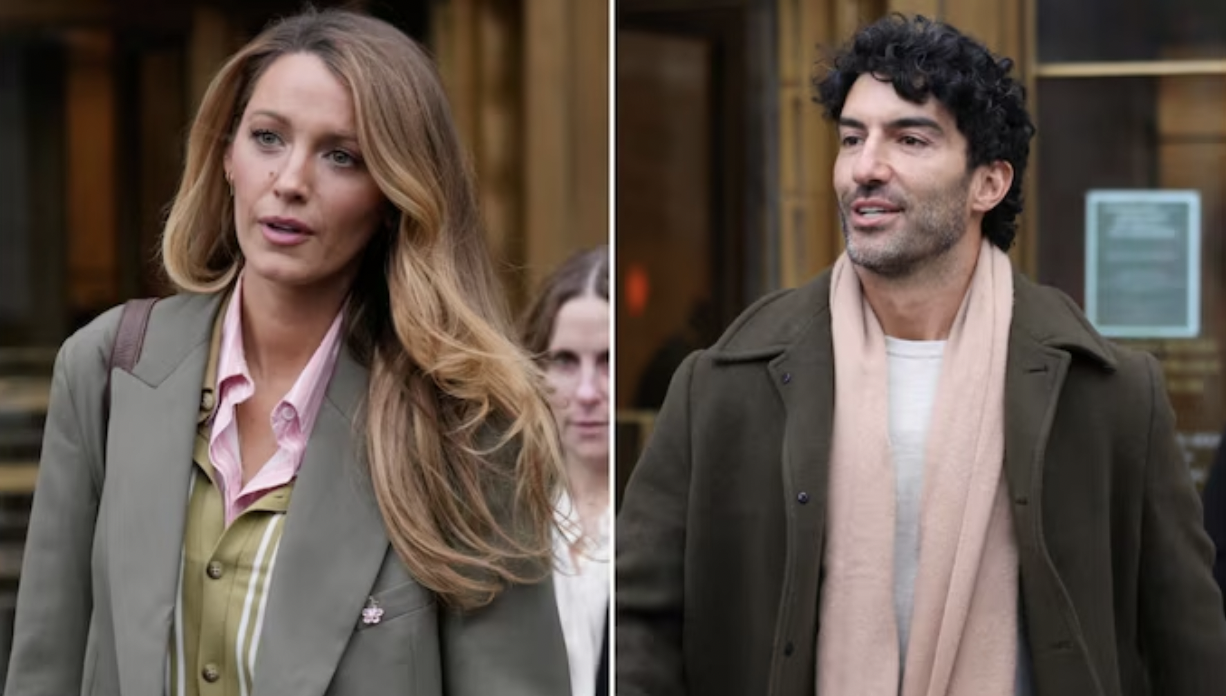
In December of 2024, Lively accused Baldoni and his production company, Wayfarer Studios, of sexual harassment and strategizing to destroy her reputation. Lively then proceeded to file a 10-claim complaint against the California Civil Rights department describing the atmosphere of the set as a “hostile work environment” and asserting that Baldoni and other producers engaged in inappropriate conduct, including unwanted physical advances and boundary violations that she said caused “severe emotional distress.” She formalized these allegations into a federal lawsuit on December 31, 2024, in which she named Baldoni, Wayfarer, and several crisis-PR professionals as defendants, claiming they orchestrated public relations tactics to retaliate against her for speaking out. In response, Baldoni denied the harassment claims and instead launched his own legal offensive in early 2025, suing Lively, her husband, and others for defamation and extortion, seeking hundreds of millions in damages and accusing them of a coordinated effort to “smear” his reputation. A federal judge eventually dismissed Baldoni’s defamation suit in mid-2025, finding Lively’s statements legally protected, and the dispute has since remained unresolved, with trial proceedings and settlement conferences. Just earlier this week, Lively and Baldoni were unable to come to an agreement during a court-ordered settlement conference and will have to reconfer in a trial scheduled for May 18th.
Beyond the legal intricacies of this case, this conflict alludes to a much broader issue: the power of reputation and image in Hollywood. We have seen time and time again in other instances of celebrity conflicts, such as the Depp v. Heard defamation case, that public perception is a powerful tool to wield, and whoever has it in their grasp thus holds the control and authority. This case simply further cements this idea, not only because both sides have weaponized their public personas to shape the narrative around the dispute, but because the conflict has itself become a kind of referendum on Hollywood’s cultural and political fault lines. Additionally, the Lively–Baldoni feud has unearthed novel questions about how the industry’s responses to harassment allegations intersect with broader shifts in the #MeToo movement and the politics of belief, reframing what might once have been internal studio matters as public moral contests over reputation and credibility. Critics have gone so far as to suggest that the saga reveals a collapse of the Hollywood #MeToo era, in which the digital amplification of competing narratives too often obscures substantive issues of abuse in favor of sensationalized storytelling and “narrative warfare.” In the Lively v. Baldoni case, both sides have adopted aggressive legal and media strategies such as publicizing unsealed texts, filing competing lawsuits, and drawing in high-profile allies and detractors in order to gain public sympathy and moral legitimacy. Ultimately, this underscores how in modern-day Hollywood, image management and reputational authority often function as the decisive tools of institutional power in the political minefield of on-set governance.
***
This article was edited by Abigail D’Angelo
 Matthew Subramani
  Ryan Scriven
  Simon Shalett