
Photo via Economist
***
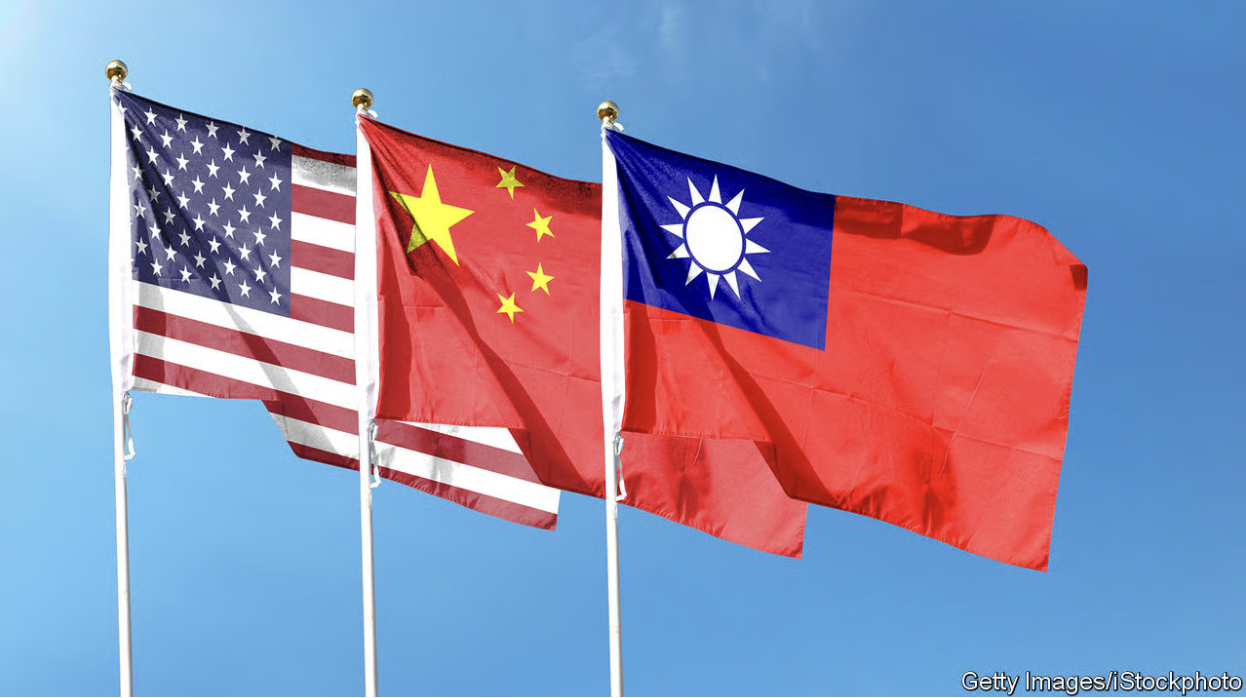
The history of China and Taiwan’s dynamic is complex, and has existed in such complexity since the Civil War ended in China in 1949. China sees Taiwan as its own, and the Taiwanese government sees itself as a sovereign nation-state. Other nations with relationships with China and Taiwan have been forced to maintain complex relationships with both states.
The United States is a core example of the dynamic nature of China-Taiwan foreign relations. The United States enacted the One China policy in 1949. This policy technically displayed the United States’ understanding of China to include Taiwan. However, America’s opinion can change with administrations and geopolitics.
There are a plethora of reasons that the United States “technically” recognizes Taiwan as a part of China but doesn’t do so when it comes to nation-state relations. The main factor is the semiconductors produced by Taiwan. Semiconductors run every single technological device humans use. iPads, refrigerators, phones, computers, televisions, etc., all have semiconductors. Taiwan produces 60% of the world’s semiconductors and over 90% of the world’s most advanced semiconductors.
Taiwan’s key role in producing computing power is thought to give it a “Silicon Shield.” This theory suggests that Taiwan is safe from a military attack by China because of its technology and semiconductor industry. If war were to break out, Taiwan and the United States could destroy the semiconductor fabrication plants. This would hurt global economies, set back the semiconductor industry and potentially pop the AI bubble. Taiwan’s silicon shield makes the United States want to defend Taiwan to save the supply chain and the global economy. Taiwan’s strategic importance, however, also makes it a bigger target for China. China wants to be a leader in technology and live out its “One China policy,” so controlling these factories is very important to them.
A war in the Taiwan Strait would be very bad for the global economy. Experts believe it could cost trillions of dollars every year. Without these chips, companies cannot build new cars, planes, or medical equipment. It is very hard to build these factories elsewhere. It takes a lot of time and money to build what Taiwan has built.
The United States is well aware of this risk. In 2022, the government passed the CHIPS and Science Act. This law aims to bring chipmaking back to America. The goal is to lessen Taiwan-China tensions and the United States’ reliance on foreign countries. There has been progress with new factories opening in Arizona and Ohio. However, the United States is still behind Taiwan. Reshoring is a slow process. It will take many years for American factories to be as good as Taiwan’s.
This situation makes the policy of “Strategic Ambiguity” very difficult. It is hard for the United States not to clearly state that it will defend Taiwan from an attack. The goal is to stop China from attacking and stop Taiwan from declaring formal independence. But as technology becomes more important and China tensions rise, this policy is tested. The world watches closely because a mistake could lead to a fight between two nuclear superpowers.
It is also important not to forget the 23 million citizens in Taiwan. A conflict would cause suffering among Taiwanese and Chinese citizens. Just like in other worldly conflicts, the civilians often suffer the most. It is imperative that this fact is factored into international relations, as our world has lost touch.
In sum, the situation regarding Taiwan, China and the United States is a delicate one, held together by economic necessity and diplomatic tradition. The need for semiconductors should remind us that we are all connected in many ways. It is important we keep it that way.
***
This article was edited by Alissa Mili and Sofia Alvarez.
 Isabella Villalobos
  Abby Coxe
  Daniel Ukandu