
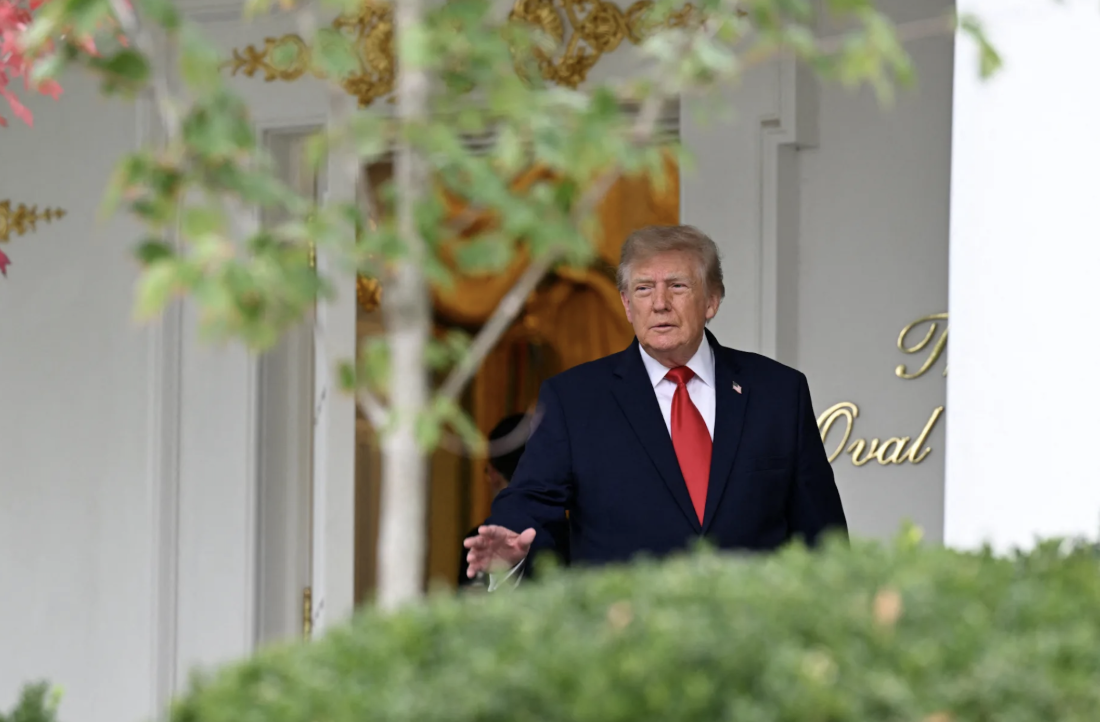
Image via Annabelle Gordon/Reuters
***
Earlier this September, U.S. President Donald Trump announced seriously considering a diesel export ban as prices for fuel continue to rise. Believing that banning diesel exports would keep money and fuel within the United States and lower prices, President Trump told a Fox News reporter, “We may do it.”
It’s no coincidence this is happening prior to midterm elections, as pressure piles on President Trump to respond to complaints about high fuel prices—the same prices he insistently promised to lower during his electoral campaign and subsequent presidency. He was so cocksure about it that, in fact, he even vowed to push gas prices below 2 dollars a gallon: something that hasn’t happened since May of 2020. But with the ongoing war in Iran, a war that the President himself pushed, shipping disruptions in the Strait of Hormuz have only increased gas prices. Just in October of last year, gas was $3.05 per gallon; Now, it has increased 47% to $4.26.
Many energy experts and financial analysts have suggested against the war in Iran and now the 90-day diesel ban, claiming it could “result in reduced refinery runs, global economic damage and even higher U.S. prices.” Thankfully, in early October, President Trump said he would not authorize an export ban on diesel and would instead turn to Russia to allow immediate imports of Russian diesel to help relieve U.S. market pressure.
Following a meeting between President Trump and Russian President Putin, the Kremlin released a statement that “Mr. Putin had expressed a willingness to supply more oil and other fuels to the world in a phone call with President Trump.” To push this deal forward, the U.S. Treasury lifted sanctions on Russian diesel exports “to allow the supply of Russian diesel to the global market,” sanctions that were originally put in place in 2022 to stop Russia from financing the war. In response to this, Ukrainian President Zelensky said, “This only fuels Putin’s war effort and gives him the ability to wage war even more aggressively.” Gone are the days of peace, and here to stay are President Trump’s and Putin’s saccharine friendship.
With President Trump and Putin shaking hands and exchanging smiles, the deal seems to be done. But what does this mean for us? For everyday people? Well, President Trump and Putin originally agreed they’d be able to deliver 300,000 tons of diesel immediately, 500,000 tons in November, and 1 million tons “immediately thereafter.” While the numbers may seem large at first, it’s actually not enough to cause much change in gas prices, considering the United States “burns through” roughly 20 million barrels of gasoline, diesel, and other oil-based fuels every day. The first batch sent over would amount to around a day of demand in the U.S. For the majority of people, gas prices even after this deal aren’t likely to make much of a difference.
Instead, the broader focus should be on the war in Ukraine, and what this means for the nations in conflict. At the Warsaw Security Forum, authors heard foreign allies describe the affair as “an utter betrayal.” It’s not just outsiders calling this move into question, as opposition has come directly from U.S. lawmakers. A coalition of 12 U.S. Senators, including Democrats such as Richard Blumenthal, Chris Coons, and Republicans Alan Armstrong and Susan Collins, advocated for rescinding the diesel agreement, believing that the deal disproportionately benefited Russia more than it did America.
Seeing as the actual benefits Americans would receive from this deal begin to outweigh the benefits Russia reaps, it’s unclear whether gas prices will ever be lowered the way President Trump promised during his campaign, whether he intends to or not. As tensions rise between America and the international sphere, and even within Congress itself, it seems as though gas prices will remain high, and the war in Ukraine will rage on.
***
This article was edited by Catherine Dalton and Andrea Dominguez.
 Samantha Kornsey
 Matthew Subramani
 Jackson Cutrone