
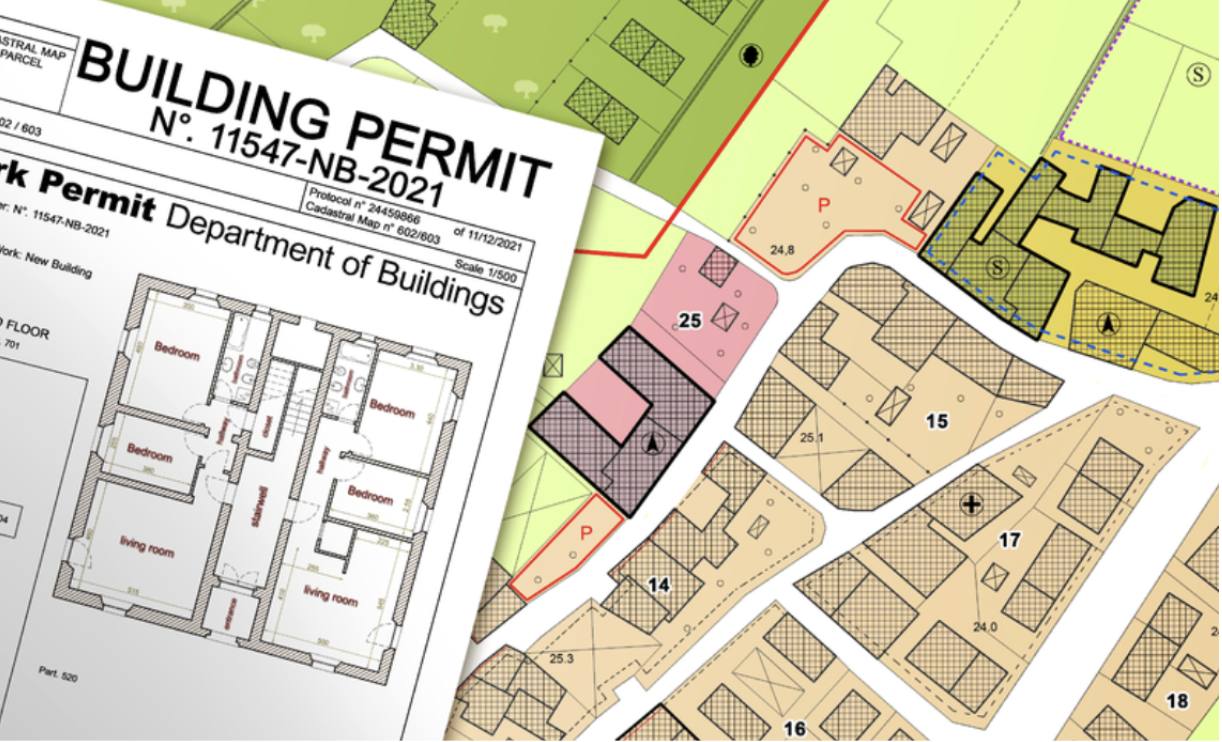
Image via National Property Inspections
***
In the United States, people argue that the federal government shapes (and is crucial in creating) effective climate policy. Debates are centered on federal agencies, specialized committees, or the president. These bodies pass broader legislation such as the Inflation Reduction Act of 2022. However, this framework misses where many of the most consequential climate decisions actually occur: the local level. Local zoning boards often exert more direct influence over emissions, land use, and climate resilience than federal lawmakers. In this sense, zoning boards are automatically climate policymakers; however, they’re not always pro-environment.
Zoning boards control where and how exactly things are built.. These seemingly simple decisions shape the physical structure of cities and suburbs. This, in turn, determines energy consumption, transportation patterns, and environmental impact. For example, a zoning board that restricts multi-family housing in favor of single-family homes indirectly increases car dependency, urban sprawl, and per-capita emissions. Without any federal mandates car reliance and emissions are lowered through these boards allowing higher-density and mixed-use development. This demonstrates the reality that the federal government can incentivize renewable energy or set emissions targets. However, it cannot easily override the linkchain of decisions that dictate whether people live in dense, transit-accessible areas or sprawling, car-dependent ones.
The power of zoning boards is particularly evident in housing policy. The United States faces a well-documented housing shortage, especially in urban areas. Restrictive zoning exacerbates this shortage by limiting supply, supporting increasing prices, and pushing development outward into less dense areas. This pattern tends to increase a commuters distance, and by association, increase transportation emissions, which remain one of the largest contributors to U.S. greenhouse gas output.
Transportation policy continues to demonstrate this point. Federal transportation policy can only function if local zoning supports transit-oriented development. Without sufficient density near transit stations, ridership remains low and systems underperform. It is true that a city can invest heavily in rail or bus systems, but if surrounding neighborhoods are limited to low density housing, the number of potential riders remains capped. This weakens both the economic and environmental return on those investments, which is detrimental to both the economy and environment.
A clear example of zoning reform shaping climate outcomes can be seen in Minneapolis. In 2019, the city adopted a comprehensive plan that eliminated single family zoning across the city, allowing duplexes and triplexes in previously restricted areas. This policy was designed to increase housing supply, but it also has important environmental effects. By allowing more people to live in central areas, closer to jobs and transit, the policy reduces the need for long commutes and lowers emissions over time.
Regardless, zoning boards often face strong local pressure to reject higher density projects. Residents may oppose new developments due to concerns about traffic, neighborhood character, property values, or crime concerns. These concerns are apparent, but they create a system where groups of residents can block projects that have broader environmental benefits for everyone. Because zoning boards are highly responsive to local voices, they often prioritize short term neighborhood preferences over long term climate goals, which makes this a bigger conversation about environmental justice.
Some states have started to recognize this problem and are stepping in to limit local control. Policies that allow accessory dwelling units or require higher density near transit are becoming more common. These reforms have the goal of aligning local land use decisions with statewide climate and housing priorities. This way, zoning laws and climate action have the ability of working hand in hand. Legal scholars increasingly argue that zoning reform should be treated as a form of climate policy, not just housing policy.
It is clear that the most important climate decisions in the United States are not always made in Washington. They are often made in local meetings, where zoning boards decide if, what, when, and where something is built or destroyed. These decisions shape how people live, how they travel, how much energy they use, and how much they pollute.
***
This article was edited by Emma Zadrima and Margot Sleeman.
 Sarah Olivia Sullivan
  Luke Helmholz
  Gavin O'Sullivan